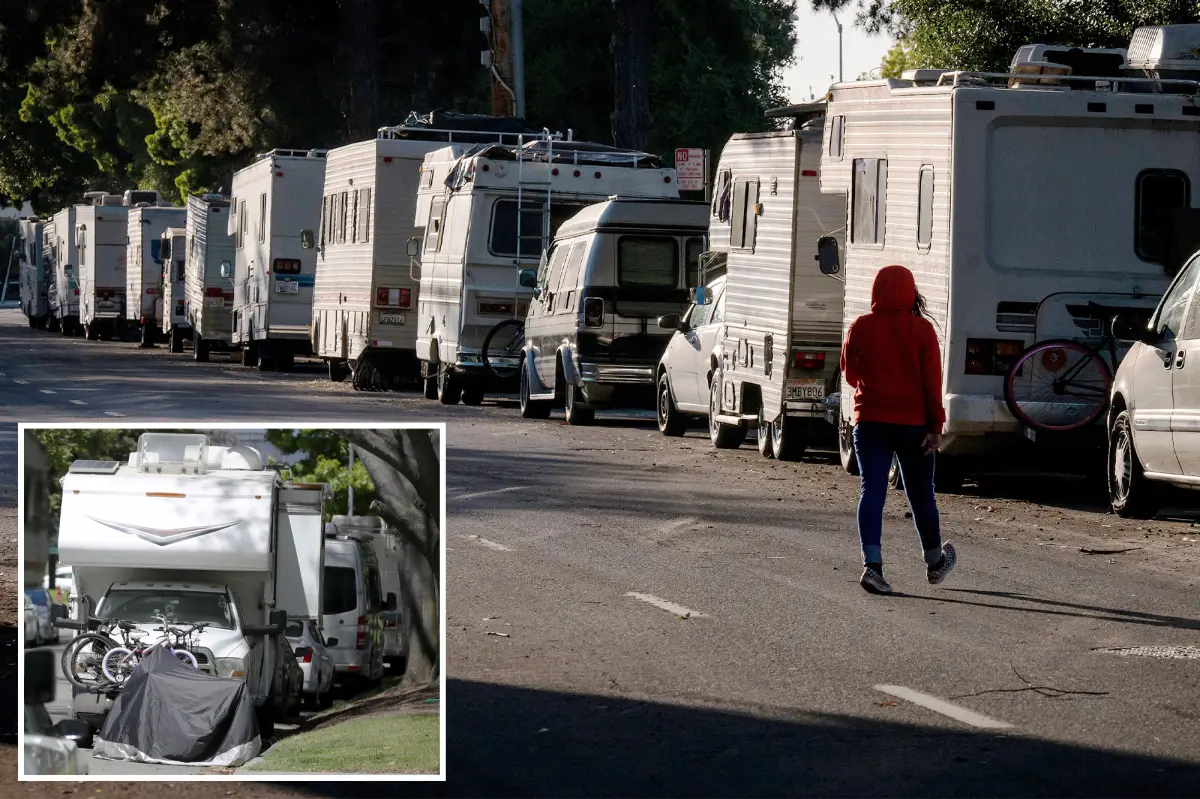

Fed up with recreational vehicles and other oversized vehicles crowding its streets, the Silicon Valley city of Mountain View has approved tougher regulations targeting the growing number of mobile homes parked throughout the community.
The Mountain View City Council voted to advance a proposal that would prohibit unhitched trailers from parking on public roads and ban “vanlording,” the practice of renting out RVs. Supporters said the measures are intended to curb “predatory rental practices,” improve neighborhood conditions and ensure emergency vehicles can pass safely.
“This wasn’t a big thing on our radar probably five or seven years ago, but the situation has evolved to the point where the balance, in my opinion, is out of whack,” Councilmember Chris Clark said at a Tuesday meeting, according to the Mountain View Voice.
The regulations are scheduled to take effect one month after a second and final vote set for Dec. 8.
Another council member moved to postpone enforcement until July, giving the city more time to notify people living in vehicles about the new rules and connect them with available resources. Some officials expressed concern about the potential impact on Mountain View’s low-income residents.
“I’m not happy with this,” Councilmember Lucas Ramirez said. “It’s not my preferred approach.”
Mountain View also approved $428,000 for the city’s financial assistance program and two nonprofit organizations to expand homelessness-prevention and response services. An additional $50,000 will fund an emergency lodging voucher program for RV residents affected by the new restrictions.
The latest crackdown follows a sharp increase in oversized vehicles on the city’s streets over the past year. City staff attributed the growth in part to parking spaces removed for bike lanes, as well as stricter RV ordinances adopted by neighboring communities.
A city staff report found 428 inhabited vehicles, most of them RVs, on Mountain View streets during the summer—a 40% increase from the previous year. Approximately 67 were unhitched trailers.
Residents have increasingly complained about the appearance and impact of the parked RVs.
At an October meeting, Lunar Energy CEO Kunal Gerotra said RV parking had harmed the area surrounding his company’s offices by obstructing visibility near driveways and increasing the risk of collisions.
“We feel we’ll have to leave the city if this continues for any longer than what it is right now,” Gerotra reportedly told council members.
Mountain View adopted citywide RV restrictions in 2020. The existing rules prohibit oversized vehicles from parking on narrow streets and roads with bike lanes—restrictions that apply to most of the city’s roadways.
Following the start of enforcement, the number of occupied vehicles fell to a low of 148 in 2023, according to city data. Since then, however, the total has steadily increased.
“This council is talking about this tonight to no longer kick the can,” Councilmember Ellen Kamei said.
Other Bay Area cities are also tightening restrictions on RVs. Under new rules, Oakland will no longer classify vehicles as encampments, giving authorities broader power to tow them with less notice and fewer protections than those afforded to tent encampments.
San Jose has taken one of the region’s more aggressive approaches, establishing no-parking zones and towing RVs when residents fail to move them by specified deadlines.


