
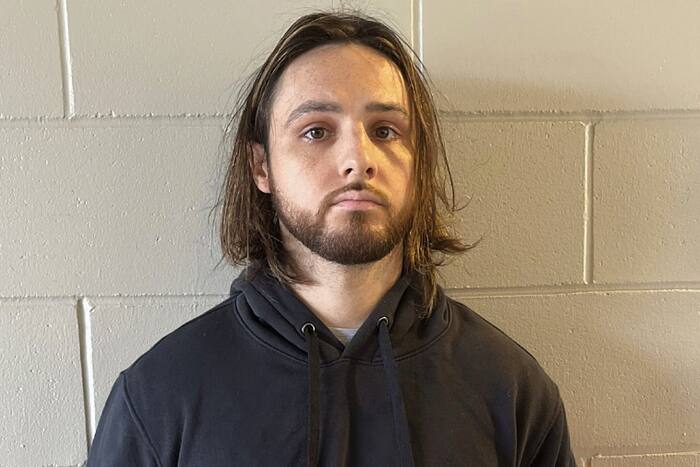
LOS ANGELES – A man accused of igniting the fire that grew into last year’s deadly Palisades Fire was convicted of arson charges Friday, months after his first federal trial ended with a hung jury.
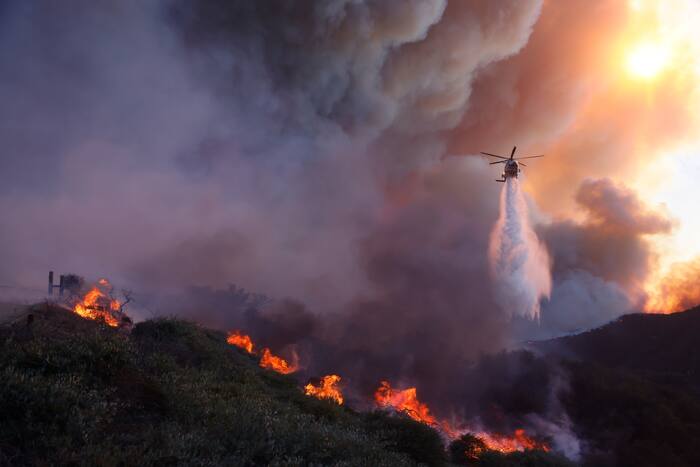
Jurors found Jonathan Rinderknecht, 30, guilty of starting a fire on Jan. 1, 2025. The blaze smoldered undetected in underground root systems before reigniting on Jan. 7 and becoming one of the most destructive wildfires in California history. The Palisades Fire killed 12 people and destroyed entire neighborhoods across Los Angeles and Malibu.
Rinderknecht pleaded not guilty to federal charges of destroying property by fire and arson. The first charge was narrowed to cover only the Jan. 1 blaze, known as the Lachman Fire, while the second charge involved the Palisades Fire. He was convicted on both counts.
Rinderknecht showed little visible reaction in court. Before leaving, he hugged his attorneys.
Bill Essayli, the top federal prosecutor in Los Angeles, called the verdict a “testament of the hard work” by his team. Essayli said he was “intimately familiar” with the strength of the evidence and pleased that jurors convicted Rinderknecht.
Rinderknecht’s attorney, Steve Haney, said in a statement that the defense was disappointed but respected the jury’s process.
“After a lengthy deliberation, they clearly gave this case a great deal of consideration,” Haney said. On the possibility of an appeal, he said the defense would review its options at the appropriate time.
Rinderknecht is scheduled to be sentenced March 17, 2027. Each count carries a mandatory minimum sentence of five years and a maximum of 20 years in federal prison.
Prosecutors pursued the case again after Rinderknecht’s first jury deadlocked 10-2 in favor of acquittal following a two-week trial in June. When they filed a new indictment for the retrial, they dropped a third charge alleging that timber had been set on fire.
Juror says Rinderknecht’s testimony helped establish guilt
Juror No. 3, who identified himself only by his first name, Cameron, said he was the sole juror who initially believed Rinderknecht was not guilty. One other juror was undecided, while the remaining 10 favored conviction.
“It took a lot for me to be convinced otherwise,” Cameron said. “After listening to every single point, I do now agree that he’s guilty.”
Cameron said he initially questioned a technical analysis presented by a defense expert, who argued that the government had identified the wrong origin point for the fire. He said jurors received a “lack of information” about that analysis.
Ultimately, Cameron said, Rinderknecht’s own testimony became the strongest evidence supporting a guilty verdict.
“Stating that he was up on the hill, didn’t smell a fire, didn’t see fireworks … no one else was on the hill that night,” Cameron said.
Prosecutors say Rinderknecht had been “mad at everything”
In the retrial, prosecutors presented a more focused case built around digital forensic evidence, expert testimony and Rinderknecht’s state of mind in the hours before the fire. Unlike the first trial, they placed less emphasis on his reported resentment of the wealthy and powerful and did not characterize the alleged arson primarily as an act of “societal revenge.”
Prosecutors highlighted evidence placing Rinderknecht near the fire’s origin, including photographs showing his car parked at the bottom of a trail leading to the area where the blaze began. Cellphone tower data also tracked his movement on the hill. Fire-detection camera images established the likely ignition window, while experts ruled out other possible sources, including fireworks.
Testimony from Uber passengers and text messages Rinderknecht sent to his girlfriend at the time indicated that he had been acting erratically and angrily in the hours before the fire, prosecutors said.
“He was mad at everything, and frustrated,” Assistant U.S. Attorney Mark Williams told jurors.
After the fire started, Rinderknecht called 911 more than a dozen times while walking down the hill. Prosecutors showed jurors a screen recording he made on his phone during those calls. At one point, he asked ChatGPT, “Are you at fault if a fire is lit because of your cigarettes?”
Prosecutors argued that these actions were part of an attempt to establish an alibi.
They also presented extensive testimony describing how fire investigators concluded that the Palisades Fire was a holdover from the initial blaze allegedly started by Rinderknecht.
Defense challenges proof of the fire’s origin
Haney challenged the government’s case, arguing that the fire scene may have been compromised because the area remained accessible to the public until the Palisades Fire began on Jan. 7.
The defense presented its own expert witnesses, including a retired U.S. Forest Service fire investigator who testified that the origin area was elsewhere, contrary to the government’s conclusion.
Haney argued that prosecutors could not conclusively establish that no one else was near the ignition point that night because some cellphone records were missing. He also cited a neighbor’s testimony that a group of teenagers had been seen running away from the direction of the trailhead.
He urged jurors to disregard evidence about Rinderknecht’s character, including angry text messages, describing it as “evidence of the man, not evidence of the act.”
Haney also offered an alternative explanation for the ignition: fireworks. Several witnesses, including two neighbors and a local firefighter, said they heard a loud bang or explosion from the direction of the hill where the fire was believed to have started.
Prosecutors countered that none of the thousands of images collected that evening from cameras in the area showed fireworks in the sky above the hill.


