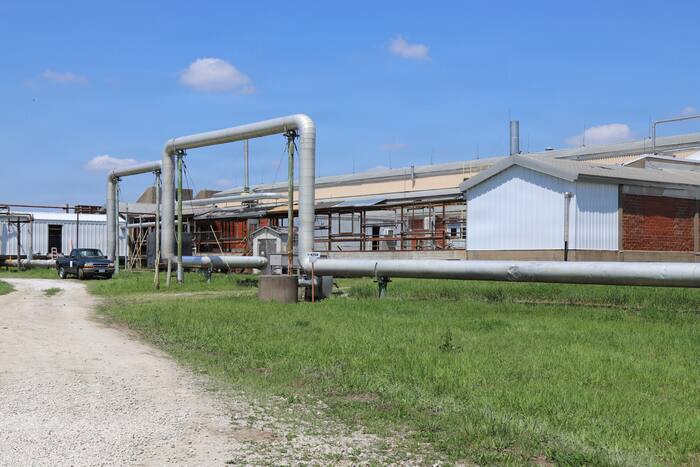

DES MOINES, Iowa – A federal appeals court has temporarily blocked a permit that would have allowed the U.S. Army to detonate several tons of bomb-making chemicals in Iowa, granting a request from environmental groups.
The late-Thursday ruling puts the military’s plan to dispose of dozens of barrels of lead azide on hold while the court considers the case.
“The Army can’t detonate under the permit while the permit is stayed,” said Thien Chau, an attorney with Earthjustice, which filed a petition on behalf of Iowa groups seeking review of the U.S. Environmental Protection Agency permit.
As of Friday, the 8th U.S. Circuit Court of Appeals had not released a schedule for deciding the groups’ emergency motion or said whether it would hold a hearing. Chau said attorneys expected the court to act before the operation was scheduled to begin Monday.
The Army did not immediately respond to messages seeking comment on how the court’s action would affect its plans.
Military officials have said the chemicals are unstable and that the danger of an uncontrolled explosion is increasing, especially as temperatures fall.
The detonation was originally scheduled for Friday, but the Army announced Thursday that it would be delayed until Monday after widespread public concern over the possible health and environmental effects.
“This will delay the detonation until the latest possible moment prior to a forecasted temperature drop, which would risk further destabilization of the material,” Acting Army Secretary Adam Telle said in a post on X.
The Army, the EPA and the federal Department of Health and Human Services said Friday in a joint statement that they were coordinating to carry out the detonation as safely as possible.
“Officials have been meticulously planning for this event since March, and all agencies involved are prepared to take the most extreme mitigation measures available to ensure there is no risk to the public and any disruptions are minimized,” the statement said.
An inspection earlier this year at the Iowa Army Ammunition Plant found that lead azide, a chemical used in producing munitions, had begun to deteriorate. Crystallization had made the material unstable and dangerous, leading the Army to bring together specialists in munitions chemistry, engineering and environmental safety to develop a response.
EPA documents show that officials considered options including using other chemicals to neutralize and decompose the contents of the drums. However, they said handling the containers would increase the risk of an accidental and potentially fatal detonation.
Environmental groups challenged that conclusion, arguing in their petition that officials had not fully examined other options. The groups also faulted authorities for failing to provide the public with more information.
The Army explained its plans at a public meeting in Middletown in October. But other communities, including some as far as 100 miles (160 kilometers) away, did not learn of the potential effects until a public advisory was issued Sunday.
Nearly 400 people live in Middletown, about 160 miles (257 kilometers) southeast of Des Moines. Thousands of people in nearby areas, however, could be affected if material released by the detonation spreads through the air and settles on the ground.
Some schools and businesses had planned to close. The Army advised residents to remain indoors, bring pets and livestock inside, and keep windows and doors shut. Officials also urged people in the projected plume’s path to clean their vehicles, windowsills and outdoor surfaces afterward.
“The detonation will result in an air plume with some lead-containing particles which will disperse in the air and deposit on the ground,” the advisory said. “Lead is toxic to humans and animals.”
Lucy Giehl lives with her husband and two dogs about 4 miles (6.4 kilometers) north of the ammunition plant. In an interview Thursday, she said she was unsure whether she should wear gloves while cleaning surfaces or prevent her dogs from drinking water from their pond.
“There are just so many details that I feel like haven’t been addressed with the public.”
___
Montoya Bryan reported from Albuquerque, New Mexico.


