
Nikita Hand zipped up her new red halterneck jumpsuit, thrilled about the evening ahead.
It was a Saturday in early December 2018, and the hairdresser and her colleagues were preparing for their Christmas party at a Dublin salon beneath a canopy of twinkling lights.
At 29, Nikita had a young daughter and a long-term partner. As she describes it, she was ‘an ordinary girl living my best life’.
‘I was bubbly and outgoing,’ she says. ‘I loved going out, I loved fashion and I was happy in my body. Looking back, I had it all.’
The group had arranged a festive meal at a nearby circus-themed venue, followed by drinks at a local bar.
For Nikita, it was a rare escape from the relentless demands of work and motherhood. She pulled on a faux-fur coat, slipped into her heels and headed out in high spirits.
She had no idea she was walking towards the most devastating night of her life.
More than 24 hours later, in the early hours of Monday morning, Nikita’s then-partner opened the door of their home and found her in a horrifying condition.

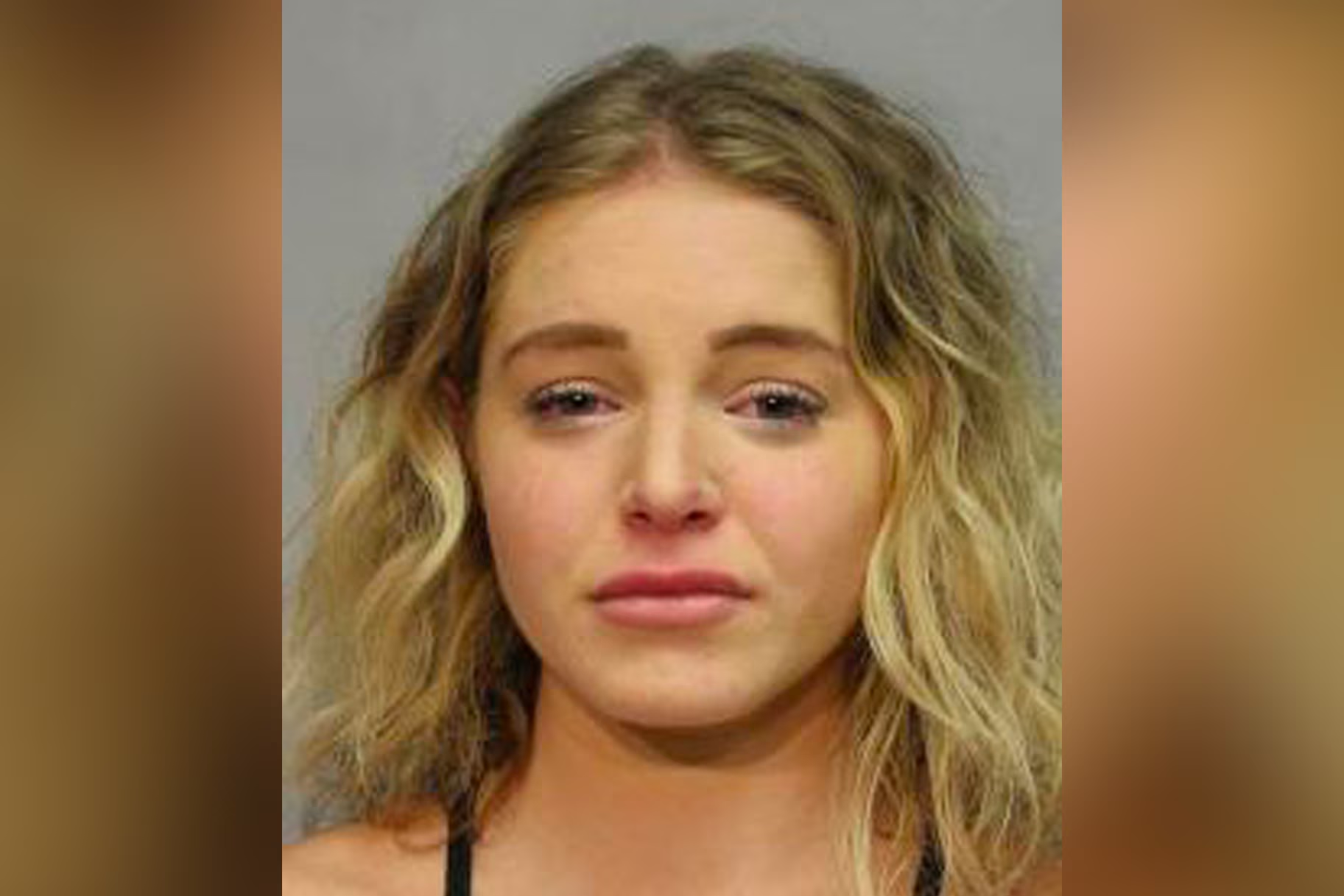
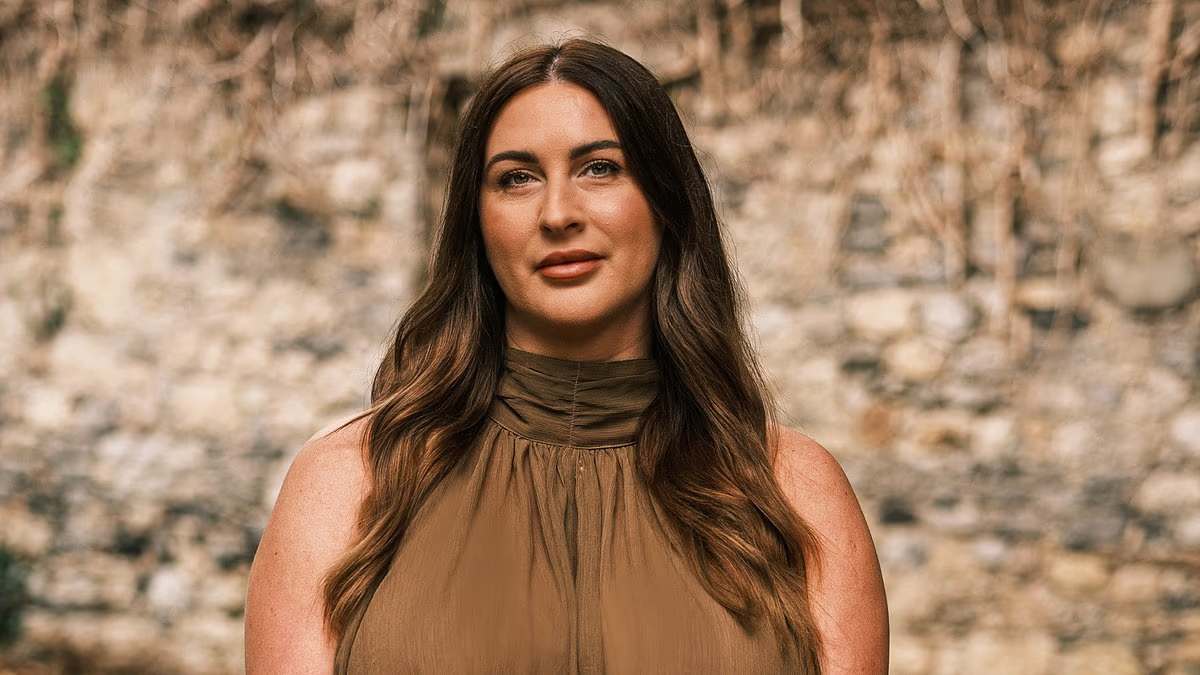
Nikita Hand recalls being ‘bubbly and outgoing’ before the night that changed her life

MMA fighter Conor McGregor was accused of raping Nikita during the ordeal in December 2018
‘I can still remember his eyes widening when he saw me: my hair was in disarray, my eyes were bloodshot and my bare arms were black and blue,’ she recalls. ‘I was reeling and disorientated.’
The injuries covering Nikita’s body were both visible and internal.
She said she had been raped during a terrifying ordeal in which her attacker pinned her to a bed, tore off her clothes and choked her three times, leaving her convinced she was going to die.
And the man she accused was not a stranger.
He was someone she knew and had once admired: mixed martial arts fighter Conor McGregor, a globally recognised sports star.
Initially, Nikita refused to identify her attacker. It was not until the following month that she found the courage to give a statement to police.
She feared retaliation from McGregor and his many supporters, but she was also terrified that nobody would believe her.
On the night of the alleged attack, she had been drinking heavily and taking cocaine. She had also been the one to initiate contact with McGregor, sending him an Instagram message asking whether he knew of any parties nearby.
‘I could already anticipate the sideways glances, the knowing looks and the rolling eyes,’ she says. ‘“You’d had how much to drink? And you took cocaine? And you went with him to a hotel room?”
‘“Are you sure you didn’t lead him on? Surely you can’t remember half of what happened.”’
What followed appeared to confirm her deepest fears.
In June 2020, 18 months after the incident, Nikita learned that the Director of Public Prosecutions had decided not to pursue the case, citing insufficient evidence.
McGregor denied the allegations and maintained that their sexual encounter had been consensual.
It would take another four years for Nikita to have her case heard in court.
With a criminal prosecution no longer possible, she brought a civil action. In November 2024, a jury comprising eight men and four women found McGregor liable for rape and ordered him to pay Nikita damages and costs totalling almost €1.75 million (£1.5 million).
For Nikita, the judgment was a long-awaited vindication. At last, she felt the world knew she had been telling the truth.
Now, almost eight years after the attack, she has found the courage to recount the full, visceral story in her harrowing memoir, Not The Perfect Victim.
Its publication comes at a significant moment. Last week, disgraced comedian Russell Brand was sentenced to ten and a half years in prison for rape and sexual assault offences committed between 1999 and 2009, after six victims gave evidence against him.
‘I found Brand’s entire trial very triggering,’ she says. ‘It brings everything back.’
She praised the judge, however, for delivering what she called ‘powerful’ remarks. Mr Justice Bennathan told Brand: ‘Whatever women wear, wherever they go, whatever they drink, they retain the right to say “no”.’
It is a message Nikita, and sexual assault survivors everywhere, have long needed to hear.

Nikita leaves court in Dublin after McGregor lost his appeal in the civil case in July 2025

McGregor outside Dublin’s High Court after losing his appeal against the jury’s finding in Nikita’s favour
Like many of Brand’s accusers, Nikita knew the man she accused. They had grown up in the same Dublin suburb.
‘We had the same circle of friends. I’d seen him in town and in the local pub, and we had exchanged a few messages online,’ she says.
McGregor, 38, was a local hero: the boy from the area who had become a global name in mixed martial arts, a punishing sport involving punches, kicks and chokeholds.
His fighting career made him extremely wealthy. In 2021, Forbes named him the world’s highest-paid athlete, estimating his net worth at $180 million (£134 million).
His career has also been clouded by controversy, including charges involving assault, disorderly conduct and driving offences, as well as reported links to the shadowy Kinahan organised crime group.
On December 8, 2018, McGregor spent the night drinking at several Dublin nightclubs.
During the evening, he and Nikita exchanged a handful of ‘likes’ on Instagram stories. Nearly 9am on Sunday, when Nikita did not want the night to end, she sent him a message on social media.
‘Between long hours at the salon and caring for my seven-year-old daughter, Freya, I hadn’t been out in ages,’ she says.
‘I wasn’t ready to go home. I don’t remember exactly what I wrote because, after the assault, I deleted the exchange in a panic.
‘I knew he was a party person and would know if anything was happening, so I said something like, “Are there any parties going on now?”’
Ever since, Nikita has blamed herself for pressing send.
That message resulted in Nikita and a colleague joining McGregor and a male friend at The Beacon, a four-star hotel outside Dublin where McGregor’s security team had booked the penthouse suite.
Nikita said it was there that McGregor, then a father of one with a long-term partner, now his wife, who was heavily pregnant, forced himself on her. She said he put her in a headlock, pinned her down and knelt on her chest before raping her.
Despite her repeated pleas, her attempts to bite him and her struggle for breath beneath his weight, she said he would not stop.
Nikita says she felt like a ‘rag doll’.
‘I did fight at first,’ she recalls. ‘I fought hard. But when his elbow closed around my neck and his arm tightened, all of that disappeared. My body made the decision to stop fighting and survive.’
Her memories were initially clouded by alcohol, drugs and trauma.
She regained consciousness in the early evening on Sunday, a full day after leaving for her Christmas party.
Fragments of the previous day returned in frightening flashes. Crimson bruises had spread across her bare arms, and she could not stop shaking.
She managed to take a taxi to her manager’s home, where she broke down, before returning to her own house early the next morning and telling her then-partner what had happened.
‘I was a completely different person from the bright-eyed, cheerful woman who had left for work on Saturday morning,’ she says. Their relationship would not survive the aftermath.
EXPLORE MORE: Thomas Markle Branded ‘Lying, No-Good Coward’ by Son Thomas Jr
In the days and weeks that followed, supported by her mother, Debbie, and counsellors from the Dublin Rape Crisis Centre, Nikita underwent intimate medical examinations and formal police interviews.
The injuries were so extensive that the gynaecologist who later testified in court spent nine minutes listing them one by one, including bruising to her neck and scratches on one breast.
She had a cut on her jaw and ‘extensive bruising’, shaped like a handprint, on her left buttock. A tampon inserted before the party because she was due to start her period had been pushed so far inside her that doctors had to remove it with forceps.
Yet the physical injuries were only part of the damage.
Nikita began using alcohol to dull the pain. She spent long, bleak periods in bed, too frightened to leave the house and unable to work or care for her daughter.
When she learned that the Director of Public Prosecutions would not pursue the case, her depression deepened.
At her lowest point, Nikita considered taking her own life.
‘I struggle to explain how devastating that time was,’ she says. ‘I wanted to crawl into a hole and never come out.’
She knew a civil claim would not send McGregor to prison, but believed it was the only remaining route to hold him accountable.
Taking that route also meant giving up her anonymity, and she feared how McGregor’s supporters would react if she publicly challenged him.
Even before then, word had spread quickly through the small community and she had faced intense abuse.
‘I received vile messages online. People body-shamed me and told me to “un-alive” myself,’ she says.
‘They called me ugly, fat, slutty and a homewrecker. I was scared to walk around the corner alone.’
In early 2021, Nikita discovered that McGregor had bought her local pub. Only ten minutes from her home, it made his possible presence feel uncomfortably close.
Her fears were not unfounded.

Nikita says she was ‘shaking from head to toe’ when she heard the court’s verdict

McGregor and then-partner Dee Devlin outside court in Dublin; the couple have four children and married in December 2025

Nikita has now found the courage to describe the attack in full in her harrowing memoir
One night in June 2024, three masked men entered her home carrying a knife and stabbed her new partner, Gary, while Nikita and her daughter barricaded themselves in a bedroom.
As the attackers left, they shouted: ‘You’re nothing but a rat. When we see you next time, you’re dead.’
Nikita’s legal team believes McGregor supporters carried out the attack, although there was no suggestion that McGregor himself was involved.
Thankfully, Nikita and her family escaped relatively unharmed, but she no longer felt secure in her own home.
‘The next morning, I took pictures down from the walls,’ she says. ‘I never went back.’
Five months later, Nikita’s civil case finally went to trial.
The two-week hearing at Dublin High Court attracted intense media coverage. McGregor sat close enough to touch, surrounded by supporters in the public gallery.
She describes the experience, particularly the gruelling cross-examination, as humiliating. ‘I found it degrading — almost as bad as the assault itself,’ she says.
McGregor continued to reject Nikita’s account throughout the proceedings. He claimed her injuries could have been caused when she ‘swan dived’ into the hotel bath while heavily intoxicated.
After six hours of deliberation, the jury found McGregor liable for sexual assault and awarded Nikita almost €250,000 (£208,000) in damages for medical expenses and lost earnings.
‘I was shaking from head to toe,’ she says of hearing the verdict. ‘I almost couldn’t process it. I had to ask, “What’s happening?” I couldn’t believe it.’
The legal battle was not finished. McGregor appealed, arguing that he had not received a fair trial.
The Court of Appeal unanimously rejected his first appeal. On December 4 last year, the Supreme Court, Ireland’s highest court, did the same and ordered McGregor to pay Nikita’s legal fees, totalling €1.5 million (£1.25 million).
‘There were moments when I thought it would never end,’ Nikita says. ‘In many ways, it still hasn’t.
‘The money meant nothing to him, but I still have to live with what he did.
‘I continue to have panic attacks. I could be walking to the shops or talking to a friend when a wave of anxiety suddenly hits me.’
This season is particularly painful. Christmas lights and invitations to parties revive memories she would give anything to erase.
McGregor, meanwhile, remains highly visible and appears largely untouched by the verdict.
In March 2025, he met US President Donald Trump at the Oval Office and announced plans to run in Ireland’s presidential election, although he later withdrew.
In June this year, he appeared on The Tonight Show with Jimmy Fallon, whose fawning interview prompted a global backlash after it failed to mention the civil case.
‘Seeing him given such a huge platform really knocks me,’ Nikita admits. ‘I want to live my life without ever seeing his face again, but that’s very difficult.’
The women who accused Russell Brand face a similarly painful reality.
Nikita hopes they will draw strength from coming forward, just as she has, and understand that they are neither alone nor responsible for what happened to them.
‘It took me a long time to say this with conviction, but nothing I did made it my fault,’ she says.
‘Nothing erased my right to say “no”. “No” is a complete sentence. “No” is inviolable.’
Across Ireland, Nikita has become a symbol of hope for sexual assault survivors, with her name now associated with courage.
The weekend after the civil judgment, calls to the Dublin Rape Crisis Centre helpline doubled. Since then, she has helped hundreds of other women share their experiences.
Hairdressing is now behind her — she has not worked since the assault — but she hopes eventually to retrain as a counsellor or become a spokesperson for sexual assault survivors.
Her life has also brought new happiness, including Gary, with whom she recently welcomed Alba, a five-month-old girl and half-sister to Freya, now 15.
Much of what Nikita has done, including writing her book, has been for her daughters.
‘I want them to grow up understanding consent, knowing how I stood up for myself and refused to be silenced,’ she says.
As for the man she accused, whose name she refuses to dignify by saying, Nikita says she feels nothing.
‘I don’t forgive him and I never will.
‘I’m incredibly proud that I found the strength to take him to court and secure the justice I deserved.
‘But now? I don’t think about him anymore. He means nothing to me.’
- Not The Perfect Victim: My Fight for Survival, Truth and Justice by Nikita Hand is out now in Trade Paperback, published by Hachette Books Ireland