
Putin reportedly ‘very frustrated’ as Ukrainian strikes damage vital Kerch Bridge
Fox News contributor Rebeccah Heinrichs questions whether President Donald Trump’s meeting with Chinese President Xi Jinping and Russian President Vladimir Putin will produce an end to the war in Ukraine following attacks on the Kerch Bridge. She also says Trump could be growing increasingly impatient with Iran as American forces enforce an oil blockade.
Ukraine’s latest attacks on the Kerch Bridge, one of Russian President Vladimir Putin’s most politically significant infrastructure projects, may have seriously disrupted Moscow’s military supply line to occupied Crimea. The strikes have also raised fresh concerns about Russia’s ability to maintain its operations as both sides face a challenging winter.
A European intelligence assessment dated Nov. 18 and obtained by News Outlet called the latest assault likely the most effective Ukrainian attack yet on the heavily protected crossing. It followed a coordinated campaign aimed at Russian air defenses, radar installations and electronic warfare capabilities.
Ret. Gen. Philip Breedlove, a former NATO Supreme Allied Commander Europe, said the damage could have consequences well beyond the bridge’s symbolic importance. “The Russians are extremely limited in how they get supplies to Crimea and cutting the Kerch bridge will severely, severely damage their ability to resupply Crimea,” Breedlove told News Outlet.
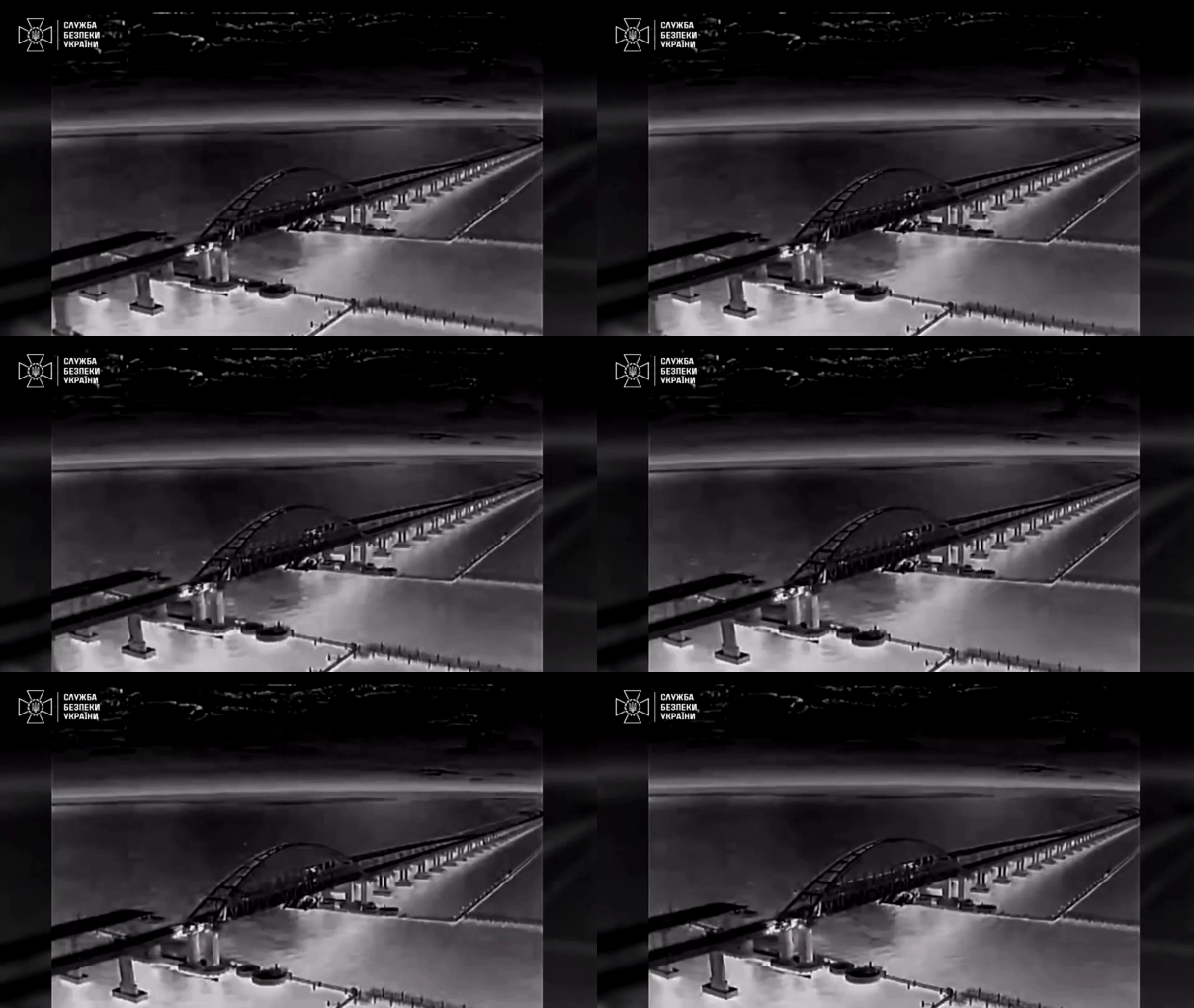
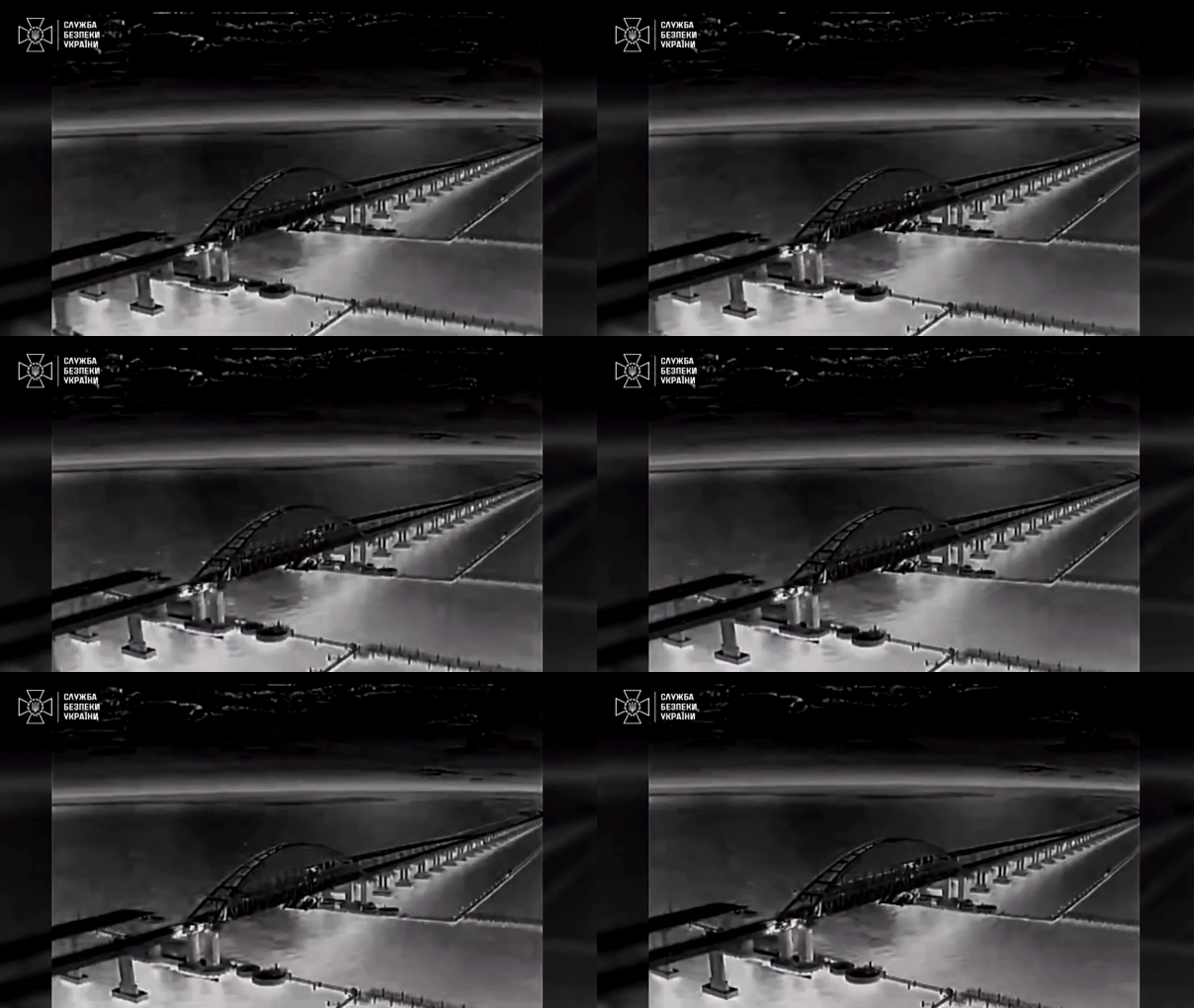
Ukraine said Monday’s strikes destroyed one of the Kerch Strait bridge’s two steel arches and the road span beneath it. (Security Service of Ukraine)
What happened to the Kerch Bridge?
On Nov. 17, Ukrainian missiles and drones hit the 12-mile crossing connecting Russia’s Krasnodar region with Crimea. The assault sent a large portion of the roadway into the Kerch Strait and damaged the neighboring railway line.
Putin opened the bridge in 2018. Since then, it has functioned as an important transportation route and a powerful symbol of Russia’s 2014 annexation of Crimea.
The European intelligence assessment said Ukraine spent several weeks targeting Russian defensive systems before launching the main attack, apparently seeking to reduce the bridge’s protection.
Ukraine hit the railway once more on Nov.19, temporarily stopping train service and bringing the total number of attacks to three within four days.
The resulting damage has interrupted one of Russia’s most direct routes for moving supplies into Crimea, where those resources support military operations in southern Ukraine.

A view shows the Kerch Bridge linking Russia to Crimea, which was targeted in an explosion by Ukraine on Tuesday, June 3. (Reuters/Alexey Pavlishak)
Why the bridge is strategically important
Russia has built an alternative land route through occupied southern Ukraine, but the European assessment cautioned that moving more military equipment along those roads could expose Moscow to serious new risks.
Among the likely problems are longer transport times, increased vulnerability to Ukrainian drone strikes and additional strain on other parts of Russia’s logistical network.
Breedlove said Ukraine’s campaign should be understood as a broader effort to weaken Russia’s grip on Crimea, not merely an attempt to destroy a bridge. He noted that Moscow’s choices have narrowed further as Ukraine has challenged Russian naval power in the northern Black Sea.
Ukraine, he said, has used maritime and aerial drones to push back the Black Sea Fleet despite having no large conventional warships of its own.
The European assessment said repairs could last for months. Some limited road traffic may return within weeks, but replacing the destroyed section is expected to take much longer, especially if Ukrainian forces continue targeting the crossing.
Damage near the Kerch–Yenikale Canal could also interfere with shipping between the Black Sea and the Sea of Azov.
Which side has the momentum?
Ukraine’s successful strikes have exposed a major vulnerability, but a European intelligence source familiar with Russian strategic thinking gave a far less optimistic assessment of the wider war.
IN CASE YOU MISSED IT: Trump to Review Barry Bonds Hall of Fame Snub After Rose Pardon
“It has more symbolic meaning, but also logistics is paralyzed right now,” the source told News Outlet, describing the immediate consequences of the attacks.
Teenagers are looking at the city view during a partial power outages following Russian attacks in Kyiv on October 31, 2026, amid the Russian invasion of Ukraine. (Tetiana DZHAFAROVA / AFP via Getty Images)
The source nevertheless said Moscow is preparing to step up its winter offensive while using talks with Washington to increase pressure on Kyiv.
“The general trend is not good for Ukraine,” the source said.
The source added that Russia believes it can maintain military pressure long enough to compel Ukraine to surrender territory, particularly in the eastern part of the country.
“They are very convinced that by spring Ukrainians will give up,” the source said, characterizing Moscow’s expectations.
Breedlove rejected the suggestion that Russia is gaining the military advantage.
“Militarily, the tide is turning against Russia,” Breedlove told News Outlet, arguing that Russian forces have endured enormous casualties while achieving only limited battlefield progress.
He said Russian losses in recent months had reached extraordinary levels and maintained that Moscow’s forces were failing to make meaningful territorial gains.
Breedlove did acknowledge, however, that military momentum and political leverage are not necessarily the same thing.
He said shifts in Washington’s negotiating position could improve Putin’s political standing even if Russian troops continue to struggle on the battlefield.
The contrasting assessments underscore the challenge before Ukraine: turning battlefield successes into stronger diplomatic leverage before Russia’s winter offensive gathers speed.

Russian President Vladimir Putin (C), accompanied with Deputy Prime Minister Dmitry Kozak (L) and head of the Federal Road Agency Roman Starovoyt, points at the map while inspecting the site of the under-construction bridge across the Kerch strait, which will link Russia and the Crimean peninsula, onboard a helicopter, on March 18, 2016. (MIKHAIL KLIMENTYEV/Sputnik/AFP via Getty Images)
What could happen next?
Putin has threatened retaliation for the attacks on the bridge. On Friday, Russia launched a large-scale missile and drone barrage against Ukrainian cities that killed at least eight people, according to Ukrainian authorities.
The assault came just hours after Putin appeared with President Donald Trump and Chinese President Xi Jinping at a summit in China, while Washington continued pushing efforts aimed at securing peace talks.
The European intelligence assessment said additional Ukrainian strikes against the Kerch Bridge during reconstruction are highly likely. Such attacks could extend the disruption to Russia’s supply network.

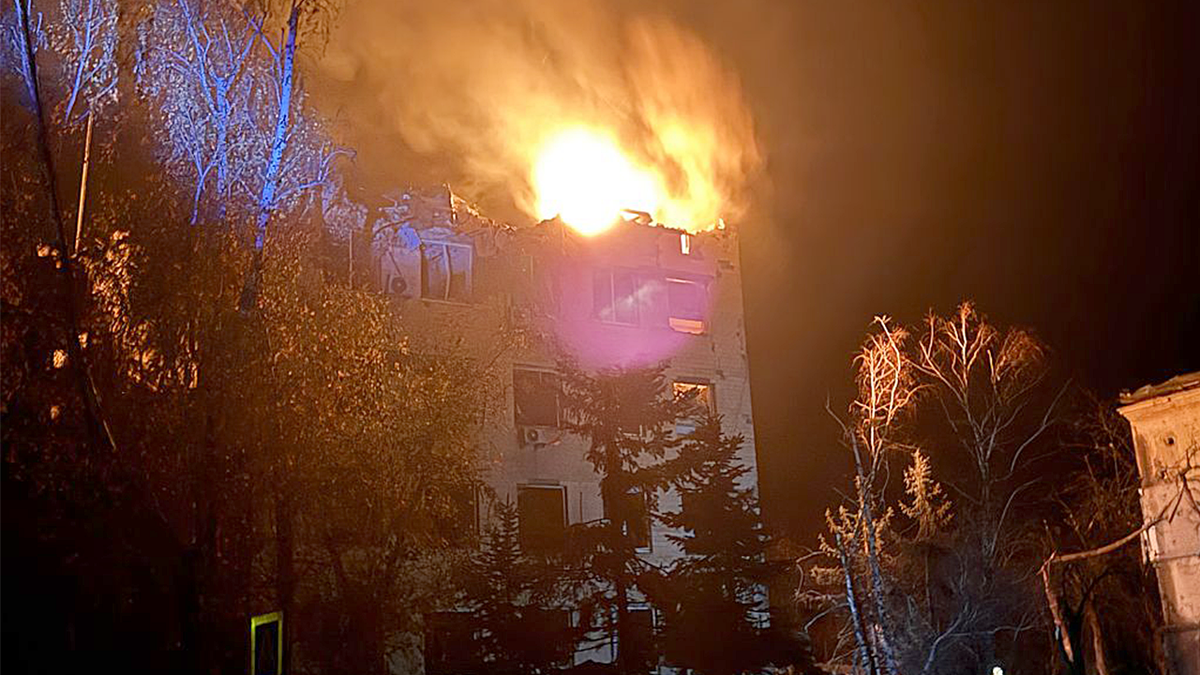
Smoke rises in the city during a Russian missile strike, amid Russia’s attack on Ukraine, in Kyiv, Ukraine Nov. 20, 2026. (Gleb Garanich/Reuters)
For Moscow, rebuilding the crossing is now both a major logistical undertaking and a matter of political importance. For Kyiv, keeping the bridge exposed offers a way to raise the cost of Russia’s occupation and show that even Putin’s most heavily guarded infrastructure can still be reached.


