
Andy Burnham is expected to give in to Brussels’ £500 million demand for lower tuition fees for EU students as the price of his new “Brexit betrayal” agreement, it was claimed on Saturday night.
The Prime Minister and his Foreign Secretary, Ed Miliband, have insisted that their much-anticipated reset deal is final. However, well-placed sources say Brussels could hold up implementation while seeking expensive concessions on university fees.
Negotiations between Mr Burnham and the bloc over food, emissions and youth mobility were reportedly brought close to collapse last week after the EU made a late attempt to force Britain to charge European students the same tuition rates paid by British students.
On Saturday, Mr Miliband maintained that the agreement would proceed regardless of the dispute over tuition fees.
Speaking to the BBC, he said it was “absolutely clear” that the deal was not conditional, adding: “The dates are set out in 2028 when these things are coming in, we’re introducing legislation in Parliament, so definitely.” The legislation is expected to be presented this week.
But Britain’s former Brexit negotiator, Lord Frost, accused Mr Miliband of “colluding with Brussels to hide the truth from the British people”.

The Prime Minister appeared upbeat on arrival, smiling as he held hands with European Commission president Ursula von der Leyen and EU Council president Antonio Luis Santos da Costa

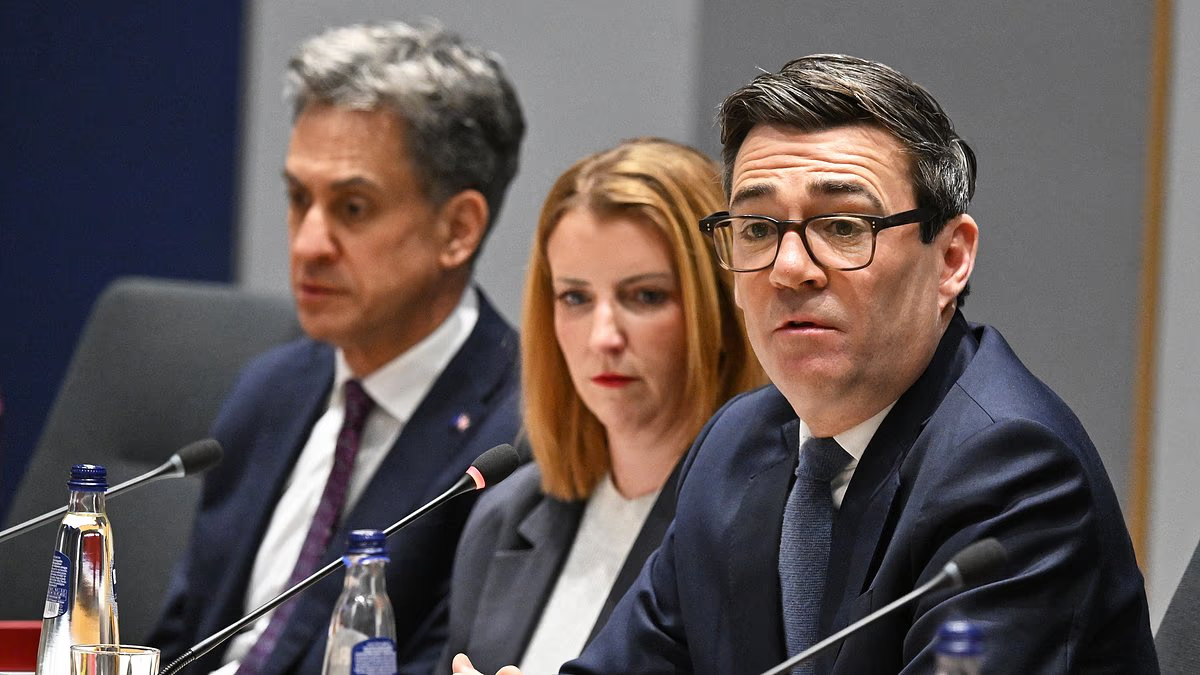
Later on Friday: Andy Burnham with Louise Haigh and Ed Miliband in Brussels last week
Calling on the Foreign Secretary to “start being honest”, Lord Frost told The Mail on Sunday: “There is no doubt in my mind that the EU is not going to implement the three agreements until they’re happy on tuition fees.”
He said EU Council president Antonio Costa and Commission president Ursula von der Leyen had been asked directly whether the issues were linked, but “both waffled”. He added: “The truth is clear: much of this deal won’t happen until Britain has complied with the EU demand to cut fees for students.”
Labour MP and former minister Graham Stringer also criticised Mr Miliband, calling him “profoundly naive” for believing that Friday’s agreement would proceed without Britain conceding to Brussels’ demand and paying as much as £580 million a year to subsidise EU students at British universities.
“Brussels will simply slow down implementation of the new deal until we wave the white flag on tuition fees. This is how the EU always works.”
A draft statement circulated to EU ambassadors on Friday explicitly said the three agreements “will not precede the conclusion of the negotiations on… tuition fees”.
A source familiar with the talks told this newspaper that, despite Mr Miliband’s claims, Britain would ultimately have to accept the EU’s tuition-fee demands for Friday’s agreement to be fully implemented.
The source also warned that, without concessions from London, Brussels could “go slow” on preparations for the deal’s planned start in 2028.
The source said the Burnham Government would also need to accept the fee demands to join the “Made In Europe” scheme, which would give European companies priority in public procurement and help shield industry from low-cost Chinese imports.

Burnham pictured speaking to the media on Friday at the EU-UK summit in Brussels, Belgium
The insider said the cost of backing down on tuition fees would be “massively outweighed” by the billions the British economy could lose if the UK were excluded from Made In Europe.
University leaders warned on Saturday that they would need compensation if EU students were charged the same rates as British students. EU students currently pay up to £38,000 a year in tuition fees, compared with a maximum of £9,790 for British students.
Duncan Ivison, vice-chancellor of Manchester University, said: “If nothing was done to compensate or provide additional funding, it would take £500 million, we estimate, out of the higher education sector at a time where there’s a lot of pressure on the sector.”
The EU declined to clarify the dispute on Saturday night.
Conservative leader Kemi Badenoch challenged Mr Burnham to “come clean to Parliament” and disclose “just what he’s agreed with Brussels”.
She told The Mail on Sunday: “It seems clear the EU has us over a barrel on tuition fees and we will spend six months arguing before Labour capitulates again.”
Reform UK leader Nigel Farage said his party would scrap the entire agreement if elected. Writing in The Mail on Sunday, he vowed that “one of the first priorities of a Reform UK government will be to repeal this pernicious deal”.
The dispute came as pressure mounted on Mr Burnham to pledge that Labour would seek to rejoin the bloc in its manifesto for the next general election.
Mr Miliband intensified the speculation by saying that rejoining could be considered, with informal discussions expected to begin about Britain’s future relationship with Europe. He argued that “the world has changed massively” since the 2016 referendum.
“Europe is changing too, so we’ve got to look at what that means.”
Former Labour leader Neil Kinnock has said another Brexit referendum is “probably inevitable” if Labour wins the next general election. A senior ally of Mr Burnham also told The Times that the Prime Minister believes “deeply” that Britain should rejoin.
The ally said: “He wants to rejoin. That’s the truth of it. He feels very deeply and thinks he is on the right side of public opinion.”
Former ministers David Lammy and Peter Kyle have backed rejoining, while Rachel Reeves is understood to be considering using such a campaign as a route back into frontline politics.
A new campaign to rejoin the EU, branded Get In!, was reported on Saturday to be launching within days.
PM’s deal could cost hard-pressed Britons £3billion every year
By Christian Calgie
Andy Burnham’s agreement with Brussels could cost Britain £3 billion a year, according to new analysis.
The measures agreed on Friday would cost the Treasury more than £2.2 billion annually, research by Stay Out, a new campaign group opposing Britain’s return to the EU, found.
Businesses would face a further £763 million in annual costs, much of which would ultimately be passed on to consumers already under financial pressure.
The analysis examined six major measures in the agreement between the Prime Minister and the EU, including arrangements covering food and farming, the youth experience scheme and participation in Erasmus.
Britain could pay more than £1 billion each year to participate in Brussels’ regional development programme, which finances infrastructure in the bloc’s poorest countries. This is also understood to be the cost of joining the EU electricity market.
The Treasury estimates that taking part in the Erasmus scheme would cost a further £570 million annually. Meanwhile, the 100,000 participants in the newly agreed youth scheme would receive a discounted NHS surcharge of £776, funded by taxpayers.
Oliver Lewis, chairman of Stay Out, said: “Brussels has only ever been interested in our money and, until the Prime Minister realises that, every concession will bring us a step closer to rejoining an EU that would charge us £750 million a week.”
Shadow Chancellor Andrew Griffith added: “Burnham is putting Brussels ahead of Britain.”
A Government source rejected the claims on Saturday night, describing them as “dodgy” and saying Stay Out “cannot be trusted”.
The source added: “Our deal will add £17 billion a year to our economy by cutting costs for business and creating opportunities for young people.”


