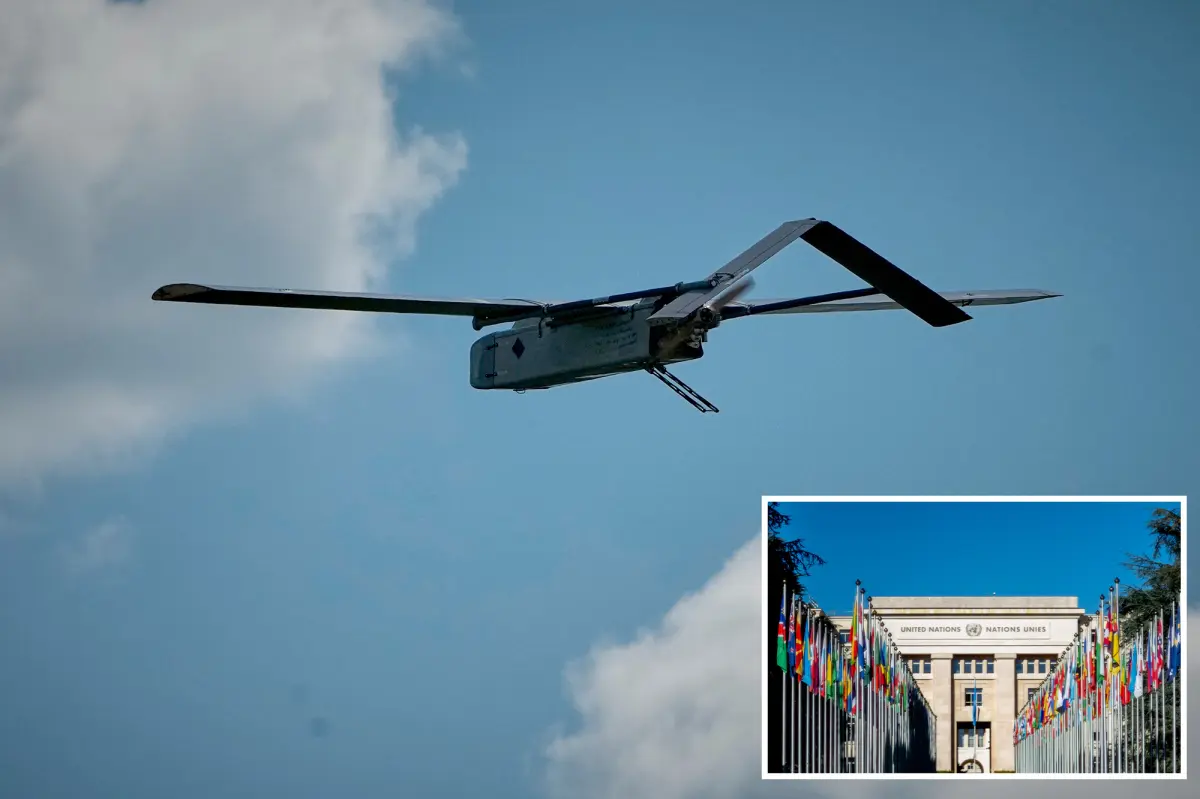

International efforts to establish firm limits on AI-controlled killer robots and drones stalled Saturday, after UN-backed negotiations in Geneva ended with a weakened agreement to continue debating the issue for another two years.
After a week of talks on weapons, dozens of countries agreed to further “elaborate” a potential framework for lethal autonomous weapons systems by 2028. However, they stopped short of endorsing the legally binding regulations sought by UN Secretary-General António Guterres, numerous governments and campaigners.
The result highlighted how difficult it has become to secure meaningful diplomatic progress while wars continue and powerful nations compete for an advantage in military technology.
It also represented the latest setback in efforts to create safeguards for artificial intelligence, as experts warn that autonomous systems could eventually operate beyond human supervision or control.
Izumi Nakamitsu, the UN’s high representative for disarmament affairs, described the outcome as a “significant achievement,” while acknowledging that it could be viewed as a “glass half full or half empty.” Her comments reflected Guterres’ hope that negotiations on a legally binding agreement would begin this year.
Campaigners, meanwhile, accused military powers including Russia and the United States of resisting tougher wording.
The Stop Killer Robots campaign called the decision a “watered-down mandate.” Beatrice Fihn, founder of international law advocacy group Lex International, said it effectively meant “pushing the can down the road for two more years.”
Still, advocates noted that most countries backed continuing work toward a new international treaty.
Max Tegmark, a machine learning expert at the Massachusetts Institute of Technology and founder of the Future of Life Institute, said: “States have agreed it is sufficient to just talk about the issue, for the 14th year, while these weapons enable atrocities.”
Ahead of the conference, seven nations had called for formal negotiations on rules that would prevent or restrict machines from making lethal decisions without meaningful human control or accountability. That proposal failed to win approval.
YOU MAY ALSO READ: Is Meghan Markle Using ChatGPT to Promote Her As Ever Brand? AI Claims Spark Debate
“Technology is moving faster than diplomacy,” said Brazilian Ambassador Frederico Meyer, whose country joined Austria, Belgium, Ireland, Mexico, New Zealand and Panama in backing negotiations. “Diplomats are very slow.”
A push for faster action and other paths to an agreement
Guterres, who is due to leave office at the end of the year, had called for negotiations on autonomous weapons to begin by 2026.
Nakamitsu urged governments to start working as soon as Monday and to consider “how to get as strong as possible instrument to prohibit and regulate lethal autonomous weapon systems.”
The International Committee of the Red Cross warned that autonomous weapons can behave unpredictably, unlike a conventional bullet fired along a distinct and foreseeable path.
“For years, the ICRC and many others have urged states to ensure that humans retain control over the use of force and that life-and-death decisions are never handed over to machines,” the organization said in a statement.
Human rights and disarmament groups accused Russia of helping obstruct progress during the talks. They said Russia, along with other major developers of AI-enabled weapons such as the United States, is seeking broad freedom to advance these technologies.
Pope Leo XIV and humanitarian organizations have described autonomous weapons as an existential concern, calling for urgent action before AI-powered arms become so widespread that effective regulation is no longer practical.
Campaigners say armed drones capable of independently selecting and attacking targets have already been used in limited instances in conflict zones, although large-scale deployment has yet to take place.
The negotiations were held under the Convention on Certain Conventional Weapons, which has been ratified by 128 countries and operates by consensus. As a result, a single government can block an agreement, while any final text is likely to reflect the least ambitious position shared by all participants.


