

Patrick Stewart’s Jean-Luc Picard remains one of the most celebrated characters in science-fiction television. As the thoughtful commander at the heart of “Star Trek: The Next Generation,” Picard helped define a new chapter of the franchise and became the steady force holding the USS Enterprise crew together.
Picard was a very different kind of sci-fi hero when he first appeared. Unlike James T. Kirk’s (William Shatner) more impulsive, action-oriented command style in “Star Trek: The Original Series,” the French-born captain favored diplomacy, scholarship, music, and careful judgment. Yet even the finest Starfleet officer can make serious mistakes, and Picard’s long career includes more than a few decisions that deserve scrutiny.
Some of Picard’s worst moments came when circumstances left him with no good options. Others were caused by impatience, poor judgment, or an alarming lack of caution. Here are five of Jean-Luc Picard’s most questionable actions across the “Star Trek” television shows and films — and how they compare with Captain Kirk’s own less-than-stellar choices.
5. Giving Shinzon far too much freedom
Tom Hardy’s Shinzon in 2002’s “Star Trek: Nemesis” does little to hide his villainy. He begins the film as a rebel commander who seizes control of the Romulan Empire by murdering its leadership. His dark clothing, menacing behavior, and enormous warship — ominously named the Scimitar — complete the picture. He is also a young clone of Jean-Luc Picard whose accelerated aging is rapidly destroying his body.
Picard is ordered to negotiate with Shinzon, so meeting him is unavoidable. Even so, nearly every detail should have put the captain on high alert. Picard knows that the galaxy contains alternate universes, dangerous genetic experiments, and individuals such as Khan Noonien Singh. Once Shinzon welcomes him into a shadowy fortress and reveals that he is Picard’s clone, the captain should be questioning everything rather than treating the encounter like a routine diplomatic visit.
Instead, Picard attends dinner with Shinzon and misses a chance to establish a genuine connection. His refusal to reach out only pushes the unstable clone further toward open villainy. Shinzon is hardly a subtle antagonist, whether because of his emotional immaturity or the film’s writing, but Picard’s willingness to overlook so many warning signs certainly does not help.
4. Encountering a magnificent lifeform, then helping kill it
Picard’s reputation for measured command takes a hit in “Galaxy’s Child,” a Season 4 episode of “Star Trek: The Next Generation.” When the Enterprise encounters a massive space creature, the captain chooses curiosity over caution. Although Worf (Michael Dorn) strongly recommends raising the deflector shields, Picard allows the creature to approach, investigate the ship, and make contact.
The decision quickly turns dangerous. The creature surrounds the Enterprise with an energy-dampening field, leaving the ship unable to escape and placing the crew at risk of a potentially deadly radiation emergency. Picard responds by ordering the crew to fire phasers, killing the creature. The Enterprise is then left to deal with the energy-dependent offspring the adult had been protecting.
There are circumstances in Picard’s defense. He orders the phasers set to a low power level in an effort to limit the damage, and the dampening field has nearly disabled the Enterprise. Still, the encounter raises obvious questions. Why not fire warning shots, raise the shields, or attempt to drive the animal away? Picard could not know every variable, but failing to take basic precautions around an unknown lifeform is a remarkably poor example of Starfleet leadership.
3. His entire complicated history with the Crusher family
Picard’s connection to Beverly Crusher (Gates McFadden) is complicated enough on its own. Add her late husband and son to the story, and the situation becomes a full-blown space opera. Before “Star Trek: The Next Generation,” Picard served alongside Jack Crusher (Doug Wert), whose death occurred during a dangerous mission in which Picard was involved. That tragedy can be understood as one of the unavoidable risks of Starfleet service, but it casts a long shadow over everything that follows.
The situation becomes more uncomfortable because Picard and Beverly clearly share a deep romantic attraction. Their feelings are explored more directly in the Season 7 episode “Attached,” although the chemistry between them is apparent much earlier. Beverly works aboard the Enterprise under Picard’s command, while he continues pursuing other relationships that are rarely destined to last. The two eventually become involved offscreen, and decades later “Star Trek: Picard” reveals that they have an adult son, Jack Crusher (Ed Speleers), named after Beverly’s first husband. It is, in every sense, a complicated family history.
Then there is Wesley Crusher (Wil Wheaton). Picard can be supportive of the young officer, but he also treats him like an irritation — most memorably telling Wesley to be quiet when the teenager tries to warn him that Lore (Brent Spiner) is impersonating Data (Spiner). Wesley may have been difficult, but Picard’s impatience is especially harsh given his role in Jack Crusher’s death and his unspoken feelings for Beverly.
2. Turning down Q’s attempt to join Starfleet
Q, played by John de Lancie, is one of Picard’s most persistent problems. The all-powerful being repeatedly places the captain and his crew in impossible situations, and their combative relationship continues into “Star Trek: Picard.” That is why Picard’s response in “Q Who” is so baffling: when Q offers to join the Enterprise crew and serve under Picard, the captain dismisses him immediately.
Q claims he wants to protect the Enterprise from dangers it does not yet understand, and his warning ultimately proves sincere. Guinan (Whoopi Goldberg) advises Picard not to trust him, so the captain has reason to be cautious. But rather than consider the proposal — or even notify Starfleet Command that a near-omnipotent entity wants to enlist — Picard angrily rejects it. A simple message to his superiors might have been the sensible course of action.
Q responds by sending the Enterprise to a distant region of space, where the crew encounters the Borg Collective. The resulting battle severely damages the ship and kills several crew members. Worse, the Borg learn that the Federation exists and eventually turn their attention toward Earth. Picard is later forced to acknowledge that Q’s warning was valid and that the encounter served an important purpose. Still, the crisis might have been handled differently if Picard had shown even a little diplomatic patience.
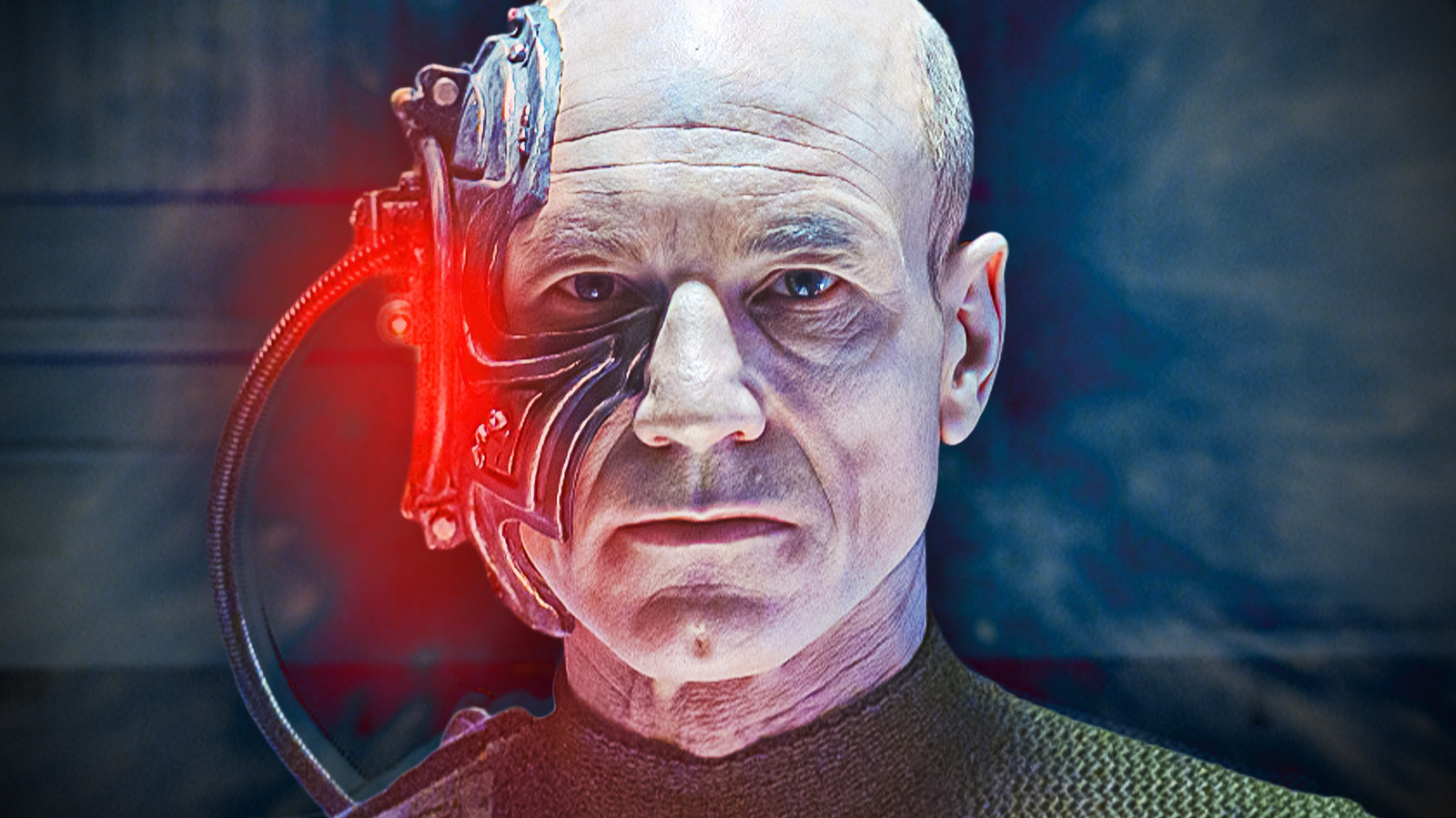
1. Nearly everything he does as Locutus of Borg
Picard cannot fairly be held responsible for actions committed while he was controlled by the Borg. Nevertheless, in terms of the devastation caused, nothing Picard does as an independent human compares with the destruction carried out through his identity as Locutus of Borg after his assimilation in “Star Trek: The Next Generation.”
Locutus appears most prominently in “The Best of Both Worlds, Part II,” but he is a terrifying threat precisely because he retains Picard’s memories, personality, and detailed knowledge of Starfleet operations. The Borg use that information to devastating effect. The two-part story and later references establish that Locutus helps the Collective destroy 39 Federation starships and kill or assimilate nearly 11,000 people during the Battle of Wolf 359. Among the victims is Jennifer Sisko (Felecia M. Bell), the wife of “Star Trek: Deep Space Nine” protagonist Benjamin Sisko (Avery Brooks).
Picard is eventually freed, but the experience never truly disappears. Later stories reveal that he continues to hear the Borg because of the genetic changes caused by his assimilation. Starfleet remains aware of the psychological and physical consequences as well. Six years later, when the Borg attack Earth in “Star Trek: First Contact,” the Enterprise is initially barred from joining the battle because officials fear Picard is too personally connected to the enemy. His time as Locutus may not have been his choice, but it remains the darkest chapter in his legacy.


