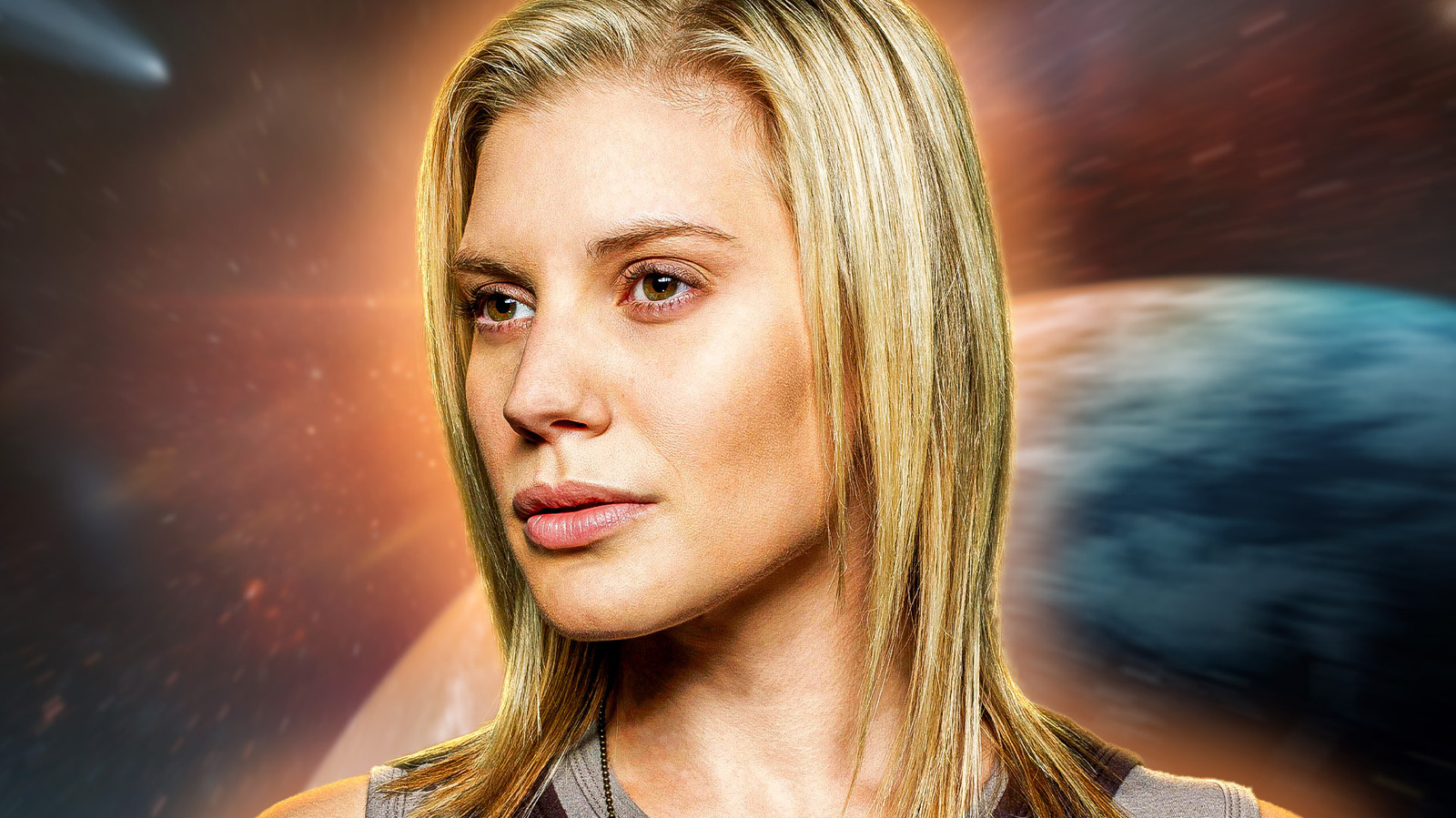


If the finale of “Stranger Things” demonstrated anything, it is how difficult it has become for a major science-fiction series to deliver a universally accepted ending in the social media era. Millions of viewers now scrutinise every clue, theory, and Easter egg throughout a show’s run. “Stranger Things” represents an especially extreme example — its divisive conclusion left some fans certain that it could not be the true finale, while others believed the apparent plot holes pointed to a more conventional ending still to come. Yet even that controversy has not produced quite the same long-running arguments and critical reassessments as the five shows featured here.
This selection leaves out series that were already losing the goodwill of their audiences before the finale arrived — was the ending really the biggest problem with “Heroes”? — as well as shows that later continued through reboots, including “The X Files.” A few titles below received loose follow-ups, but those later additions never fully addressed the questions left hanging. For that reason, they are treated as afterthoughts rather than definitive conclusions.
The shows appear in alphabetical order rather than by ranking. Many other divisive sci-fi finales could have made the cut, but these stand out for taking especially daring creative risks and inspiring fascinating fan debates over the years. Even viewers who dislike the results can still recognise the ambition behind what the creators were attempting.
ALF
Not every controversial ending was designed to serve as a true series finale. That is certainly the case with “ALF,” the much-loved NBC sitcom from the late 1980s. Its bleak final episode was written as a cliffhanger leading into a planned fifth and final season, and the original broadcast even ended with a “to be continued” message. Falling ratings changed those plans, however, and NBC cancelled the comedy before viewers could learn what happened to the wisecracking Melmacian alien. After four seasons of hiding from the Alien Task Force, ALF was finally captured.
The episode initially suggested that ALF might leave the Tanner family after receiving a radio transmission from fellow Melmacians. But just as he was about to be rescued, their spacecraft abandoned him. The final image showed ALF standing alone in fading light while uniformed agents moved in to take him away.
A tearful goodbye between ALF and the Tanner family made the episode feel like a deliberate farewell, but the show’s cancellation unexpectedly turned that cliffhanger into the ending audiences got. Later that year, “The Fresh Prince of Bel Air” filled its NBC time slot, and fans waited six years for any kind of follow-up. The television movie “Project: ALF” finally offered one, but it removed the Tanner family — who had supposedly relocated to Iceland — and replaced the sitcom’s familiar dynamic with an unlikely storyline involving an assassination plot. For viewers who had waited years for proper closure, it was hardly a satisfying finale.
Battlestar Galactica
The three-part “Battlestar Galactica” finale took one of the most dramatic creative turns on this list. “Daybreak” began as a desperate operation to rescue Hera Agathon (Iliana Gomez-Martinez) from the Cylons, but gradually expanded into an apocalyptic and supernatural conclusion. The mission was already carrying enormous consequences for humanity, while Kara “Starbuck” Thrace (Katee Sackhoff) remained at the centre of an unresolved mystery after dying and inexplicably returning. The story built toward a chaotic confrontation in which nuclear weapons were accidentally fired at the Cylon Colony. Starbuck was then told she could take the ship anywhere, rather than follow their enemies into a black hole.
Using the melody of Bob Dylan’s “All Along the Watchtower” as a set of coordinates — a callback to an earlier moment in the series — Starbuck guides the Battlestar to Earth 150,000 years in the past. The survivors choose to abandon their technology and join primitive humans, setting humanity on a new path. Starbuck, meanwhile, simply vanishes. An epilogue reveals that modern humans carry both human and Cylon DNA as a result of this extraordinary reshaping of history.
The conclusion is undeniably ambitious, but many fans felt it abandoned the show’s carefully grounded military science-fiction approach. The suggestion that a higher power had guided the survivors to their destination struck some viewers as too mystical. Creator Ronald D. Moore maintained that this had always been the intended ending, arguing that the series had long explored ideas involving angels and demons. For others, however, that supernatural turn felt like a sharp departure from everything that came before.
Lost
“Lost” had already generated plenty of disagreement before its sixth season, but the arrival of what showrunner Damon Lindelof called “flash-sideways” made the final debate even more intense. These scenes depicted an alternate reality in which the characters had never boarded Oceanic Flight 815, setting up the most contested element of the 100-minute finale. After years of arguments over whether everyone had been dead all along, “The End” confirmed that the island events were real. Jack (Matthew Fox) dies and enters an afterlife, which turns out to be the world shown in the flash-sideways sequences. Rather than solving every island mystery, the finale placed greater emphasis on repairing relationships, ultimately leading to Jack’s emotional reunion with his father.
For a fan base that had spent years analysing every clue, emotional resolution was not enough for everyone. A post-credits montage of the deserted plane wreckage, added after an ABC request, only revived the theory that the characters had been dead from the beginning — precisely the interpretation the finale had tried to dismiss. The footage was intended merely to create extra time between the ending and the return of commercials, but it became another source of frustration.
Among the finales featured here, “Lost” has perhaps undergone the greatest critical rehabilitation, with many viewers now defending it as a misunderstood masterpiece. Still, its character-focused conclusion was bound to confuse audiences who had expected a lore-heavy series to resolve more of its mysteries.
Mr. Robot
With an extraordinary 9.8/10 rating on IMDb, “whoami/Hello, Elliot” is the only finale in this group that seems to have won over almost the entire fan base. However, when the two-part ending aired on USA Network in December 2019, “Mr. Robot” initially appeared to be following the same path as the “Lost” finale — one that required time before its reputation could fully recover.
Fans on the show’s subreddit have noted that creator Sam Esmail originally conceived the story as a film script, meaning the final twist had been carefully planted from the beginning. That design becomes even more rewarding on a rewatch. At the time, though, some viewers were unsettled by the unanswered plot threads and the decision to move the final two episodes away from the show’s established cyberpunk hacker-thriller format.
The finale reveals that the Elliot audiences had followed for four seasons, played by Rami Malek, is actually one of the dissociative identities belonging to the real Elliot, who has not been in control. Once the cybercrime and corporate-espionage elements fall away, the story becomes an intimate examination of trauma and dissociative identity disorder without reducing either to a simple plot device. Like “Lost,” the series chooses emotional resolution over answering every remaining question. Its standing has improved considerably, but that sudden shift was still a bewildering way to conclude such a densely layered show.
Quantum Leap
NBC was not the only network to leave a sci-fi story stranded at a cliffhanger. Years after “ALF,” “Quantum Leap” ended with another bold twist that was never intended to serve as a finale. The beloved series followed Dr. Sam Beckett (Scott Bakula), a time traveller who repeatedly inhabited other people’s bodies in an effort to “put right what once was wrong.” The central tragedy was that Sam could not return to his own era. Then “Mirror Image” revealed that he had been making those leaps by choice all along — a revelation that was both moving and deeply unsettling as the show’s final broadcast.
In the episode, Sam returns to an earlier version of his own body for the first time and tries to prevent the wife of his best friend, Al (Dean Stockwell), from being unfaithful. Had the story been planned as a conclusion, it might have worked as a poignant final chapter. But the writers expected the show to continue, leaving several major threads unresolved. After NBC cancelled the series once production had finished, the creators had to attach a last-minute title card because the planned closing scene — one that would have led into another season — had already become unusable.
Even the replacement message contained an unfortunate error: it stated that “Dr. Sam Becket never returned home,” misspelling the name of the protagonist viewers had followed for five seasons. The episode clearly contains the makings of a daring finale that completely reinterprets the show’s premise, and its supporters argue that this bold idea gives “Mirror Image” lasting power despite the abrupt execution.