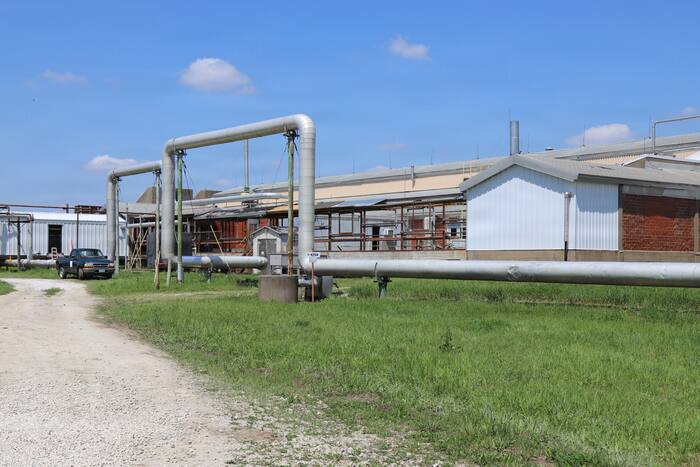

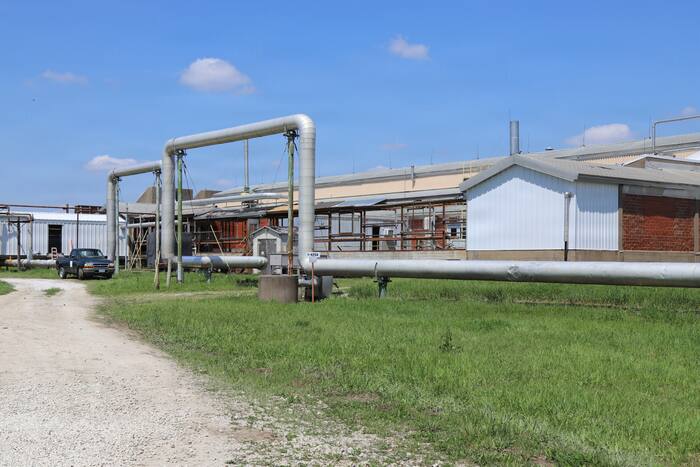
WASHINGTON – President Donald Trump said Monday that he would leave it to a federal appeals court to decide whether the administration can proceed with plans to destroy several tons of deteriorated bomb-making material at an Iowa ammunition plant.
The Army originally scheduled the detonation of 68 barrels of lead azide for Friday. The operation has since been rescheduled three times amid growing public concern over potential health and environmental consequences. Officials most recently targeted Wednesday, citing favorable weather conditions.
The Army did not immediately respond to a request for comment about Trump’s social media statement. Environmental groups filed a lawsuit last week seeking to block the operation, and an appeals court issued a stay while it considers whether an emergency permit granted by the U.S. Environmental Protection Agency was legally valid.
Trump says he would blame incoming governor for any “death or destruction”
“I feel the proper course is to get rid of this longterm problem but, at the same time, have ordered the Military not to do so until such time as the Eighth Circuit agrees that we can go forward,” Trump wrote.
Trump said that if incoming Gov.-elect Rob Sand and the court oppose the plan, the administration would have no choice but to abandon the detonation. He added that he would hold Sand responsible for “any and all death or destruction caused by this very unfortunate, and longterm, situation.”
In a social media post Sunday, Sand said earlier decisions had left officials with few workable choices. “No good options exist and the situation is more dangerous and unpredictable than it ever should have been,” he wrote.
Sand also asked why a contract intended to eliminate the explosive hazard had been canceled, why the material remained unaddressed and “why we are rushing to demolition now in late November.”
“The safety of Iowans should be the top priority of everyone involved,” he said. “All relevant federal, state and local government resources should be focused on protecting everyone that could be impacted.”
Residents remain uncertain as detonation plans shift
Residents around Middletown, home to the Iowa ammunition plant, have been sealing windows and doors as a precaution against lead dust that could be released during the blast. People living farther away have also voiced concern online about how changing winds could carry a potential plume.
Officials acknowledge that lead is toxic. They have advised residents to remain indoors during the detonation and rinse outdoor surfaces with water afterward to reduce the risk of exposure to lead particles.
Middletown Mayor Rodney Johnson said the operation needs to happen so the community can move forward.
“Improper storage and disposal is where things go wrong,” Johnson said on social media.
Rachel Rintelmann, an attorney for the environmental organization Earthjustice, said Monday that it was too early to determine how Trump’s order for the military to pause would affect the lawsuit.
“What I can say is that this post only adds further confusion to a situation that has already caused chaos in the lives of impacted communities,” Rintelmann said. “The people of Iowa deserve better than this.”
Army argues the plan is intended to prevent a greater danger
In court documents filed over the weekend, Army Col. Aaron Teller, a specialist in emergency munitions response, said the reduced amount of liquid inside the barrels makes the material more vulnerable to freezing. That, in turn, can increase the sensitivity of crystals that have formed along the inner rims and beneath the lids.
“Even a small amount of friction can break the crystal formation, causing an explosive chain reaction,” Teller wrote in a declaration submitted to the court.
Workers at the Iowa Army Ammunition Plant discovered several dozen barrels of deteriorated lead azide in March. The chemical is used in the production of munitions. As the material crystallized, officials determined that the barrels posed an unstable and potentially deadly threat, leading the Army to gather specialists in munitions chemistry, engineering and environmental safety to develop a response.
EPA records show that officials considered alternatives, including using other chemicals to neutralize and break down the contents. Authorities ultimately said opening or handling the barrels would raise the likelihood of an accidental and potentially fatal explosion.
Environmental groups challenged that assessment in court, saying the government had not adequately examined other options. They also faulted officials for failing to provide the public with sufficient information about the danger and proposed response.
Officials maintain that the threat of an uncontrolled blast is increasing, especially as temperatures fall. They warn that the chemicals could become more likely to explode as forecasts call for temperatures below 30 degrees Fahrenheit (-1 Celsius) in the coming days.


