

Ketchup Entertainment
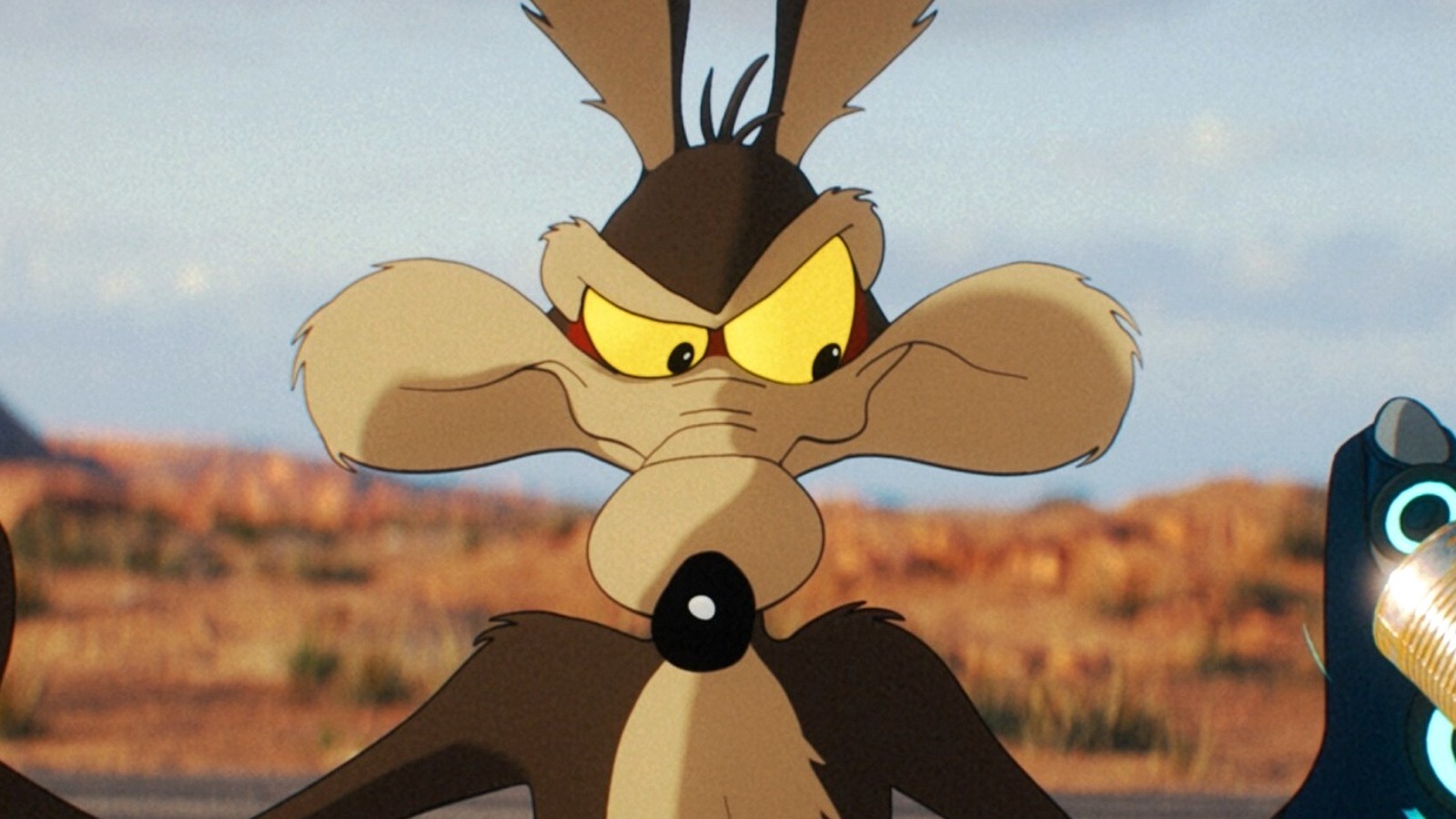
After nearly disappearing altogether, “Coyote vs. Acme” finally reached audiences three years after its planned summer 2023 debut. The long-delayed Looney Tunes adventure quickly became a fan favorite. There was also a fitting bit of irony in its success: a story about an underdog battling a powerful corporation that Warner Bros. once tried to bury ultimately earned more at the box office than several films released by the studio in 2026.
Because feature-length Looney Tunes films remain relatively rare, viewers may wonder what to watch next after “Coyote vs. Acme.” Fortunately, there are plenty of movies that tap into its blend of absurd comedy, unlikely heroes, corporate intrigue, and animated mayhem. From family-friendly conspiracy stories and live-action/cartoon hybrids to full-throttle slapstick and courtroom farces, these five films make ideal follow-ups for anyone who enjoyed the movie’s underdog spirit and flashes of wild imagination.
The Day the Earth Blew Up
Ketchup Entertainment
The Looney Tunes revival did not begin with “Coyote vs. Acme.” Daffy Duck and Porky Pig took center stage in 2024’s “The Day the Earth Blew Up,” a loving send-up of the science-fiction B-movies of the 1950s. It also holds a place in franchise history as the first fully animated Looney Tunes feature; before that, the characters had primarily appeared in shorts compilations and live-action/animation hybrids. The result was well worth the wait.
Built around traditional hand-drawn animation and a rapid-fire script from the team behind the overlooked “Looney Tunes Cartoons” shorts, the film delivers one joke after another with remarkable confidence. Every storyboard artist received a writing credit because the screenplay was packed with so many gags. Its classic visual style and comic rhythm make it feel like a long-lost Looney Tunes adventure, but that old-fashioned approach should not be mistaken for a lack of energy. The movie shows that these characters remain perfectly capable of connecting with a new generation.
The story begins when Daffy Duck and Porky Pig, both voiced by Eric Bauza, search for work after a UFO damages a hole in their roof. Their attempt to solve the problem quickly spirals into a chaotic battle involving an extraterrestrial threat. Running for 91 minutes, “The Day the Earth Blew Up” maintains its frantic pace without exhausting its audience. Alongside “Coyote vs. Acme,” it makes an entertaining double feature for fans of animated conspiracy adventures—and it proves Looney Tunes characters do not need a live-action crossover to shine on the big screen.
Who Framed Roger Rabbit
Disney
For a family-friendly mystery involving animation, noir, and a conspiracy, few films can compete with “Who Framed Roger Rabbit.” Robert Zemeckis’ 1988 classic clearly paved the way for movies such as “Coyote vs. Acme.” At the time, it was the most expensive animated production ever made, with its ambitious mix of hand-drawn characters and live-action performers helping redefine what visual effects could achieve. Its influence can be seen across nearly every subsequent film to combine the two mediums.
Yet the movie’s appeal goes beyond technical innovation. It works equally well as a loving tribute to Hollywood’s darker detective stories, updating film noir for audiences of every generation. Bob Hoskins anchors the chaos as Eddie Valiant, a weary private investigator who treats the cartoon-filled world around him with the seriousness of a “Chinatown” protagonist. He is hired to investigate rumors that Jessica Rabbit, voiced by Kathleen Turner, is being unfaithful to her husband Roger with the head of the Acme Corporation.
The film is more than a Looney Tunes-inspired mystery. Disney icons including Mickey Mouse and Donald Duck appear alongside Warner Bros. characters, creating a rare meeting between animation’s biggest rival studios. Hoskins’ grounded performance gives the outrageous premise a believable center, while the comedy captures the bold, mischievous spirit of classic cartoons. Decades later, “Who Framed Roger Rabbit” remains both a technical landmark and one of the best live-action/animation hybrids ever made.
Chip ‘n Dale: Rescue Rangers
Disney
The challenge with reviving cartoon characters from another era is finding a way to make them matter to today’s viewers. Screenwriters Dan Gregor and Doug Mand solved that problem by treating Chip and Dale as former Hollywood stars whose fame has faded. Taking inspiration from “Who Framed Roger Rabbit,” “Chip ‘n Dale: Rescue Rangers” places the pair in a world where animated characters live alongside humans and navigate the entertainment industry.
The two chipmunks have gone in very different directions since their television series ended. Chip, voiced by John Mulaney, has abandoned show business for a career selling insurance. Dale, played by Andy Samberg, has undergone CGI surgery and now makes a living on the convention circuit alongside such unlikely figures as Jar Jar Binks and “Ugly Sonic.” Their separate lives collide when former co-star Monterey Jack, voiced by Eric Bana, asks for help exposing a criminal operation that kidnaps cartoon characters and forces them to appear in overseas bootlegs.
After Monterey Jack vanishes, Chip and Dale reluctantly reunite to follow the clues, uncover the trafficking ring, and repair their fractured friendship. Directed by Akiva Schaffer, who previously delivered the music-industry satire “Popstar: Never Stop Never Stopping,” the film balances affection and parody with impressive ease. Its jokes reward longtime fans without shutting out viewers unfamiliar with the original show, making it a sharp, accessible spiritual successor to “Roger Rabbit.”
Hundreds of Beavers
Cineverse
Anyone looking for live-action filmmaking with the manic spirit of a classic Looney Tunes short should seek out the indie hit “Hundreds of Beavers.” Mike Cheslik’s wildly inventive, low-budget feature has developed a passionate following since premiering in 2022. The easiest way to describe it may be as Buster Keaton parodying “The Revenant” through the lens of a video-game playthrough.
Cheslik’s co-writer, Ryland Tews, stars as Jean Kayak, an applejack maker whose life is destroyed by the beavers that ravage his orchard. Hoping to make money by catching fish for a local merchant, Jean also falls for the merchant’s daughter. There is one condition attached to marriage: he must return with hundreds of beavers. What follows is an increasingly elaborate campaign of revenge and survival.
The film’s homemade charm only makes its absurdity more effective. Costumed performers—including Cheslik himself—play the enormous anthropomorphic beavers, while the story embraces every ridiculous turn. At one point, two beaver investigators modeled after Sherlock Holmes and Dr. Watson begin tracking Jean’s plans. Like the best Looney Tunes cartoons, the movie ignores ordinary rules of physics, nature, and common sense whenever a bigger laugh is available.
Even across its nearly two-hour runtime, “Hundreds of Beavers” rarely loses momentum. Its escalating gags eventually lead to a finale that is larger and more outrageous than many conventional action films. For viewers who want nonstop slapstick and inventive visual comedy after “Coyote vs. Acme,” this eccentric cult favorite is an ideal choice.
Bee Movie
Paramount
For another animated comedy built around an improbable legal battle, Jerry Seinfeld’s “Bee Movie” is difficult to beat. The once-mocked DreamWorks production found a surprising second life through internet memes during the 2010s, particularly among Gen Z and younger millennials. Over time, the irony gave way to a more genuine appreciation for the film’s strange, ambitious sense of humor.
The premise is as unusual as its reputation suggests. Barry B. Benson, voiced by Seinfeld, leaves his hive and takes legal action against human companies for profiting from bees and their honey. Along the way, he develops an unusually intimate friendship with Vanessa, a florist played by Renée Zellweger. It is the kind of high-concept story that seems almost too strange to exist, which makes its eventual place in pop culture all the more remarkable.
Viewers seeking courtroom comedy after “Coyote vs. Acme” will find plenty to enjoy in Barry’s lawsuit. The case becomes even more surreal when Sting and Ray Liotta, both appearing as themselves, take the stand while facing accusations of exploiting the bee population. Beneath the bizarre jokes, however, the movie carries an environmental message without becoming overly preachy.
Few major animated studio releases have embraced such an unmistakably odd tone. Now that the initial shock surrounding its premise has faded, “Bee Movie” can be appreciated on its own terms: as an eccentric, irreverent courtroom comedy that turns an unlikely insect hero into a champion for his entire species.


