
If a spider darting across the floor is enough to make you recoil, you may want to stop reading here.
A major study has exposed the remarkable range of small creatures living in our homes, with spiders, ladybirds and moths ranking among the most frequent indoor visitors.
Researchers have assembled what they call the most extensive catalogue yet of indoor wildlife, identifying more than 2,000 species living alongside people.
The findings show that homes are anything but sterile. Instead, they contain busy, largely invisible ecosystems that most residents rarely notice.
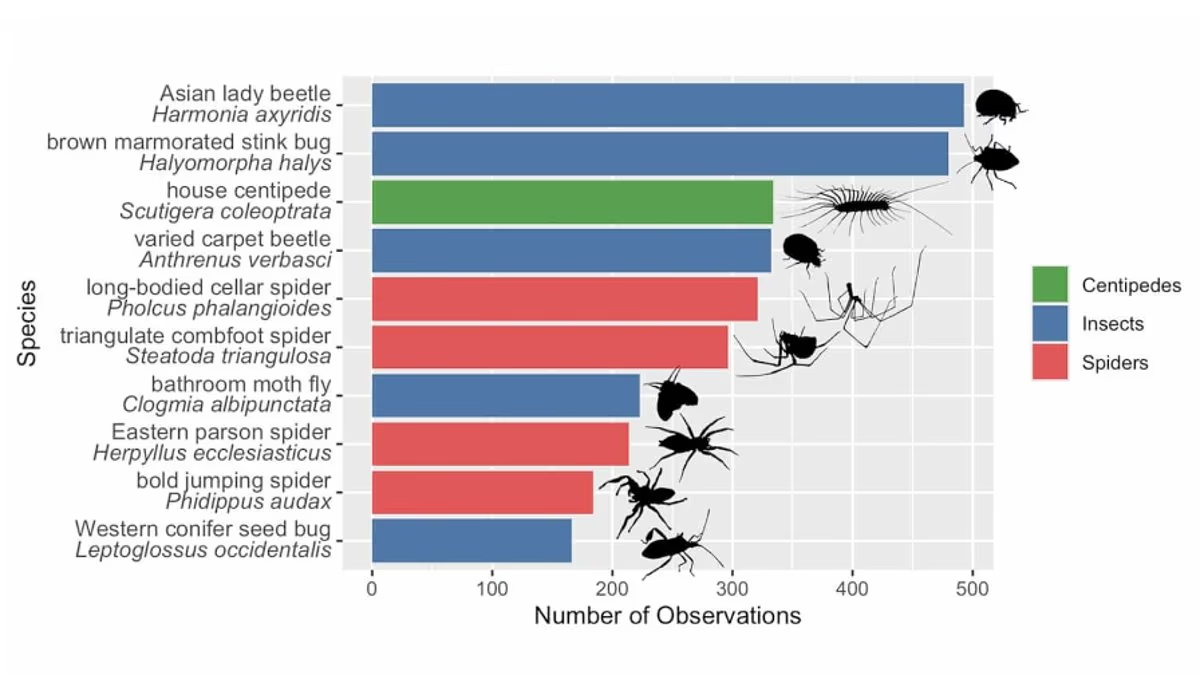
The species recorded most often included Asian lady beetles, known as ladybirds in the UK, house centipedes and a broad assortment of spiders.
Many of these animals appear to remain indoors throughout the year, even though homeowners seldom encounter them.
‘We know remarkably little about the ecosystems of man-made, indoor environments,’ Bradley Allf of North Carolina State University said.
‘One of the things that was striking was how common predator species were – including hundreds of different spider species.’

A major study has revealed the extraordinary variety of small creatures living in homes, including spiders, ladybirds and moths


The harlequin ladybird was the most frequently recorded indoor species. It has also spread widely across Britain since arriving in 2004
Published in the journal Ecology, the project analysed nearly 24,000 observations submitted by members of the public in the US and Canada.
Volunteers were asked to photograph wild organisms found inside homes, offices and other enclosed spaces.
The photographs were uploaded to the citizen-science platform iNaturalist, then reviewed by experts to confirm the species identifications.
The harlequin ladybird emerged as the most commonly recorded indoor creature. The species has also become widespread across Britain since it first arrived in 2004.
These beetles are larger than native ladybirds and can bite when handled, sometimes leaving a red mark.
This autumn, homeowners across the UK reported unusually large gatherings of the insects inside their properties.
The survey also recorded hundreds of spider species, making predatory arachnids one of the most prominent groups found indoors.
Among them was the long-bodied cellar spider, often known in the UK as the daddy long-legs spider.


The long-bodied cellar spider (left), also found in the UK, was among the most common indoor species. The bathroom moth fly, or drain fly (right), was another frequent sighting
These spiders are found almost exclusively indoors, where they benefit from warm, steady temperatures and feed on insects in the home.
The bathroom moth fly, also known as the drain fly, was another common discovery and can thrive year-round in centrally heated houses.
The flies reproduce in the organic sludge and stagnant water that collect inside drains and damp pipework.
The varied carpet beetle, a tiny insect whose larvae damage natural materials including wool and silk, was also among the species recorded most often.
Experts say the results underline how little people know about the wildlife living beneath their own roofs.
‘Another thing that is striking about this work is that most people could look over a list of the most commonly found species and wouldn’t know what most of those animals even are – and yet they are around us, all the time,’ Professor Rob Dunn, the paper’s senior author, said.
‘This is a stark departure from what we would have expected historically, when our ancestors would have been more aware of the living things around them.
‘That’s something we lost. And this is a first step toward regaining that understanding.’
The researchers said the database could provide scientists with a baseline for tracking how indoor ecosystems change over time.
The arrival of new species, or the disappearance of existing ones, could then prompt further investigation.


