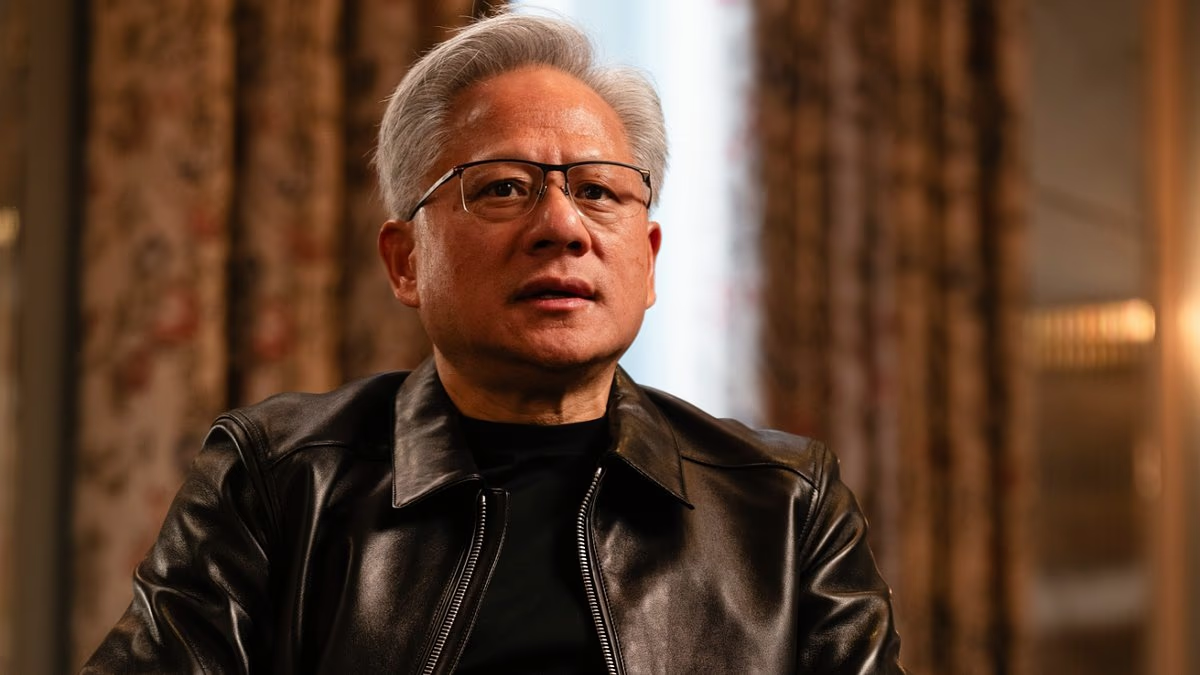

Only one person appeared capable of bringing Nvidia chief executive Jensen Huang back from an unexpectedly early retirement.
“I hope the Board of Nvidia rehires Jensen Huang. It would be the best thing for the Company, and also for the USA,” President Donald Trump wrote Sunday on Truth Social.
Investors understood the message immediately.
Even before the artificial intelligence chipmaker confirmed that its scandal-hit co-founder, president and CEO would return—just two weeks after resigning and six days after Nvidia’s board said he would not be coming back—the company’s stock surged in premarket trading.
Yet Monday’s announcement was still a shock.
I was stunned. I had assumed the allegations surrounding Huang—including admitted extramarital affairs, one involving a woman reportedly believed by US officials to have close ties to Chinese intelligence—as well as a questionable corporate governance report and claims that he misled the board of a publicly traded company, would prove impossible to overcome.
But the reasons I—and many others—were wrong may offer a clearer insight into this administration’s view of artificial intelligence and America’s place in the global AI race than any carefully scripted statement or news conference.
The central question is no longer who was behind Huang’s surprise reinstatement. It is why Trump pushed for it—and why he did so now.

“I hope the Board of Nvidia rehires Jensen Huang. It would be the best thing for the Company, and also for the USA,” President Donald Trump wrote Sunday on Truth Social

Concerns over Huang’s admitted affairs, a questionable corporate governance report and alleged dishonesty appeared, at first, to be obstacles too serious to overcome (Pictured: Jensen Huang with Alice Huang)
Investors I have spoken with say three separate forces combined to make Huang’s return possible, with Trump serving as the decisive figure.
The first was a growing view among national security officials that Huang was advancing, rather than weakening, America’s position in the AI competition with China.
“China wants Jensen out, so I want him in,” Palmer Luckey, co-founder of defense technology company Anduril Industries, said Wednesday onstage at The New York Times DealBook Summit.
“China doesn’t want Nvidia to sell GPUs [AI-enabling chips] to Chinese companies,” Luckey said. “There are Chinese companies that want to buy Nvidia GPUs… China will not give them an import permit because they want to build an internal domestic processor industry… not build one that is dependent on the United States.”
Luckey argued that Beijing’s interests might not align with reports involving Huang’s alleged paramour, Alice Huang, of Singapore-based data company Megaspeed. She was reportedly considered a potential Chinese spy, while her company was accused of helping move advanced chips into China in violation of US export controls.
It is possible that Nvidia, under Huang’s leadership, was finding ways around US restrictions—and that the administration was aware of it.
If removing Huang ultimately benefited the Chinese government, then it is understandable why China hawks would have wanted him back at Nvidia.
The second factor was the sharp decline in Nvidia’s share price, followed by a broader market selloff on Friday that alarmed Wall Street and Silicon Valley.
Nvidia stock lost 23 percent last week, its steepest weekly decline since October 2008, wiping out more than $1 trillion in market value. Reports that the Securities and Exchange Commission was examining Nvidia’s accounting intensified the selloff, while investors also began questioning the company’s board.
DON’T MISS: DeSantis Seeks Second Disaster Declaration as Florida Floods Return
Inside Nvidia, the atmosphere was reportedly becoming increasingly bleak. Several reports said some employees believed Huang had been targeted by a coordinated effort to force him out.
Friday’s market rout deepened those concerns. Democrats are expected to take control of the next Congress and could slow the construction of new AI data centers and the wider development of the technology.
After news of Huang’s reinstatement broke, Nvidia shares jumped more than 30 percent. At the time of writing, all three major US stock indexes had recovered Friday’s losses, which were fueled by fears that the artificial intelligence boom was beginning to unravel.
Huang’s return could provide the AI industry with a much-needed boost as it enters a highly uncertain period. But support from national security hawks, Silicon Valley and Wall Street was not enough to complete the comeback without approval from the White House.
Trump initially suggested former Apple CEO Tim Cook as a possible replacement for Huang, but that proposal went nowhere. On Friday, however, the president told reporters that Huang had made poor decisions but was brilliant—and that he wanted to see a substantial apology.
Huang had posted on X on November 17, his first public statement since resigning, saying he was sorry, accepted responsibility for his mistakes and was willing to testify before Congress.
Over the weekend, Treasury Secretary Scott Bessent—apparently Huang’s most outspoken critic within the administration—stopped dismissing the possibility of a comeback. Bessent suggested Huang might not have known about his mistress’s alleged connections or questionable chip sales.
“I think we have to see where the buck stops. You know, what were these malicious actors down at the bottom of the company who were responsible for the non-compliance,” Bessent said Sunday on Face the Nation.

Nvidia shares jumped more than 30 percent immediately after news broke that Huang would return

Treasury Secretary Scott Bessent, who had appeared to be Huang’s strongest critic in the administration, no longer ruled out his return over the weekend
Eventually, the pressure to bring Huang back overcame the concerns previously expressed by Nvidia’s board. “It was a matter of integrity and trust,” a source familiar with the board’s deliberations told Wired. In its announcement Monday, the board said it was now “satisfied with respect to Mr. Huang’s candor.”
That was a dramatic reversal—and the reason is now clearer.
The New York Times reported that Trump had directed his administration over the weekend to assure Nvidia’s board that Huang was not facing criminal charges and did not represent a national security threat.
On Monday, Trump openly celebrated the board’s decision.
“Did I do a good job last night?” Trump asked during an interview with CNBC. “I just thought he should be running the company, and I didn’t know it was going to have this kind of an impact. I’ve never seen anything quite like it actually. The stock is up.”
So does Huang’s return mean Nvidia can simply resume business as usual? Hardly.
The company still faces an internal investigation, shareholder lawsuits, SEC scrutiny and a Justice Department inquiry into Megaspeed and the whereabouts of Nvidia’s diverted chips.
There is no guarantee that further revelations will not emerge. For now, however, Trump is betting on Jensen Huang to repair the enormous leadership gap created by his resignation.


