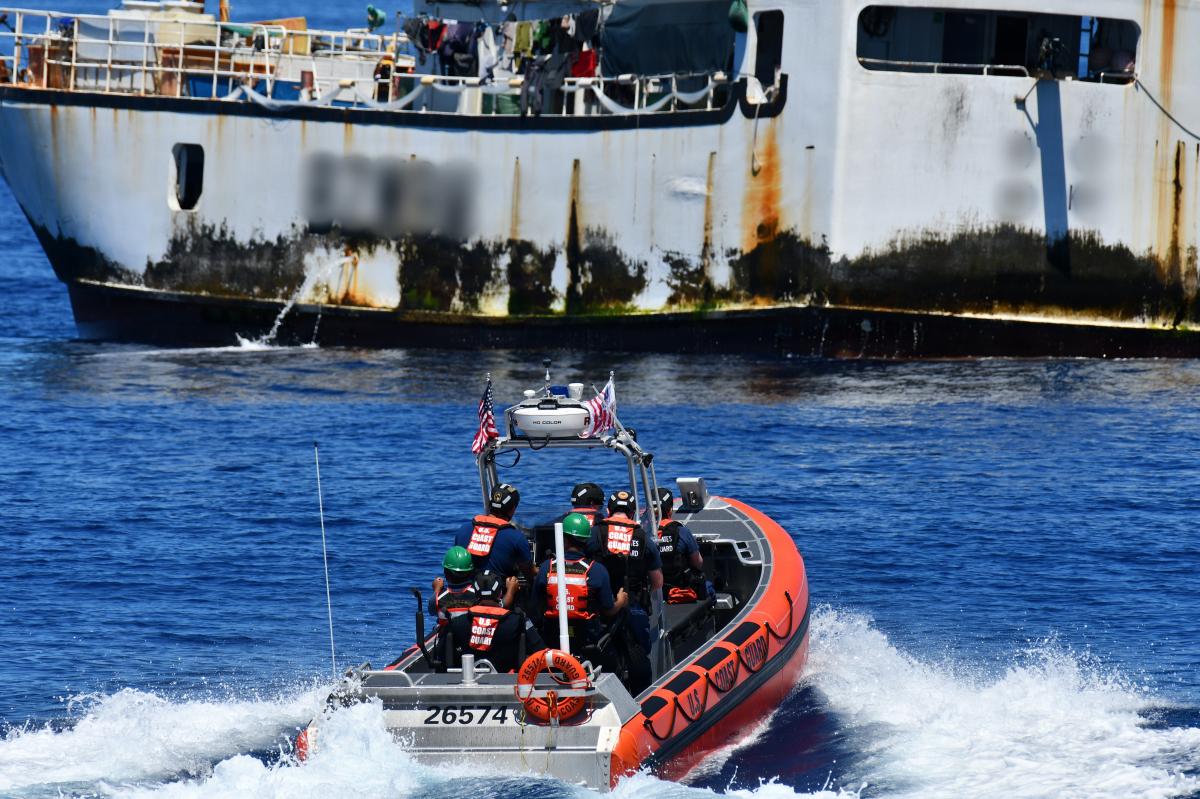
The U.S. Coast Guard sent specialized cyber teams aboard two foreign-flagged commercial vessels headed for American ports in August after receiving indications that their networks had been breached by “foreign cyber actors,” a Coast Guard spokesperson told Fox News Digital Monday.
The offshore interventions occurred Aug. 21 and Aug. 24 in the Gulf of America. Authorities addressed the suspected threats before either ship reached a U.S. port.
The Coast Guard’s confirmation followed a Wall Street Journal report that federal authorities are examining possible Iranian involvement in dozens of cyberattacks against energy tankers.
“The U.S. Coast Guard (USCG), in close coordination with the Federal Bureau of Investigation (FBI) and federal cybersecurity experts, recently conducted joint offshore security boardings of two inbound foreign-flagged commercial vessels in the Gulf of America,” the agency spokesperson said.
“The measures were designed to ensure the integrity of the vessel’s operational and information technology systems following indications that the networks of both vessels were compromised by foreign cyber actors.”
A specialized team comprising law enforcement officers, Coast Guard Cyber Protection Team members, a vessel inspector and FBI Cyber Action Team operators boarded the first ship on Aug. 21 to assess the suspected breach, officials said.
“The captain, crew and shore-side corporate staff were critical partners in helping to ensure the threats were mitigated,” the spokesperson said.
The Coast Guard carried out a comparable multiagency boarding and safety verification operation aboard the second vessel on Aug. 24, also in the Gulf of America.
Officials reported no interruptions to operations, loss of vessel stability, danger to crew members or environmental damage.
The Coast Guard said it is working with port operators, vessel owners and other local maritime partners to keep port activity safe and uninterrupted.
CHECK THIS OUT: Man Could Face Prosecution Over Baby’s Death 16 Years After Shaking
The Wall Street Journal reported that the attackers exploited weaknesses in Fortinet networking equipment. The suspected cyber campaign prompted the Coast Guard boardings after crews received bomb threats warning that “traitor ships will burn in hell.”
U.S. officials told the newspaper that as many as 50 vessels may have been targeted, including ships carrying oil, liquefied petroleum, chemicals and other potentially explosive cargoes.
A European shipping executive separately said officers received threatening messages on their cellphones.
A ransom note sent to the captain of the Liberian-flagged supertanker Prosperity, which was carrying roughly 2.3 million barrels of oil, characterized the operation as a “planned execution.”
Hackers also reportedly penetrated the propulsion and navigation systems of one vessel. The breach disrupted communications for approximately 30 hours, forced the crew to rely on manual procedures and potentially delayed energy deliveries to Asia and Europe.
“The Marine Transportation System is vital to America’s economic prosperity and national security, and safeguarding it against potential cyber risks is a standard part of the United States Coast Guard’s safety and security mission,” the spokesperson said.
“Just as we monitor for mechanical or weather-related hazards, we incorporate cyber risk management into our routine, professional approach to facilitating commerce and ensuring safe vessel transits into and from our ports and waterways.
“While confirmed cyber disruptions in the maritime domain remain uncommon, even isolated technical issues can cause avoidable commercial delays.
“We encourage all maritime stakeholders to leverage Coast Guard Cyber Command’s free, non-regulatory technical resources to maintain strong digital hygiene and report any suspected anomalies to the National Response Center,” the spokesperson added.