
Yemen’s military says it is preparing to defeat the Iran-backed Houthis and reclaim one of the world’s most important maritime chokepoints. Officials warn that Tehran is directly involved in planning and directing the conflict, raising the stakes well beyond Yemen’s borders.
During an on-the-record briefing Tuesday attended by News Outlet, Col. Majed Abdullah Al-Nuzaily, spokesman for the Yemeni Armed Forces, acknowledged recent battlefield reversals but said government troops were ready to respond to the Houthi advance.
“This is not a conventional battle against an isolated local armed group,” Al-Nuzaily said. “What we have seen on the battlefield proves that we are not facing the Houthis alone. This is an Iranian battle: Iranian in its weapons, in its planning and command, and in its direction and timing.”

Members of Saudi-backed Yemeni government forces respond during what they described as clashes with Iran-aligned Houthi fighters near Al-Hazm, Yemen, in this still from a handout video released Sept. 9, 2026. (Media Centre Of The Yemeni Armed Forces/Handout via Reuters)
Al-Nuzaily said foreign supply networks had equipped the Houthis with ballistic and cruise missiles, advanced drones and electronic-warfare systems. Those capabilities, he said, allow the group to threaten neighboring states and international shipping. “Iran is the Houthis’ patron, their godfather,” he said.
Yemen’s Interior Ministry has identified 21 foreign specialists allegedly operating alongside the Houthis, according to Al-Nuzaily. The group reportedly includes 14 members of Iran’s Islamic Revolutionary Guard Corps and seven Hezbollah operatives involved in missile and drone missions, attacks at sea and the selection of commercial vessels as targets. “And we have the evidence to prove it,” he said.
The briefing took place as government forces came under increasing pressure from the Houthis. Al-Nuzaily said the group now controls the coastline bordering the Bab el-Mandeb Strait as well as Mayyun Island, which lies in the strategic passage linking the Red Sea with the Gulf of Aden.
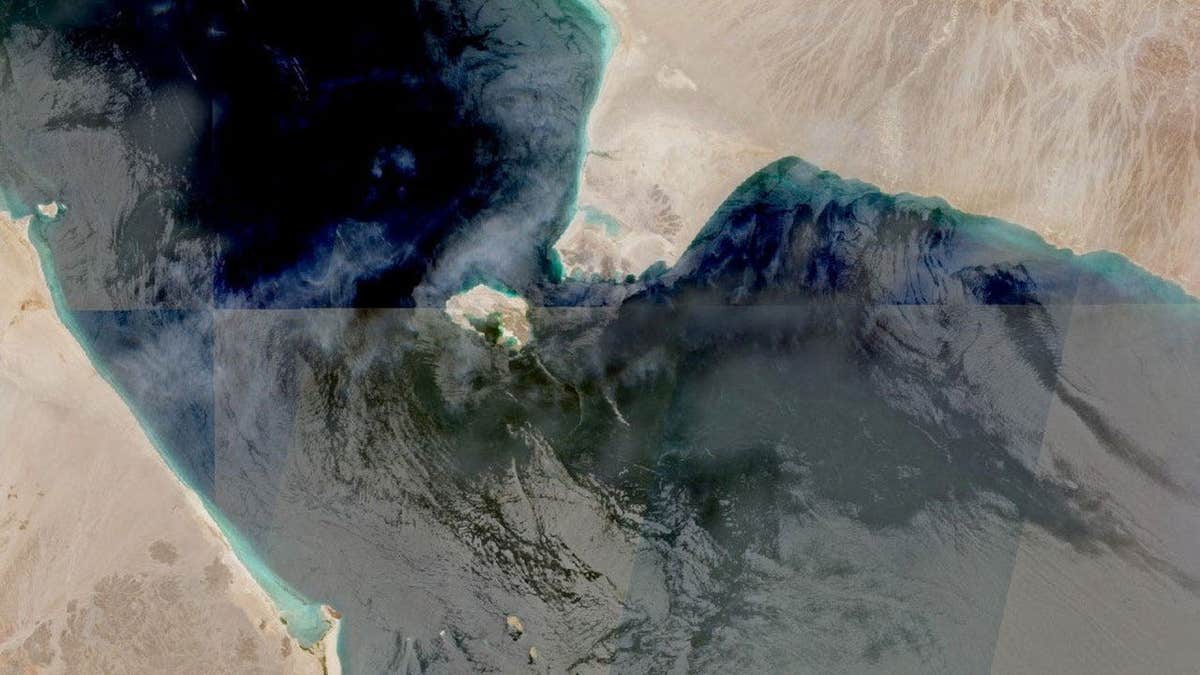
Satellite imagery depicts the Bab el-Mandeb Strait, a vital shipping route and gateway to the Red Sea, as Iran threatens to use its Houthi allies to close the passage, in an image dated July 12, 2026. (NASA Worldview/Handout via Reuters)
“Bab el-Mandeb remains a priority. We retook it once in a matter of days. We will retake it again, and next time we will hold the mountains as well as the shore,” he said.
Al-Nuzaily said Tehran regards control of the waterway as a means of gaining leverage over Washington.
“Control of Bab el-Mandeb is at the heart of Iran’s strategy. Together with the Strait of Hormuz, it gives Tehran another card to play in its confrontation with the United States, and a way to improve its terms at the negotiating table.”
Yemeni officials also warned that the Houthis are building an increasingly broad terrorist network, including cooperation with Somalia-based al-Shabab. As a result, they said, any agreement between Washington and Tehran would not automatically remove the threat.
MUST READ: Six Family Members Killed in Mississippi Plane Crash
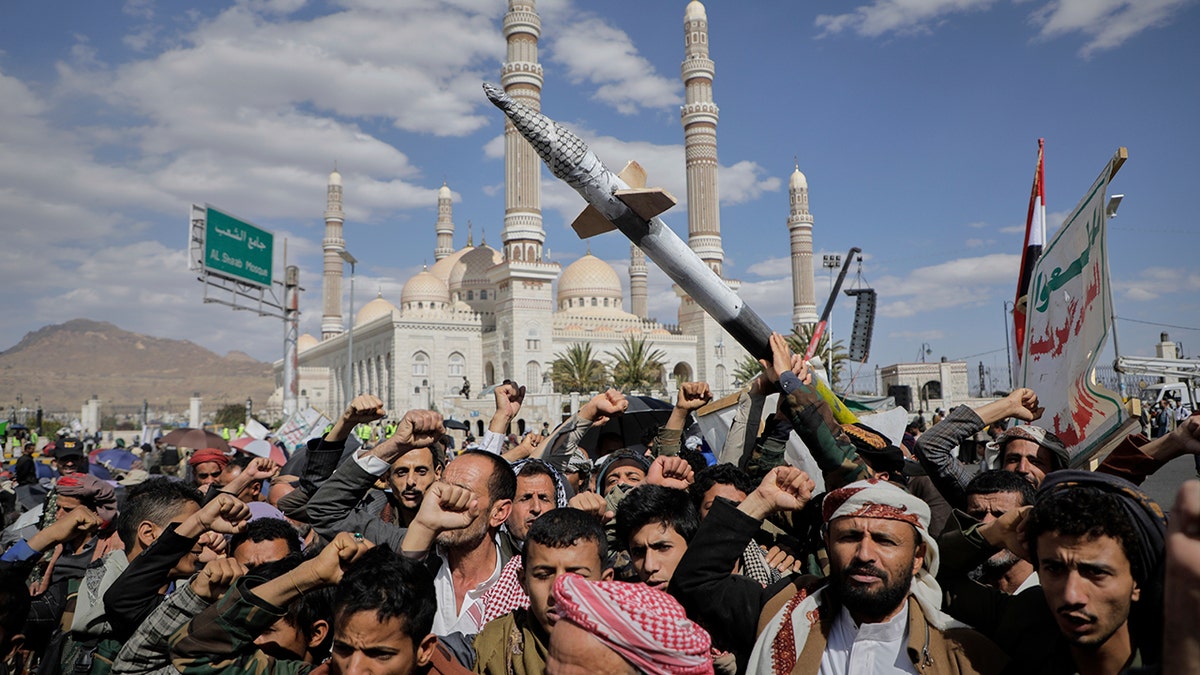
Houthi supporters chant during an anti-U.S. and anti-Israel rally in Sanaa, Yemen, on Monday, March 17, 2025. (AP Photo/Osamah Abdulrahman)
“When ISIS paraded a single missile, the world trembled – and took action. Today, the Houthis have thousands of ballistic and cruise missiles,” Al-Nuzaily said.
Ambassador Marwan Ali Al Noman, a political adviser to Yemen’s foreign minister, thanked the Trump administration for its support and for designating the Houthis as a terrorist organization. He also urged the international community to provide additional assistance.
“We are not asking anyone to fight this war for us,” Al Noman said. “We are asking for partners.”

Houthi supporters demonstrate in solidarity with Iran during a two-week ceasefire between the United States and Iran in Sanaa, Yemen, April 10, 2026. (Khaled Abdullah/Reuters)
Al Noman said Yemen needs military equipment, training, coast guard support and broader sanctions targeting the networks that provide the Houthis with weapons and financing.
Yemen began Operation Dawn of Yemen on Oct. 4. The campaign’s stated goals are to restore state institutions, recapture the capital, Sanaa, and end Houthi rule.
Government troops have encountered setbacks, including a withdrawal from Bab el-Mandeb earlier this month. Al-Nuzaily acknowledged that Houthi forces are about 37 miles from Aden, the seat of Yemen’s government, but maintained that the city remains secure and that military units now answer to a unified command.
“Some say this war cannot be won,” Al-Nuzaily said. “I say to them: you do not know the Yemeni people.”
“For 12 years, they have been told to accept the Houthis. For 12 years, they have refused. They have buried their sons and kept fighting. They have lost their homes and kept fighting. They will not kneel to men who rule by fear, who send children to die and who answer to Tehran rather than to Yemen.”
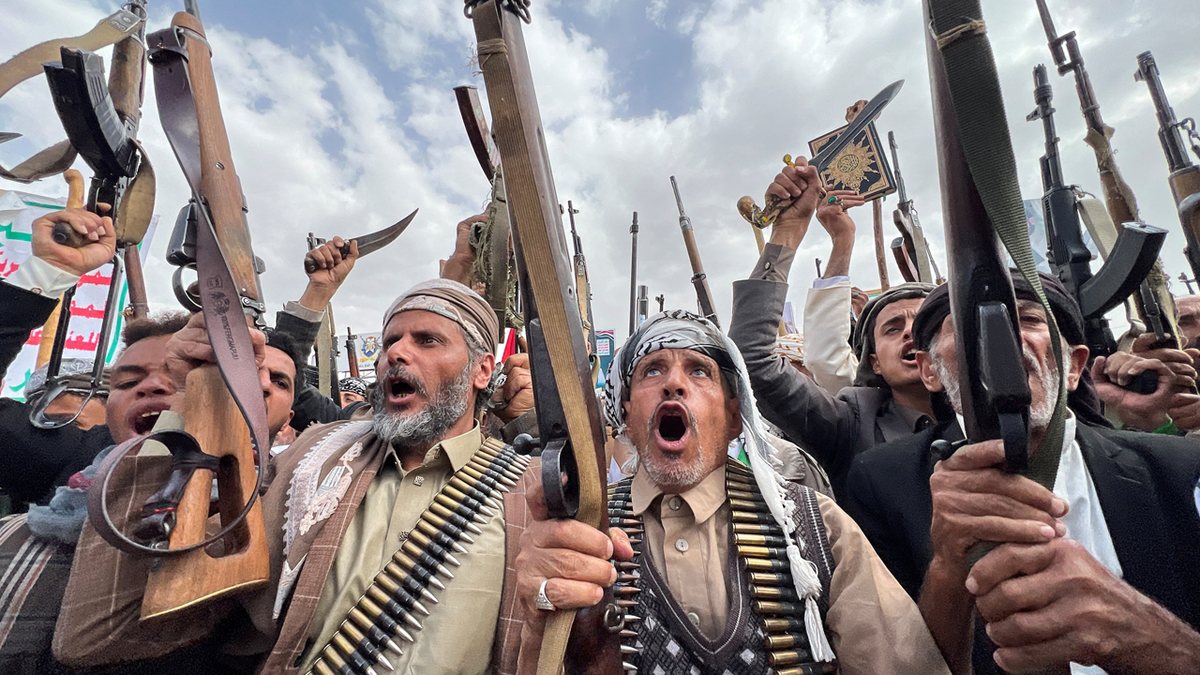
Demonstrators, most of them Houthi supporters, hold weapons during a Sanaa protest expressing solidarity with Palestinians in Gaza and condemning U.S. strikes in Yemen on May 30, 2025. (REUTERS/Adel Al Khader)
“Dawn has come to Yemen. It will not be turned back.”


