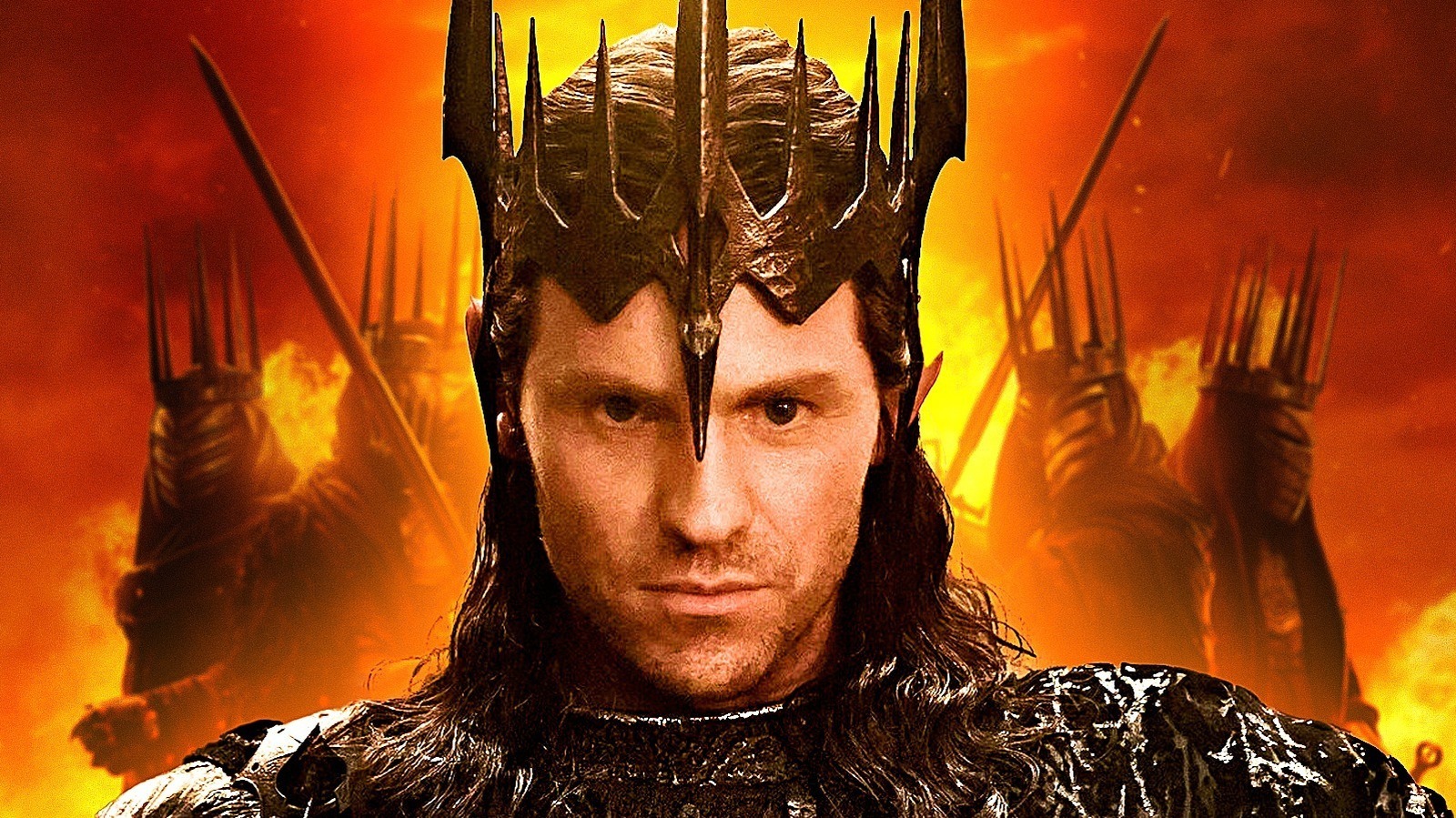


Spoilers ahead for “The Lord of the Rings: The Rings of Power” Season 3, Episodes 7 and 8 — “Orodruin” and “The Doom of Men”
“The Lord of the Rings: The Rings of Power” Season 3 has come to a close. After all eight episodes were released in less than two weeks, the series concluded with Episodes 7 and 8 arriving together as a sprawling two-part finale. The nearly two-hour conclusion had plenty of ground to cover, bringing more than a dozen major characters into position for Season 4.
That sheer volume of story makes the ending easy to lose track of. By the finale, Sauron (Charlie Vickers) has delivered Rings of Power to mortal men and forged the One Ring for himself. The Elves survive after Númenor’s army arrives at a crucial moment, but why does Sauron kneel before Ar-Pharazôn (Trystan Gravelle)? Elsewhere, a Wizard duel erupts, the Dwarves cast out their king, and a Balrog unexpectedly speaks.
The final two episodes leave behind no shortage of mysteries. Before examining what they could mean for Season 4, here’s a breakdown of the key events and storylines that led to the finale.
The essential Season 3 plot points to remember
Season 3 was positioned as a soft reboot, with showrunner Patrick McKay calling it “a great jumping-on point for fans.” A five-year time jump provided a natural reset, although the many changes introduced during the first six episodes could be disorienting.
At the opening of the season, the so-called “War of the Elves and Sauron” is raging. Sauron also spends much of the story handing out Rings of Power and creating the Nazgnagôl — early versions of the Nazgûl who possess the Nine Rings but have not yet become wraiths.
The Elves continue resisting Sauron’s expanding influence and his plan to forge a master Ring. That conflict sends Galadriel (Morfydd Clark) and Arondir (Ismael Cruz Córdova), alongside the renegade orc Marnûkh (Adam Young), to the bleak stronghold of Gundabad. Arondir dies during the mission, while Galadriel discovers that her long-missing husband, Celeborn, is still alive and is played by Jamie Campbell Bower.
As Galadriel and Celeborn attempt to rebuild their relationship and explain his long absence, Elrond (Robert Aramayo) consults High King Gil-galad (Benjamin Walker). He then travels to Númenor to seek human support. Instead, they encounter a kingdom on the edge of civil war. The conflict ends when Míriel (Cynthia Addai-Robinson) agrees to marry her first cousin, Pharazôn, uniting the rival factions. With Númenor temporarily settled, Pharazôn leads its combined fleet to Middle-earth to confront Sauron in the finale.
Season 3 also follows Gandalf, Rhûn, and the Dwarves
Although Sauron, the Elves, and Númenor drive the central conflict, the first six episodes also devote substantial time to other corners of Middle-earth. The Harfoots were removed from the season, but several major storylines still unfold away from the main war.
One follows Gandalf (Daniel Weyman) across the parched landscapes of Rhûn. Tolkien wrote relatively little about Rhûn, allowing the series to build its own portrait of the region’s wealthy yet unsettling, cult-like civilization.
Gandalf trains under Tom Bombadil (Rory Kinnear) and forms a connection with the Secret Fire, a manifestation of the Creator in Tolkien’s mythology. He also learns that he must help the Dark Wizard (Ciarán Hinds), a fallen version of Pallando, one of Tolkien’s two Blue Wizards. Pallando and the Nazgnagôl Khamûl capture Gandalf and take him west with their army to support Sauron’s campaign.
Khazad-dûm faces its own succession crisis. Durin (Owain Arthur) sits on the throne until his brother Thráin returns to claim it. Thráin is secretly working with Sauron and is searching for the Dwarven Rings of Power hidden by Durin. Fortunately, many of these separate plots finally converge during the two-part finale.
How The Rings of Power Season 3 ends
Episodes 7, “Orodruin,” and 8, “The Doom of Men,” bring the season’s biggest threads together. After capturing and torturing Celeborn, Sauron discovers that he needs sacred metal from the Undying Lands to complete the One Ring. The series adapts that non-canon detail through metal taken from the hammer of the ancient Elven smith Fëanor. Sauron also visits Moria’s Balrog to learn how to withstand extreme heat. Armed with that knowledge, he forges the One Ring in Mount Doom and places it on his finger.
Elsewhere, Thráin locates most of the Rings of Power and banishes Durin and his family from Khazad-dûm. Outside the kingdom, Durin discovers that one of his children secretly carried one of the Seven Dwarven Rings into exile.
In Númenor, Míriel and Elendil (Lloyd Owen) share a painful final kiss before Míriel marries Pharazôn. She accepts the marriage as a sacrifice intended to prevent civil war and protect her people.
Sauron makes a shocking surrender
Episode 8 begins with the One Ring complete and war spreading across Middle-earth. Pharazôn lands in Umbar with a formidable force, but Sauron’s army is even larger after reinforcements arrive from Rhûn with the Dark Wizard. Gandalf is among the captives. Sauron and Khamûl attempt to destroy the imprisoned Wizard’s resolve, but Gandalf restores Pallando’s goodness. The redeemed Wizard then dies fighting Khamûl.
Once freed from the Dark Wizard’s influence, his troops retreat to Rhûn, leaving Sauron’s forces badly weakened. When Pharazôn’s army finally confronts him, Sauron removes the One Ring and surrenders to the Númenóreans. The season closes on a tight shot of the Dark Lord kneeling before the laughing human king, a faint smile visible just before the screen goes dark.
That outcome sets up a host of questions for Season 4. The most important is whether Sauron’s apparent defeat is really a defeat at all.
What the Season 3 finale means for the Elves
The Elves finish Season 3 in a stronger position than expected, though danger remains. Sauron’s armies have been weakened, and their civilization is no longer facing immediate destruction.
The threat of the One Ring, however, has changed everything. When Sauron puts it on at the end of Episode 7, the wearers of the Three Elven Rings sense his presence. The moment echoes J.R.R. Tolkien’s account in “The Silmarillion”: “As soon as Sauron set the One Ring upon his finger they were aware of him; and they knew him, and perceived that he would be master of them, and of all that they wrought. Then in anger and fear they took off their rings.”
Season 4 may give Galadriel and Celeborn time to reconnect after being separated for what could amount to thousands of years. They may even move closer to the family future that eventually leads to the birth of Celebrían, who must grow up to become Elrond’s wife.
For now, the Elves have their Rings but are not wearing them, while Sauron is in Númenórean custody and appears to be without his own Ring. If he creates chaos in Númenor, returns to Middle-earth, and reclaims the One Ring, the Elves could quickly find themselves in peril again. A wider alliance may be their only answer.
What the Season 3 finale means for the Dwarves
The Dwarves’ storyline ends on a quieter but consequential note. Durin, Disa, and their children are expelled from Khazad-dûm, leaving Thráin in uncontested control. Their people now face threats on several fronts. Thráin is expected to hand the recovered Dwarven Rings to Sauron, who can distribute them among the Dwarf-lords. The Rings will not enslave Dwarves as completely as they do mortal men, but they will intensify greed and make cooperation against Sauron far more difficult.
Durin and his family seek shelter among the Elves. He is encouraged when he learns that his daughter smuggled one of the Seven Rings into exile, but possessing it raises immediate concerns. Will Durin use it? Could it give Sauron a way to influence him? And even if the Ring remains safe, can it help Durin reclaim Khazad-dûm or join the wider struggle against evil?
The finale leaves the Dwarves with more uncertainty than resolution. Tolkien offered little detail about them during this period, leaving J.D. Payne and Patrick McKay considerable room — and responsibility — to shape their Season 4 storyline.
The Wizards and Tom Bombadil’s next chapter
Rhûn remains one of the show’s most original storylines. Tolkien never placed Gandalf in the Second Age, so the events unfolding there are entirely the series’ creation. Even so, Season 3 provides a strong sense of closure for the eastern plot.
The Blue Wizards are the principal figures Tolkien associated with the region, and both are dead by the finale. Rhûn’s armies also return home. Gandalf heads back into the desert, reunites with Tom Bombadil, and begins traveling west with him.
That makes it possible that Rhûn’s role in “The Rings of Power” is largely complete. Khamûl the Easterling remains the notable exception. Zubin Varla’s character is still at large and could continue the eastern story in a future season. For now, the Blue Wizards are gone, Gandalf is heading west, and Tom Bombadil appears to be returning to his home and his wife, Goldberry, Daughter of the River.
Númenor emerges as a major power
Númenor spends much of Season 3 on the brink of civil war. Míriel, Elendil, and his sons lead the pro-Elvish Faithful against Pharazôn and the King’s Men. Before the factions can begin fighting, however, Pharazôn and Míriel settle the crisis in an unexpected way: They marry. The controversial union comes from Tolkien’s books, although there Pharazôn forces Míriel into the marriage.
Regardless of how freely she enters it, Míriel is now bound to Pharazôn, who rules a reunited Númenor at the season’s end. He controls a powerful army and navy — and has captured Sauron himself.
Númenor has often operated in the background, but Season 3 places it at the heart of the story. The finale demonstrates the kingdom’s strength when its factions unite. With Sauron now in its custody, Númenor is entering the most influential, glorious, and perilous era of its history.
Sauron’s surrender is part of a larger plan
Sauron has spent the series trying to dominate everyone around him. At the start of the finale, he appears unstoppable: He commands the largest army, possesses the One Ring, and has Wizards and kings serving his cause. Within a single episode, however, he is reduced to kneeling before his enemies.
That reversal comes directly from Tolkien’s mythology. Faced with Númenor’s overwhelming strength, Sauron understands that he cannot win through force, so he submits to the Númenóreans, also known as the Dúnedain. As “The Silmarillion” explains, “he saw not his time yet to work his will with the Dúnedain. And he was crafty, well skilled to gain what he would by subtlety when force might not avail.”
The smile that crosses Sauron’s face before the credits roll is the clearest warning that he has not truly lost. Rhûn’s forces have withdrawn, his Orcs are outmatched, and his war with the Elves has paused. But Sauron did not surrender because he was beaten. He made a calculated move in a much larger game.
Where all the Rings of Power stand after the finale
By the end of Season 3, all 20 Rings of Power have been forged and are in play. The final two episodes show where nearly every one of them ends up, setting the stage for the next chapter.
The Three Rings made for the Elven-kings are compromised at the close of Episode 7. Gil-galad, Galadriel, and Círdan (Ben Daniels) remove their Rings so they cannot be detected through the One Ring. The Elves still possess them, but they are no longer wearing them.
Thráin controls six of the Seven Dwarven Rings and intends to deliver them to Sauron. Durin retains the seventh, which will likely influence his next move. Most of the Nine Rings for Mortal Men are held by Sauron or worn by the Nazgnagôl, including Theo (Tyroe Muhafidin). Pallando briefly takes one in Episode 8, Gandalf receives it, and then gives it to Tom Bombadil, who makes it vanish. That sequence is not drawn from Tolkien’s canon, so its meaning remains unclear.
The One Ring is the biggest mystery. Sauron completes it in Episode 7, then removes it before surrendering to Ar-Pharazôn one episode later. The finale does not reveal where he leaves it. Tolkien wrote in a 1958 letter that Sauron possesses the One Ring when he travels to Númenor, but the details of where he keeps it and how he uses it remain uncertain. For now, the only confirmed fact is that the Ring is not on his finger when he submits.
What the Season 3 ending sets up for the franchise
Season 3 brings several major storylines to a close. Rhûn, the Dark Wizard, the conflict in Númenor, and the latest war in Middle-earth all reach turning points. The entire set of Rings of Power has now been forged, and the identities and alliances of the major players are clearer. Still, Season 4 inherits a long list of unresolved questions.
Prime Video confirmed before the finale that the series will return for Season 4. When J.D. Payne and Patrick McKay’s Second Age saga resumes, it may feel markedly different from the season that just ended. The story now moves from a Dark Lord at the height of his power to one who has deliberately humbled himself, a human king riding a wave of success, and a growing desire for power, glory, and immortality across the sea. The landscape may change, but the danger is only beginning.


