

Contains spoilers for “Blade Runner 2099”
The original “Blade Runner” and its sequel, “Blade Runner 2049,” are widely regarded as landmark science fiction films. Both movies pair richly imagined futures with philosophical questions about identity, consciousness, and what it truly means to be human. Their moody, noir-inspired storytelling also favors mystery and atmosphere over conventional action, creating a daunting standard for any continuation. Now streaming on Amazon Prime Video, “Blade Runner 2099” manages to honor that legacy while charting a new course.
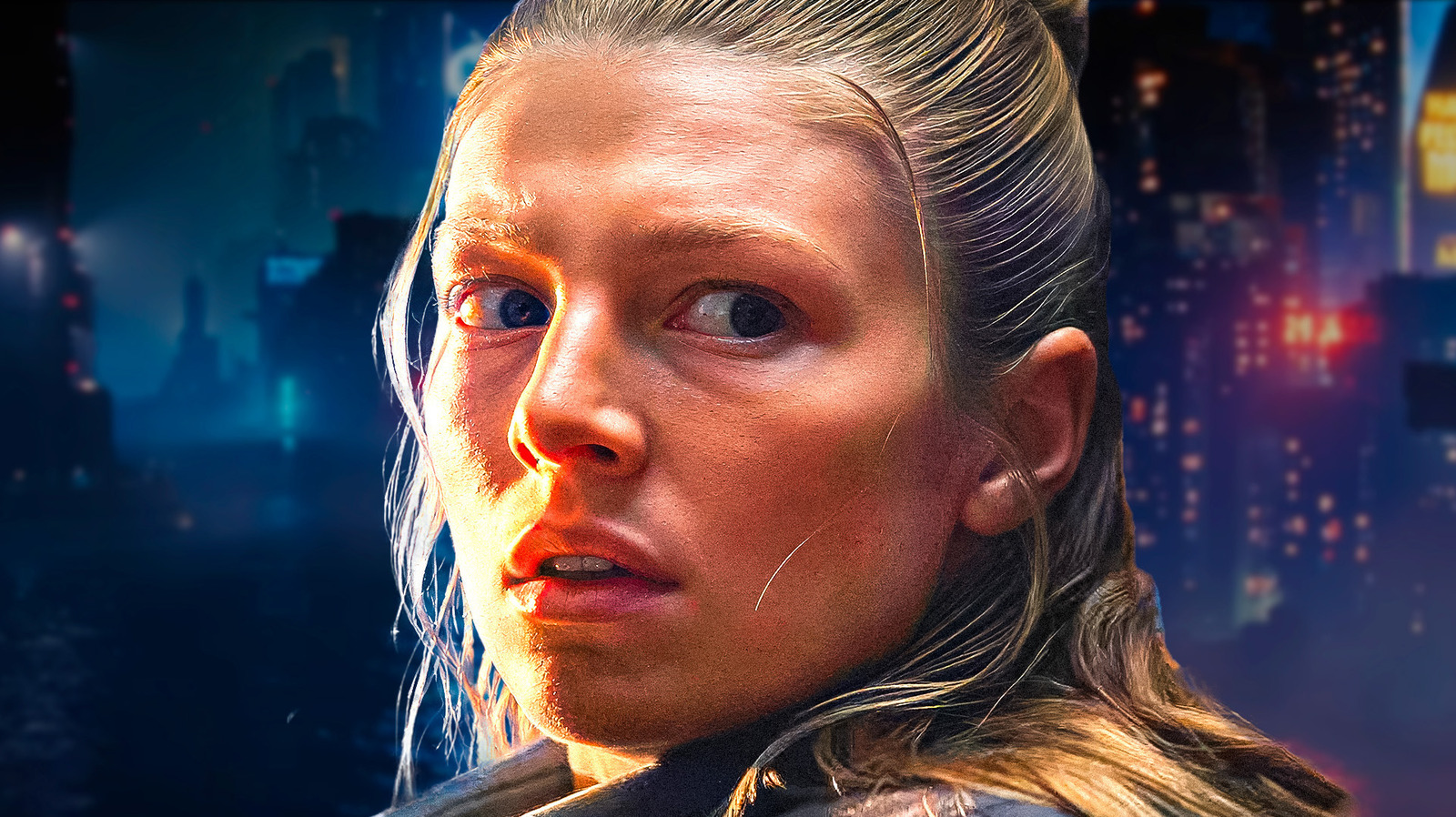
Rather than centering on Rick Deckard (Harrison Ford), the series jumps ahead to a Los Angeles where replicants have become the ruling class and humans occupy the bottom rung of society. Cora (Hunter Schafer) is desperate to escape the city with her brother, Elias (Lewis Gribben), and accepts one final dangerous assignment. To complete it, she disguises herself as a blade runner — a role now held entirely by replicants — and joins forces with Olwen (Michelle Yeoh), a veteran who has only days left to live. Their investigation soon uncovers a threat capable of reshaping the uneasy relationship between humans and replicants.
Ambiguity has always been central to the “Blade Runner” universe, leaving viewers to debate what its mysteries really mean. “Blade Runner 2099” continues that tradition, raising plenty of questions of its own. Here is a closer look at some of the series’ most puzzling moments and the explanations the story provides.
How did replicants take control?
The series unfolds roughly five decades after the events of “Blade Runner 2049,” by which point replicants have overtaken humanity as Los Angeles’ dominant population. The opening of Episode 1, “Hades,” offers a glimpse into how that transformation may have begun. A Tyrell executive praises the benefits of an entirely replicant workforce while pitching the Nexus-4 model to a business manager. Because the original “Blade Runner” features Nexus-6 replicants, this scene appears to take place before the 1982 film.
At that stage, replicants are designed with short lifespans and no capacity to create families or children. The Tyrell representative argues that these limitations prevent them from developing a meaningful desire for freedom. Although one replicant might possess the strength of 20 humans, the executive believes a being without hope has little reason to rebel.
By the main “2099” timeline, that calculation has clearly failed. Nexus-9 replicants now exist, and the ending of “Blade Runner 2049” confirms that replicants can reproduce. The first film also showed that figures such as Roy Batty (Rutger Hauer) yearned to survive beyond their programmed limits. Generations of oppression, combined with advances in replicant design, appear to have allowed them to outgrow the restrictions imposed by their creators. Given their physical advantages, a successful uprising may not have required much more than an opportunity.
How can Cora pass as a replicant?
When viewers first meet Cora, she is working at a depot while pretending to be a replicant. Her cover is exposed when she and another human are discovered, but she escapes. Later, her determination to secure a future for herself and Elias leads her to accept an even riskier assignment: infiltrating the blade runner program to retrieve an item from an evidence locker. Cora is unusually suited to the role because she has spent so long suppressing her emotions and imitating a replicant’s behavior.
Bebeto (Dimitri Abold) recruits her and arranges surgery to make the disguise convincing. Blade runners were once human officers who hunted replicants; in this era, they are replicants tasked with tracking down humans. Cora’s operation changes her eye color and places a serial number inside her hip, allowing her to withstand scrutiny. She is given the identity of Marian Jessop, a real replicant preparing to join the force.
This setup reverses the central question of the original “Blade Runner.” The earlier film asks whether artificial beings can become as intelligent and emotionally complex as humans. “Blade Runner 2099” instead explores whether years of emotional repression can make a human indistinguishable from a replicant.
How does Olwen know she has only eight days left?
In the first “Blade Runner,” Nexus-6 replicants are built to survive for just four years. That limit is the source of Roy Batty’s rebellion: he and the other replicants are fighting against an expiration date. Tyrell intended the short lifespan to prevent them from forming deep memories, relationships, and ambitions that could eventually fuel an uprising.
Promotional material for “Blade Runner 2049” established that Nexus-8 models were created with open-ended lifespans, although that development was later abandoned. Nexus-9 replicants, including Olwen, were given lifespans that could be customized. They are not immortal, but they can live considerably longer than Nexus-6 models. Olwen therefore knows exactly how much time remains to her — eight days when the series begins.
Her storyline questions whether she genuinely accepts her approaching death or has simply been conditioned to believe that she should. Olwen initially appears at peace with her fate, but her actions reveal a growing desire to keep living. Years of memories, relationships, and personal experiences have taught her that life still offers more than her programming allows her to acknowledge.
What are the red hoods?
The blade runners use a disturbing red hood to restrain suspects. At first, it appears to be a high-tech version of handcuffs, incapacitating the wearer and making escape nearly impossible. Episode 2, “Birther of Worlds,” reveals something far more brutal when Bebeto is placed inside one. After the hood is removed, a large tube can be seen running down his throat, confirming that the device does more than restrict movement — it actively interferes with the victim’s ability to breathe.
The image is unsettling on its own, but series creator Silka Luisa told Entertainment Weekly that the intubation element was especially disturbing. “With the intubation component of it, the tube goes down your throat and becomes how you breathe, and that’s what creates the sound,” she explained. “I think it’s almost the sound for me that carries throughout and really stays with you.”
Luisa also traced the hood’s visual design to “The Long Tomorrow,” the influential science fiction comic written by Dan O’Bannon and illustrated by Moebius. That comic helped shape the look of the original “Blade Runner,” demonstrating how its influence continues to echo through the franchise decades later.
What happened to the real Marian?
Cora takes on the identity of Marian, a replicant who is preparing to enter the LAPD’s blade runner division. She passes the initial index test, but the real Marian (Maya O’Shea) remains a threat to the impersonation. Episode 3, “Ho, Ho, Folks,” begins with Marian at a subway station. A janitor named Ray (Maurizio Lombardi) strikes up a conversation with her, then shoots her when the arriving train creates enough noise to conceal the attack. He disposes of her body soon afterward.
The finale reveals that Ray is working for the Tyrell Corporation. He arranged the original assignment for Bebeto, which ultimately brought Cora into the scheme to recover a memory held by the LAPD. That memory contains the genetic information needed to create replicants. Julius (Tom Burke) wants it because it could allow him to recreate the nearly immortal Nexus-1 model and upgrade newer replicants so they can escape death.
Ray has a more destructive goal. He wants the genetic code so he can dismantle replicants, including the powerful Nexus-9s, and return Los Angeles — potentially the entire world — to human control. His Tyrell connections would have given him the resources to locate Marian and monitor her. Once Cora entered the picture, replacing Marian with an undercover human became the ideal way to infiltrate the LAPD and steal the memory.
Why is a child administering an empathy test?
The first episode introduces an unusual development in the “Blade Runner” mythology: Cora’s index test is conducted by a child. Episode 5, “My Lord,” explains that the girl, Greta (Katelyn Rose Downey), was sold by her parents to an institution where children are trained to administer the test.
Fans of the original film will recognize the concept as an evolution of the Voight-Kampff test, which determines whether someone is human or a replicant by measuring emotional responses to questions about empathy. Replicants look physically identical to humans, but their creators traditionally believed they lacked the emotional development that comes from a human childhood. Cora passes by delivering the answers expected from a replicant. As the series continues, however, it becomes clear that replicants may develop empathy over time — a possibility that could compromise their usefulness as controlled agents.
Greta’s instructor fails the index test in “My Lord,” while Olwen later fails it as well. Neither result proves that the subject is human. Instead, it suggests that the replicant is developing feelings and responses beyond the limits of her original programming.
The use of children appears designed to make the test more emotionally provocative. Cora immediately questions why Greta is being held at the institute, and Greta’s final examination abandons the standard format when she asks Cora to rescue her. Placing a child in front of the subject creates a powerful emotional test — one capable of exposing how much empathy the person being examined truly possesses.
Why are authentic memories forbidden?
While Cora and Olwen investigate where new replicants are created, the series mentions that authentic memories have been outlawed. That detail can be confusing without considering the history established across the entire “Blade Runner” timeline.
In the original film, replicants are given manufactured memories to provide emotional stability and a sense of personal history. Most still understand that those memories are artificial. Rachael (Sean Young) is the major exception: she believes she is human until learning that her memories once belonged to Eldon Tyrell’s (Joe Turkel) niece.
“Blade Runner 2049” explains that genuine memories — experiences originally lived by a human being — were prohibited because they could cause severe psychological distress. Dr. Ana Stelline (Carla Juri), however, implants one of her own memories of a wooden horse into K (Ryan Gosling). The experience makes K wonder whether he was born rather than manufactured, even though he is truly a replicant.
Memory remains central to “Blade Runner 2099.” The characters are searching for a recorded memory that reveals how Nexus-1 replicants can be created, potentially allowing replicants to achieve immortality. Their standard implanted memories still provide an emotional foundation, but unlike Rachael’s experience, they do not appear intended to make anyone believe they were born human.
What is Mercerism?
During their search for the Nexus-1 memory, Cora and Olwen return to the place where Cora grew up. She identifies it as an old Mercer monastery, a reference that may pass unnoticed by viewers familiar only with the films. Readers of Philip K. Dick’s novel “Do Androids Dream of Electric Sheep?” will recognize it as a long-awaited connection to the source material.
Mercerism is a technology-based religion built around the belief that empathy is the quality separating humans from artificial beings. Followers use empathy boxes — one of which Olwen enters — to share a virtual experience in which Wilbur Mercer repeatedly climbs a hill while rocks are thrown at him. The simulation allows participants to feel his physical pain. Olwen suffers through the experience but chooses to continue watching.
In Dick’s novel, Wilbur Mercer is eventually exposed as a fabrication. He is actually an actor named Al Jarry performing on a soundstage. Even after the deception is revealed, the faith survives. If the television series follows a similar path, Mercerism’s believers may continue embracing its message despite knowing its central figure is a fraud.
The religion reinforces the franchise’s ongoing fixation on empathy. It is supposed to distinguish humans from androids, yet Olwen’s ability to experience Mercer’s pain suggests that replicants may possess the same capacity. The boundary between the two species may be far less stable than either side wants to believe.
Who is Hodge?
In the finale, “Share the Fantasy,” Cora and Olwen reach the Tyrell Launch Port for their confrontation with Julius. Before facing him, they meet Hodge (Wil Coban), a replicant who initially appears to be little more than one of the Nexus-1 soldiers Julius hopes to create. His presence, however, connects directly to an old mystery from the first “Blade Runner.”
The 1982 film refers to six Nexus-6 replicants who hijacked a ship and came to Earth, prompting Deckard to hunt them down. Only five are accounted for onscreen. One is said to have been “fried” while trying to enter the Tyrell Corporation, and Deckard battles four others, leaving a sixth replicant missing.
Hodge was originally intended to fill that gap. He appeared in early versions of the screenplay but was ultimately removed. His planned role was apparently limited to being killed, which would have meant that two replicants died at Tyrell. Still, his deletion left a decades-old continuity question and inspired some fans to speculate that Deckard himself was the missing sixth replicant. By bringing Hodge into “Blade Runner 2099” — and portraying him as someone clearly unlike Harrison Ford — the series offers a possible answer to that old plot hole.
Is Cora a replicant by the finale?
The director’s cut of “Blade Runner” ends with one of cinema’s most enduring mysteries. Deckard repeatedly dreams about unicorns, and Gaff (Edward James Olmos) leaves an origami unicorn behind, implying that he knows about Deckard’s private visions. The moment raises the possibility that the dreams were implanted and that Deckard may secretly be a replicant.
“Blade Runner 2099” creates a similarly ambiguous final image around Cora. Olwen kills Julius, destroying the remaining memory that could restore replicants to Nexus-1 status. However, Julius’ partner, Clotilde (Amy Lennox), remembers the information and may still be able to create immortal replicants. Cora and Olwen are both badly injured, and the action cuts to a replicant-production tank as an arm pushes through its surface.
Cora later undergoes another index test with Greta, but her behavior is noticeably different. She has recovered with seemingly impossible speed and acts more aggressively toward the girl. One interpretation is that Cora entered the tank and underwent the Nexus-1 process, becoming a replicant herself, while Olwen later departs to look at the stars.
A more likely reading is that Olwen, rather than Cora, received the life-extending treatment. Cora’s transformation is emotional, not biological. After spending so long pretending to be without feelings, she had pushed away much of her humanity. Helping Olwen survive reminds her why that human connection matters. Her harsh approach toward Greta may be an attempt to force the child to reclaim the part of herself that the institute taught her to suppress.
Where is Rick Deckard?
The last appearance of Rick Deckard came in “Blade Runner 2049,” when K brought him to meet his daughter, Dr. Ana Stelline. Deckard had fathered Ana with Rachael, confirming that replicants could reproduce while leaving his own nature unresolved. K makes the reunion possible, but dies from his injuries shortly afterward.
Deckard had been hiding to protect the secret of replicant reproduction. It is reasonable to assume that he would remain out of sight to keep Ana safe as well. By the time “Blade Runner 2099” begins, five decades have passed since that meeting.
If Deckard is human, he would almost certainly have died before the events of the series. Even if he is a replicant, most replicants still have lifespans comparable to humans. Unless he was secretly a Nexus-1 with the ability to live indefinitely, Deckard has likely reached the end of his life. More importantly, “Blade Runner 2099” is designed to tell a new story, which is why its central mysteries unfold without bringing him back into the action.


