
A newborn lies barely settled into the world, its small chest moving with each breath. Yet one Quebec doctor says that, in exceptional circumstances, ending the infant’s life may be the most compassionate option.
Dr Alain Naud defended that deeply controversial position before Canadian lawmakers, arguing that euthanasia should be considered for babies born with conditions he describes as incompatible with life.
Naud, a prominent supporter of Canada’s medical assistance in dying (MAID) system, faced intense questioning during a parliamentary hearing in Ottawa this week.
Conservative MP Andrew Lawton asked whether he continued to support assisted death for infants younger than one who have severe, life-threatening medical conditions.
The exchange pushed Canada’s already divisive assisted-dying debate into its most sensitive territory: decisions involving patients who cannot speak, consent or communicate any wishes of their own.
Naud stood by the principle behind his argument, although he objected to the way it had been framed.
‘I’m not talking about children 0 to 1, but rather babies born with conditions that are incompatible with life,’ he said.
That distinction, however, did little to lessen the significance of the proposal before the committee.
As MPs pressed him, Naud cited the example of a baby born without a brain and pointed to the Netherlands, where a detailed process governs the deliberate ending of life in rare and grave neonatal cases.

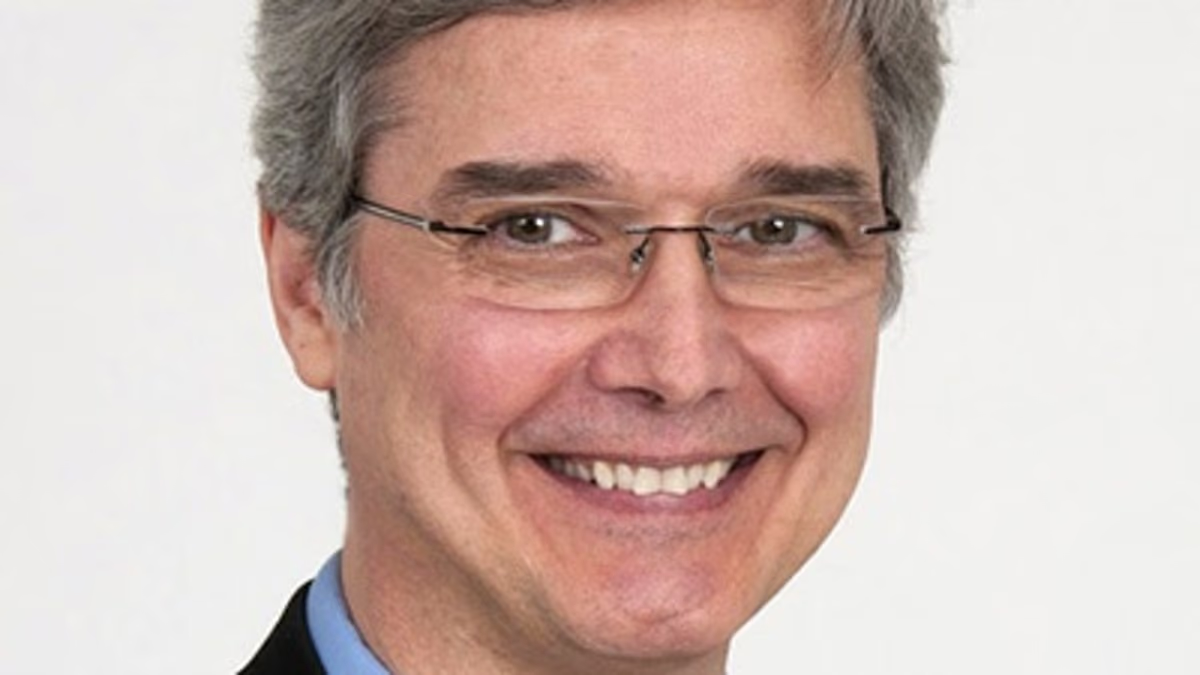
Naud, a prominent supporter of Canada’s medical assistance in dying (MAID) system, faced questioning during a parliamentary hearing in Ottawa this week

Conservative MP Andrew Lawton (pictured) challenged Dr Alain Naud over his earlier support for assisted dying for infants younger than one with severe, life-threatening conditions

Naud pointed to the Netherlands, where a tightly controlled framework allows euthanasia for newborns in exceptional circumstances (stock image)
The physician also described cases involving Quebec mothers who wanted the option of ending their babies’ lives.
‘They couldn’t bear to see their baby like that anymore,’ he told the lawmakers.
Naud is not a marginal figure in Canada’s assisted-dying debate. A family doctor, clinical professor and longtime palliative-care practitioner, he has spent decades in medicine and become one of Quebec’s most visible advocates for MAID.
After graduating from Laval University, he began practicing in Shawinigan before moving into Quebec’s hospital and academic medical system.
Over the course of his career, he has taken part in the increasingly contentious discussion over the role of doctors in helping patients die, appearing in public forums, court proceedings and parliamentary hearings as Canada’s MAID laws have developed.

Naud recalled cases involving Quebec mothers who wanted the option of ending their babies’ lives. ‘They couldn’t bear to see their baby like that anymore,’ he told the committee

Newborn babies in a hospital (stock image)
He was among the doctors who spoke publicly about participating in MAID after its legalization in Canada and has continued to call for debate over the system’s boundaries, eligibility rules and use.
Naud has also faced criticism after describing opponents of his position as ‘religious and ideological’ and accusing ‘activist groups’ of distorting, exaggerating or inventing concerns.
His willingness to challenge the limits of assisted dying has now taken the discussion into one of its most ethically difficult areas: the lives of newborn children.
That question is fundamentally different from the debate over consenting adults who seek MAID.
It would require decisions to be made for patients entirely dependent on others, with no ability to state their wishes or challenge judgments about their prognosis and suffering.
Naud’s reference to the Netherlands was deliberate. The country has become central to international arguments over whether intentionally ending a newborn’s life can ever be justified.
Introduced in the early 2000s and published in 2005, the Dutch Groningen Protocol sets out criteria and reporting requirements for cases involving the deliberate ending of a newborn’s life in exceptionally severe circumstances.
The framework is intended for situations involving a devastating prognosis and suffering considered unbearable, without any prospect of improvement. It also calls for parental agreement, independent medical advice and professional review.

The Quebec College of Physicians’ position, first set out in December 2021, echoed Naud’s views but met fierce resistance. Then-disabilities minister Carla Qualtrough rejected the proposal and said the government would not extend MAID to infants
It does not amount to a blanket legal authorization for euthanizing newborns. Instead, it is a highly restrictive and legally complicated framework that remains intensely controversial.
The Netherlands had been wrestling with such cases long before the protocol was created. Doctors and legal authorities faced difficult decisions involving babies born with devastating conditions, including severe spina bifida and trisomy 13.
Those cases helped lead to the creation of formal review and reporting procedures.
Campaigners fear a similar discussion could take hold in Canada. Brandan Tran, director of public affairs and outreach at Campaign Life Coalition, previously warned that the issue was no longer merely hypothetical.
‘These are not concerns from the fringes, but statements from a member of a provincial medical college, recommendations before parliament, and the reality of MAID right now in Canada,’ he said.
Tran ultimately described the proposal as the ‘calculated killing of an infant’.
Lawton later accused Liberal members of the committee of shifting attention away from Naud’s testimony and toward his conduct during the hearing.
‘And the Liberal response to this? Lecturing me about “respectfulness,“’ he wrote while sharing video of the exchange.

The dispute comes as Canada contends with the rapid expansion of its assisted-dying program. Since MAID became legal in 2016, eligibility has widened, including through a controversial 2021 change covering adults whose natural death is not reasonably foreseeable
This is not the first time the idea has emerged from Canada’s medical establishment.
The Quebec College of Physicians has urged consideration of euthanasia for certain newborns for several years.
In October 2022, college representative Dr Louis Roy told a parliamentary committee that assisted dying ‘may be appropriate for babies suffering from extreme pain’.
He said parents ‘should have the opportunity to access this care for their infant’.
The college’s position, initially presented in December 2021, proposed considering euthanasia for newborns with exceptionally poor prognoses and extreme suffering that could not be alleviated.
The proposal drew strong opposition. Carla Qualtrough, then the disabilities minister, rejected the possibility of extending MAID to infants.
The controversy has unfolded as Canada’s assisted-dying program has grown dramatically since its legalization in 2016.
Eligibility was significantly broadened in 2021 to cover adults whose natural death was not reasonably foreseeable.

Lawton later criticized Liberal committee members on social media, arguing that the discussion had focused on his tone instead of the substance of the doctor’s evidence
Join the conversation
How should society determine the fate of newborns with life-threatening conditions?
By the end of 2024, 76,475 Canadians had received assisted deaths, including 16,499 people in 2024 alone. MAID accounted for 5.1 percent of all deaths in the country.
In February 2023, a parliamentary committee recommended examining whether mature minors might qualify in certain circumstances, although infants were excluded. That recommendation has not become law.
Ottawa confirmed in December 2024 that it had no plans to permit MAID for babies.
Under current legislation, applicants must be at least 18, possess decision-making capacity, make a voluntary request and give informed consent.
The latest Liberal bill, C-41, does not propose altering those requirements or extending eligibility to children.
Instead, it would create a system for advance requests from eligible adults and prevent the planned March 2027 expansion to people whose sole underlying condition is mental illness.
For now, Canada’s MAID law draws a clear boundary: newborn babies cannot be euthanized under the current system.
Dr Naud was approached repeatedly for comment.