Just after turning 30, I took an online DNA ancestry test.
I mailed in a saliva sample and waited anxiously for the results.
When they finally arrived, I was matched with a first cousin I had never known about. She then introduced me to a man who, I discovered, was my half-brother.
The results confirmed what I had suspected for years: the woman who raised me was not my biological mother. My birth mother was a stranger living more than 4,000 miles away in the United States.
You might imagine I was devastated. After all, I had seemingly been deceived throughout my life. But when I saw the results, I punched the air and let out a delighted squeal.
At last, my overwhelming feeling that I had been born through surrogacy had been proved right.
I wasn’t irrational or inventing an elaborate explanation for why I had never felt a bond with the woman I called my mother, who had kept the truth about my origins from me.
The confusion and distress I felt about my identity had a real foundation. These days, it seems hardly a week passes without news of another celebrity welcoming a baby through surrogacy.

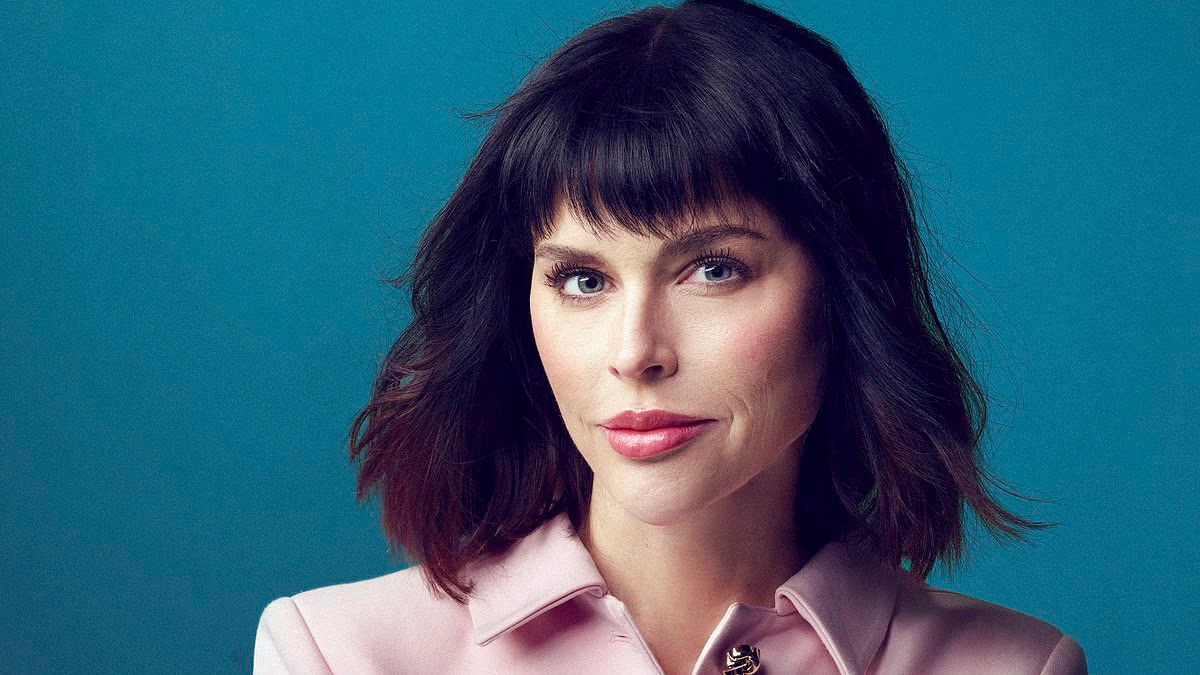
Olivia Maurel says she always felt an ‘overwhelming instinct’ that she was born through surrogacy — a belief later confirmed by a DNA test

Olivia says she was ‘always an extremely anxious and troubled child’ who ‘cried constantly’
The accompanying photographs often show a new mother or father tenderly holding their baby in a hospital room. Their announcement thanks the ‘wonderful’ surrogate who helped make their dreams possible.
It sounds like a beautiful story. Yet we never see that ‘wonderful’ surrogate once her role is over — exhausted, perhaps bleeding, and recovering in another room.
Would the story seem quite so joyful if we knew exactly what the surrogate’s contract required? Or if we learned that she had agreed to rent out her body because of overwhelming financial hardship?
And that is before considering the extraordinary emotional turmoil the child may experience while growing up, as I know all too well.
By now, you may have realised that I am fiercely opposed to surrogacy. Although it is the reason I exist, I will not stop campaigning until surrogacy is abolished worldwide. I believe it is an appalling and abusive practice.
I was an exceptionally anxious and troubled child. I cried constantly, chewed my nails until they bled and pulled out handfuls of hair — behaviours I now believe were linked to the trauma of being separated from my biological mother. She relinquished me as soon as I was born, without even holding me, after signing a legal document promising never to discuss what had happened or try to contact me.
Although my parents never explained how I had entered the world, I instinctively sensed that something was wrong.
My parents were extremely wealthy. My father is Swiss and my mother is French, and during my childhood we divided our time between the south of France — where surrogacy is illegal — and Palm Beach, Florida. I grew up in enormous houses, attended elite schools and enjoyed extraordinary holidays.
Materially, I had every privilege. Emotionally, however, things were very different. I never questioned that my father was my father: we looked alike, I had been conceived using his sperm and the surrogate’s eggs, and I felt an instinctive connection with him. But something always felt wrong with my mother, who largely left my upbringing to a succession of nannies.
She was noticeably older than my friends’ mothers and refused to tell me how old she was. Whenever I asked, she would say: ‘I’m ageless.’
Why, though, were there no photographs of her pregnant with me? And why did she become angry or dismissive whenever I raised the subject? From as far back as I can remember, our relationship was strained and distant.
By my early teens, I had learned not to question my mother if I wanted to avoid conflict, and I never discussed it with my father. But I remained curious.
While searching through things at home, I found my mother’s passport and saw that she had been almost 50 when she supposedly gave birth to me. My birth certificate showed that I had been born in Louisville, Kentucky — a place with which our family had no connection. None of it made sense. When I was about 17, I searched online and discovered that Louisville was a major US surrogacy centre. Suddenly, everything fell into place. From then on, I was convinced I had been born through surrogacy and that the truth had been hidden from me.
My mind filled with questions I was too frightened to ask my parents. Who was my real mother? Why had she given me away? How much had she been paid?

Olivia says she owes her existence to surrogacy but will continue campaigning for the worldwide abolition of what she calls an appalling and abusive practice

Olivia was raised by extremely wealthy parents who divided their time between the south of France and Palm Beach, Florida
With no one I felt able to confide in, my behaviour began to spiral. I drank heavily, smoked marijuana and became involved with one destructive crowd after another. There is certainly no shortage of wealthy, troubled young people to party with.
My parents sent me to several psychiatrists, hoping they could turn me into the compliant daughter they wanted. I repeatedly told therapists, ‘My mother isn’t my mother. My parents are lying to me.’ I am fairly sure they did not believe me, and my distress intensified.
At 19, I moved back to France to study law, but my behaviour became even more unpredictable.
Unable to speak to my family and unwilling to confront what I was feeling, I used alcohol to numb the pain.
One evening, after going to a gig with a male friend, I drank until I passed out. He took me to his house, where he and another boy raped me.
I felt violated, ashamed and completely broken. I could not face reporting the attack. Soon afterwards, I entered another relationship with a controlling man who physically abused me. Eventually, at 20, I attempted suicide.
I began seeing a psychologist and, for the first time, felt genuinely understood. She helped me leave my abusive boyfriend and recognise how toxic my relationship with my mother had become.
But my life truly began to change when I met my husband, Matthias, at 22.
He loved me without conditions. Crucially, he and my mother-in-law believed what I was saying and wanted to help me uncover the truth, find peace and move forward.
We married when I was 24 and later had three children: Eleanor, now eight, Theodore, seven, and Auguste, five.
Each time I held one of my precious babies for the first time, I was overwhelmed by the thought of handing them to a stranger and never seeing them again. I knew that, for their sake, I had to discover who I really was.
So, in 2022, I took the online DNA ancestry test — the test that proved I had not imagined everything, deceived my friends, my husband and every therapist I had seen. It changed my life in ways I could never have predicted.
Before taking the test, I confronted my father. I told him: ‘Dad, I know I was born through a surrogate. I know Mum did not give birth to me, and you need to tell me because I deserve the truth.’
MORE ON THIS: Young MAGA Activists Call GOP Their ‘Evil Father,’ Turn on Trump
He answered: ‘I need to speak to your mother before I can tell you anything.’ That was enough. To me, he had effectively confirmed my suspicions. I waited for him or my mother to return with the full explanation, but they never did.
The DNA results gave me the confirmation I needed, but I did not confront my parents. It seemed pointless. I finally had the answer they had withheld from me for 30 years.
After connecting with my cousin, I discovered that I had five half-siblings. They confirmed that their mother — my biological mother — had been a surrogate, possibly more than once.
My birth mother contacted me on Facebook, and we began exchanging messages. She sent photographs of herself as a young woman, and she looked remarkably like me. She told me that I had been conceived using her eggs and my father’s sperm, and described giving birth to me at 38. After nurses took me away to clean me, she said, I turned my head towards her as a newborn — a moment she had never forgotten. The surrogacy contract prevented her from contacting me, she explained, but she had thought about me every day and hoped that I would eventually find her.
I wanted to ask why she had agreed to become a surrogate. Realistically, though, I assumed the answer could only have been financial.

Olivia’s birth mother contacted her on Facebook, where they exchanged messages about her experience as a surrogate

Olivia says her parents sent her to several psychiatrists in an effort to make her the obedient daughter they wanted
Her other children told me that she had experienced mental health problems for much of her life, suggesting she should never have been considered a suitable surrogacy candidate.
Through my campaigning work, I later learned that surrogate agencies often put financial gain ahead of everything else.
What my birth mother told me left me shaken, but it also fuelled my determination. Since then, I have used my voice as a person born through surrogacy to speak out against the practice.
Three years ago, I posted a TikTok video about my story. It went viral, and events quickly gathered pace. I am now Executive Director of the Casablanca Declaration, an international campaign calling for the abolition of surrogacy, and I have published my memoir, In Search Of My Mother.
The book tells my personal story while also examining the murky world of the surrogacy industry.
Since going public, I have heard from many people who wanted to share their own experiences.
My godmother’s son contacted me to say that his family had known my parents were hiding something. They noticed that my non-pregnant mother and father travelled to the US and returned to France several weeks later with a baby, but they did not feel it was their place to ask questions. Strangers have also reached out. Former surrogates have told me about the grief, guilt and regret they carry over the babies they gave away. Others born through surrogacy have contacted me because they, too, feel tormented.
When psychologists discuss the trauma adopted children may experience after separation from their birth mothers, some describe the emotional and physical rupture as ‘the primal wound’. I believe children born through surrogacy can experience the same profound pain when the natural connection between a mother who gives birth and her baby is disrupted.
Yet many surrogate-born children who contact me are afraid that speaking honestly about their struggles will sound like a rejection of the parents they love. I understand that anxiety. They face a powerful conflict of loyalty and often feel they must be grateful.
In the UK, only so-called ‘altruistic’ surrogacy is legal. This means the woman carrying the baby may receive reasonable expenses, but not a fee. However, there are not enough UK surrogates to meet demand, so intended parents often look overseas. Nothing prevents them from travelling to a country where commercial surrogacy is legal and then bringing the child back to Britain.
The number of surrogacy births in the UK has doubled over the past decade. Official figures record 5,763 applications for parental orders — the legal process for transferring parentage from the surrogate to the intended parents — during this period. Campaign group Stop Surrogacy Now UK estimates that 77 per cent of children born through surrogacy are the result of an overseas commercial arrangement.
New surrogacy markets are emerging in countries including Ghana, Nigeria, Mexico and Colombia, where women may receive as little as £800. Clinics and agencies can make ten times that amount. In Colombia, 80 per cent of surrogates live in extreme poverty.
I often hear people argue that surrogates freely choose to help infertile couples. If that is true, where are the financially comfortable surrogates? Who would inject themselves with large doses of hormones, endure the side-effects and complete a pregnancy only to give the baby away, unless they were in desperate need?
It is deeply ironic that many celebrities who have used surrogacy describe themselves as feminists. I do not accept that. You cannot call yourself a feminist while renting another woman’s body.
Of course, my views on surrogacy are shaped by my own experiences, and many people have told me that a painful outcome for me does not mean everyone will have the same experience.
I accept that many surrogacy stories end positively, with children who are loved and raised by caring, attentive parents. But that does not make the multibillion-dollar surrogacy industry acceptable.
The fact that surrogacy is illegal in many countries, including France, Spain and Italy, shows that others share these concerns. This week, the Georgian government announced that it would discuss a proposed ban. This year has also brought the troubling case of American surrogate McKenna West, who refused the intended parents’ request to abort the baby she was carrying because he had a heart defect.
Abortion clauses are standard in surrogacy contracts. When a baby is not considered ‘perfect’, intended parents who have paid thousands may decide they do not want the child. If the surrogate refuses to terminate the pregnancy, she may be left to care for a disabled child herself.
Then came the so-called ‘house of horrors’ case in California, where police found 14 surrogate children aged between six months and three years. The children had all been acquired by a wealthy Chinese couple, who were charged last month with conspiracy to commit child abuse.
This is what can happen when people are allowed to purchase babies and profit is placed ahead of safeguarding. As surrogacy expands, I fear such cases will become more common unless governments introduce a ban.

Olivia believes the ‘primal wound’ associated with separation from a birth mother can also affect children born through surrogacy
People will say these are exceptional cases and that most surrogacy arrangements have happy endings. But the truth is that we do not know, because there have been no credible studies into the long-term experiences of children born through surrogacy.
My heart goes out to any woman who desperately wants a child but cannot conceive. Even so, ending surrogacy worldwide, in every form and without compromise, has become my life’s work — despite the personal cost.
I am now completely estranged from the parents who raised me. They have made it clear that a relationship is possible only if I stop telling my story, and that is something I cannot agree to.
I have also been cut out of any inheritance. That does not trouble me. I do not want their money.
I love them and wish them well, and I do not blame them. I believe they became so determined to have a child that they failed to consider the consequences.
My husband still takes our children to visit them. Having endured the pain of not knowing my own heritage, it would be hypocritical to deny my children theirs. My father is, after all, their biological grandfather.
I am no longer in contact with my birth mother, either. She is a troubled person and, eventually, our communication faded. But I recently met my half-brother in New York, and it was one of the best days of my life.
We arranged to meet at Grand Central Station. Across the crowded concourse, we recognised each other and embraced. For a moment, it felt as though the broken branches of my family tree had been brought together again.
Now 34, I am happier than I have ever been. For years, I was a traumatised child desperate to understand who I was and find a sense of purpose. Today, I have both.
- In Search of my Mother (Spinifex Press, £16.95) by Olivia Maurel is out now.
As told to CLAUDIA CONNELL