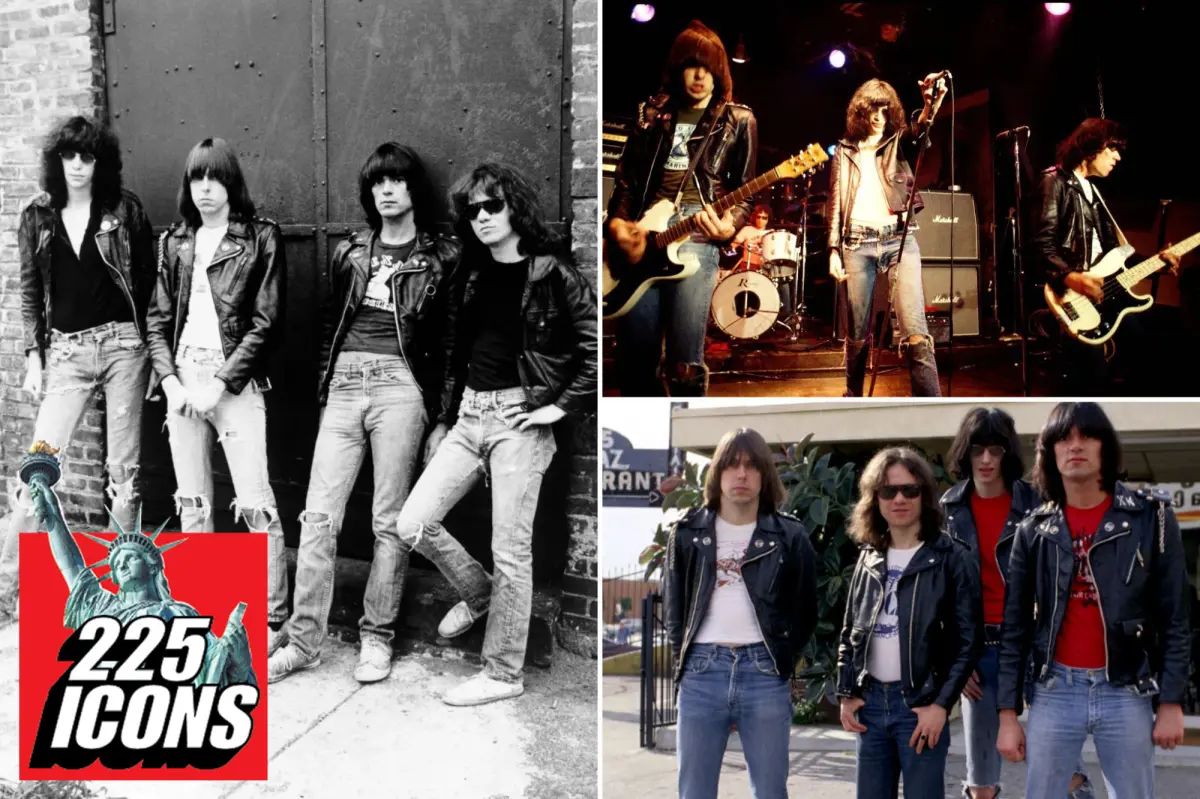

As The New York Post marks its 225th birthday, we’re celebrating the people, places and cultural landmarks that have helped make New York City unforgettable.
The Ramones
Gabba gabba hey — few bands were more unmistakably New York.
The Ramones took punk rock from underground clubs to a worldwide audience, delivering two-minute bursts of distorted guitars, breakneck drumming and wonderfully warped bubblegum melodies.
Underneath the leather jackets and ripped jeans were four Forest Hills natives — Joey, Johnny, Dee Dee and Tommy — who infused their stripped-down music with Queens swagger and unmistakable New York accents. Their sound would go on to influence thousands of bands.
“Punk exists because of the false assumption that The Ramones can be imitated,” Spin magazine once observed.
After forming in 1974, the hometown heroes found international success without losing touch with the city that shaped them. Their songs referenced turning tricks on “53rd and 3rd” and escaping to “Rockaway Beach.”
CONTINUE READING: Canadian billionaire Doug Putman eyes takeover of TG Jones
The “I Wanna Be Sedated” rockers — whose later lineups featured Marky, Richie and CJ — also helped transform East Village club CBGB into a global shrine for musicians and artists, with stars such as Andy Warhol among its famous visitors.
Six of the band’s 14 albums featured cover images photographed around New York City. “Subterranean Jungle,” for example, showed the group beside a graffiti-covered subway train, while the iconic cover of their self-titled debut proved that four musicians standing against a brick wall could look impossibly cool.
Although all four original members died after the band split in 1996, their legacy remains woven into the city. New York has honored them with two street renamings: “The Ramones Way” in Forest Hills and “Joey Ramone Place” on Manhattan’s Bowery.
In “Sheena Is a Punk Rocker,” the band proclaimed that “New York City really has it all.”
They were absolutely right. Mark Lungariello