

Anesthesiologist who advised Christa Pike’s defense challenges lethal injection process
Dr. Joel Zivot, an anesthesiologist who advised Christa Pike’s attorneys, joins Bill Hemmer to examine the legal consequences after a judge ordered Tennessee officials to preserve evidence from Pike’s botched execution. Zivot discusses the complications involving the lethal-injection drugs used by the state. Pike remains on death row after surviving the failed execution.
A Tennessee death row inmate convicted of torturing and killing a 19-year-old classmate in the 1990s—and who survived a botched execution attempt earlier this year—is challenging the conditions of her confinement.
Attorneys for 50-year-old Christa Pike, the only woman on Tennessee’s death row, asked a judge Monday to require prison officials to permit private mental health evaluations without an attorney present, according to court records.
Pike has remained at the center of the national debate over capital punishment since Sept. 30, when she survived two doses of pentobarbital during a botched execution. The attempt came nearly three decades after she was convicted of carving a pentagram into 19-year-old Colleen Slemmer’s chest and taking a piece of her skull.
“We are seeking emergency relief from the court to ensure that mental health professionals retained by Christa Pike’s legal team have the access and resources necessary to properly assess her mental and psychological condition following the State’s botched attempt to execute her on September 30,” Pike’s attorney, Luke Ihnen of Federal Defender Services of Eastern Tennessee, said in a Nov. 25 statement. “The State has increasingly restricted Christa’s access to mental health professionals attempting to evaluate her. These restrictions are new and deeply concerning.”
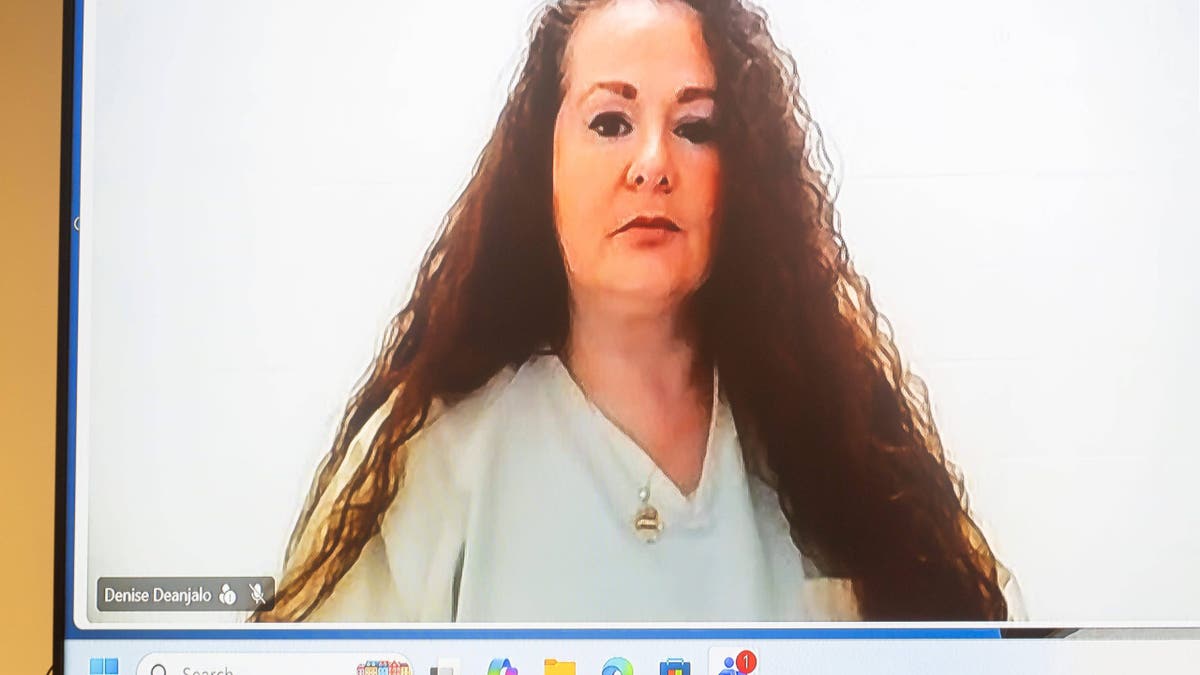
Christa Gail Pike appears remotely from the Debra K. Johnson Rehabilitation Center during a hearing in Knox County Criminal Court in Knoxville, Tennessee, on Aug. 11, 2026. (USA TODAY Network via Reuters Connect)
Chancellor I’Ashea L. Myles denied the request to expedite the dispute on Nov. 25 and set a hearing for Dec. 15, according to docket entries.
Court documents obtained by WBIR reportedly show that Pike’s legal team retained trauma specialists Dr. Patti van Eys and Dr. Kate Porterfield, both clinical psychologists, to evaluate her.
Prison officials initially approved three private visits between Pike and van Eys. On Nov. 9, however, they informed Pike’s attorneys that a lawyer would be required to attend all future sessions.
Pike’s attorneys also alleged that officials classified van Eys as a “treating provider” and questioned the purpose of her evaluation.
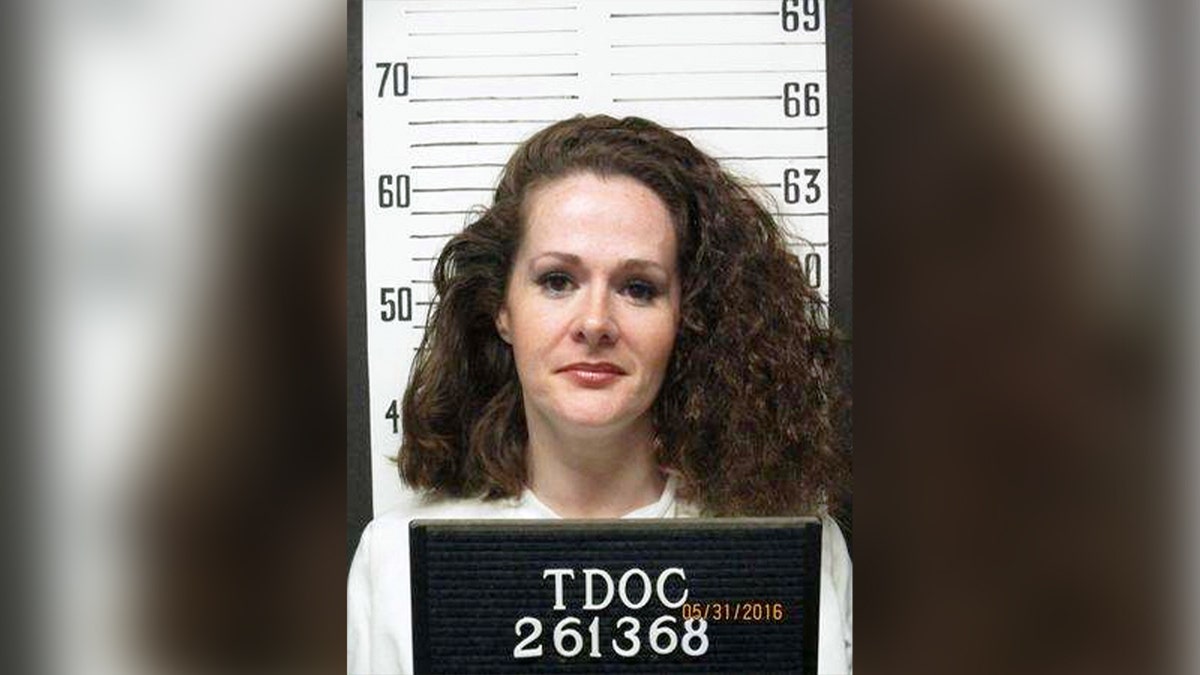
Christa Gail Pike was scheduled for execution on Sept. 30, 2026, which would have made her the first woman executed in Tennessee since 1820. (Tennessee Department of Correction via AP)
When Pike’s lawyers later sought access for Porterfield, prison officials said she, too, would need to be accompanied by a lawyer and “would not be permitted to keep her own notes and evaluation materials,” according to the filing.
Pike’s attorneys argued that the Tennessee Department of Correction has no legal or policy authority to control how they represent her. They described the requirement that a lawyer personally accompany every expert as “imposed arbitrarily.”
KEEP READING: Detroit Lions Star Calls for NFL Investigation Into Chicago Bears’ Alleged ‘Illegal’ Act
The defense further argued that TDOC’s written policy defines an attorney as “any person working for, on behalf of, or under the direction of an attorney.” They maintain that definition includes the psychologists and that the policy does not require a lawyer to accompany outside experts.

The split image shows Christa Pike at her 1995 murder trial, left, and Colleen Slemmer, whom Pike was convicted of torturing and killing, right. (Reuters)
The attorneys asked the court to permit private evaluations using standard materials and to prevent prison officials from reviewing or retaining the experts’ notes.
“Christa has endured a lifetime of suffering, including childhood rape, abuse and neglect, compounded by the recent repeated failures of the Tennessee Department of Correction — who is entrusted with her care today,” Ihnen said. “She should not have to fight for access to the professionals working to understand the full extent of the harm they have caused.”
The dispute emerged weeks after Pike said in a statement dictated to her legal team that she had been largely isolated in the infirmary at the Debra K. Johnson Rehabilitation Center since surviving the execution attempt.
“Since that night, I have been largely isolated in the prison’s medical ward, away from other people and the human connections that mean so much to me,” Pike said in the earlier statement. “That isolation brings its own kind of pain. I spent 28 years in solitary confinement and much of what I am experiencing today is a repeat of that condition.”

Convicted killer Christa Gail Pike listens to proceedings in Knox County Criminal Court in April 2008 during a bid for a new trial in the 1995 killing of fellow Job Corps student Colleen Slemmer. (USA TODAY Network via Reuters Connect)
After the Sept. 30 execution attempt, Pike was taken to a hospital and remained unconscious for several days. Her attorneys initially believed she was brain-dead and expected doctors to remove her from life support, but she later regained consciousness and was returned to prison.
Tennessee Gov. Bill Lee then paused the state’s remaining executions for the year and ordered an independent review of the problems. He also indicated that Pike’s death sentence was unlikely to be changed.
Pike was 18 when she, her 17-year-old boyfriend Tadaryl Shipp and 19-year-old Shadolla Peterson were charged in Slemmer’s 1995 killing. Slemmer was a fellow participant in a federal Job Corps program in Knoxville.
The three took Slemmer to an isolated location on the University of Tennessee’s Knoxville campus. Prosecutors said her throat was cut multiple times, she was struck in the head with a large piece of asphalt and a pentagram was carved into her chest.
Pike later confessed to participating in the killing. She was convicted and sentenced to death in 1996, and the Tennessee Supreme Court upheld both her convictions and sentence.
News Outlet has contacted the Davidson County Chancery Court clerk’s office and Pike’s attorneys for copies of the latest filings. The outlet has also sought comment from Pike’s legal team and the Tennessee Department of Correction.