Share this @internewscast.com
For generations, DC Comics characters have ventured into the realm of cinema. From the 1940s serials to the 1951 film “Superman and the Mole Men,” these iconic figures have long been a staple of theatrical storytelling. This connection has only grown stronger over the decades, bolstered by successful films such as “The Dark Knight” and “Wonder Woman.” Impressively, nine DC Comics films have crossed the $300 million threshold at the domestic box office, with three even surpassing $400 million. These numbers suggest that attaching the DC logo or the name Superman to a film often seems to promise box office success.
Yet, with such a lengthy history in filmmaking, DC has also seen its share of box office duds. Financial failures involving DC characters are not uncommon, with ten particular films standing out as significant disappointments tied to some of the most cherished superheroes. These films, spanning different eras, faced various issues during their theatrical runs. Some struggled due to negative reviews they couldn’t shake, others were hindered by poor release strategies or unreliable star power.
These ten underperforming DC films starkly contrast with blockbusters like “Joker” and “Superman,” highlighting the financial misses within DC’s rich cinematic legacy.
The late 1970s saw the first Christopher Reeve “Superman” film achieve monumental success, reshaping expectations for superhero movie earnings. However, by the time “Superman III” hit theaters in 1983, the franchise’s box office allure had waned. A few years later, “Superman IV: The Quest for Peace,” produced on a tighter budget, attempted to squeeze a few more dollars from the franchise. However, it ended up as a cultural laughingstock, symbolizing budget constraints leading to uninspired storytelling rather than inventive filmmaking. The film’s critical reception remains poor even today.
Financially, “Superman IV” was a fiasco, raking in just $36.7 million globally, with a mere $14.5 million coming from North America, where previous “Superman” films had once drawn massive crowds. The negative buzz surrounding “Quest for Peace” deterred audiences, and its evident low-budget nature failed to deliver the grand spectacle fans expected. Arriving years after the most beloved entries in the series further dampened enthusiasm. Domestically, it ranked as the 68th highest-grossing film of 1987, trailing behind titles like “Hellraiser,” “Masters of the Universe,” and “Ernest Goes to Camp.”
Superman IV: The Quest for Peace (1987)
Despite its iconic brand, which once captivated moviegoers, the lackluster films, not Kryptonite, marked the downfall of Christopher Reeve’s Superman series.
Financially, the feature was also a total flop, only grossing $36.7 million worldwide. Just $14.5 million of that came from North American audiences, who used to come out in record-shattering numbers to see “Superman” installments. The dismal reputation surrounding “Quest for Peace” kept people away in droves, and its innately low-budget sensibilities ensured that this project couldn’t meet even the most basic expectations of spectacle-driven entertainment. Arriving years after the most beloved “Superman” installments also diluted excitement for this project. The 68th biggest movie of 1987 domestically, “The Quest for Peace” came in embarrassingly behind projects like “Hellraiser,” “Masters of the Universe,” and “Ernest Goes to Camp” that year.
That’s despite wielding a brand name that previously meant something profoundly special to moviegoers. Subpar motion pictures, not tidal waves of Kryptonite, killed Christopher Reeve’s string of Superman movies.
Jonah Hex (2010)
Out of all the DC Comics characters Warner Bros. could’ve given the silver screen treatment at the dawn of the 2010s, they chose “Jonah Hex.” That’s no slam on the quality of this DC Comics gunslinger. Rather, it’s bizarre that solo movies for Wonder Woman, The Flash, and Aquaman (among many others) remained elusive while Jonah Hex got to take center stage. Despite how puzzling this situation was, director Jimmy Hayward’s “Jonah Hex” launched into movie theaters in June 2010 with a stellar cast at its back, including Josh Brolin, Megan Fox, John Malkovich, and Michael Fassbender. No amount of A-list stars, though, could’ve prevented its eventual financial demise.
Even under the best of circumstances, “Jonah Hex” would’ve had problems overcoming the box office woes usually plaguing high-concept western movies. “Wild Wild West” and “Cowboys & Aliens” can both attest that this is tough territory to make profitable. This particular project, though, was a tormented mess, as seen by its extensive reshoots and a marketing campaign that didn’t begin until seven weeks before the movie’s release.
This whole boondoggle resulted in an inevitably dismal worldwide box office haul of $11 million, $10.54 million of which came from its North American run. A disastrous sum for something that cost $47 million to produce, “Jonah Hex” was one of 2010’s most embarrassing flops. It also further tainted DC’s reputation for non-Batman or Superman movies. This film was a calamity that didn’t come close to justifying Jonah Hex receiving a solo motion picture.
Catwoman (2004)
Seven years after “Batman & Robin” killed off the big-screen “Batman” franchise, Gotham City’s lore came back to theaters with “Catwoman.” However, this Halle Berry star vehicle directed by Pitof wasn’t a traditional take on the cat burglar. Any typical elements from the comics or Michelle Pfeiffer’s 1992 version of the character were eschewed. Instead, “Catwoman” came up with new lore and superpowers for this crime-fighter. It was an audacious move that was banking on Berry’s post-Oscar win star power to carry the day.
Costing $100 million to make and debuting in late July 2004, Warner Bros. was hoping that “Catwoman” would be a big summertime smash. Inevitably, it only grossed $40.2 million domestically and garnered abysmal reviews from critics and audiences alike. Much of the feature, such as a big scene set on a basketball court, was instantly mocked, while its $82.07 million worldwide cume didn’t come close to recouping the $100 million budget. Opening only four weekends after “Spider-Man 2’s” gargantuan box office run only made it extra apparent how much “Catwoman” had stumbled financially amongst comic book movies.
This financial catastrophe was frustrating on many levels, though at least “Catwoman” has garnered a cult following in the decades since its debut. So many other DC movie flops would kill for that kind of fanbase. In box office numbers, though, Gotham’s lore would have to wait for a big screen resurrection until 2005’s “Batman Begins.”
Green Lantern (2011)
Starting with 2016’s “Deadpool,” Ryan Reynolds has been on a box office hot streak. And that financial reliability hasn’t just been confined to “Deadpool” sequels, but also “Pokémon: Detective Pikachu” and “IF.” These days, theatrical releases that prominently feature Reynolds have a tendency to outperform expectations. However, that wasn’t the case in 2011, when the actor was more associated with major box office flops like “Buried.” The disastrous failure of the DC Comics blockbuster “Green Lantern” didn’t help him evade that reputation.
In a summer where Marvel Studios launched Thor and Captain America as solo movie stars, Warner Bros. struggled to get audiences to care about a superhero that fought for justice “in brightest day, in blackest night.” “Green Lantern’s” initial teaser trailer went over so disastrously that it cast a negative shadow that the ensuing movie couldn’t escape. Those infamously disastrous reviews only compounded the toxicity attached to this movie’s name. Worldwide, “Green Lantern” only grossed $237.2 million, a paltry sum for something that cost $200 million to make. That box office run included just $116.6 million in North America, a haul beneath original 2011 movies like “Super 8” and “Horrible Bosses.”
Any and all hopes of further “Green Lantern” sequels were crushed. After this, Reynolds would have to wait five years before “Deadpool” boldly resuscitated his career. “Green Lantern,” meanwhile, has never gotten redemption as a standalone film saga — though Nathan Fillion’s scene-stealing take on Guy Gardner in “Superman” did help restore the character’s pop culture luster.
Steel (1997)
These days, unless it’s LeBron James headlining “Space Jam: A New Legacy,” athletes aren’t regularly called upon to star in theatrical movies. In the ’90s, though, this was a more common practice. Basketball icon Shaquille O’Neill especially was a fixture of theatrical films like “Kazaam” back in this decade. All it took was one subpar DC Comics flop, though, to capsize his leading man career. That box office dud was none other than “Steel,” which is now an obscure footnote in the history of DC cinema.
Loosely adapted from a variation of Superman from the comics, “Steel” saw Shaq raking on the titular superhero film role in a family-friendly action movie that reached theaters in August 1997. Only opening in 1,260 theaters (compared to the 2,500+ theater footprint most major 1997 features bowed in), Warner Bros. clearly hedged its bets on how big this property could be from the start. That turned out to be a wise move, as “Steel” only grossed a paltry $1.68 million domestically. Not only did this make a little more than half of its lifetime North American gross in its first three days of release, but it was also the lowest-grossing wide release of 1997. Between this and “Batman & Robin,” 1997 was a disastrous year for DC characters in theaters.
All these embarrassing figures solidified “Steel” as a legendary box office misfire. Perhaps it’s for the best that athletes no longer regularly headline motion pictures.
The Flash (2023)
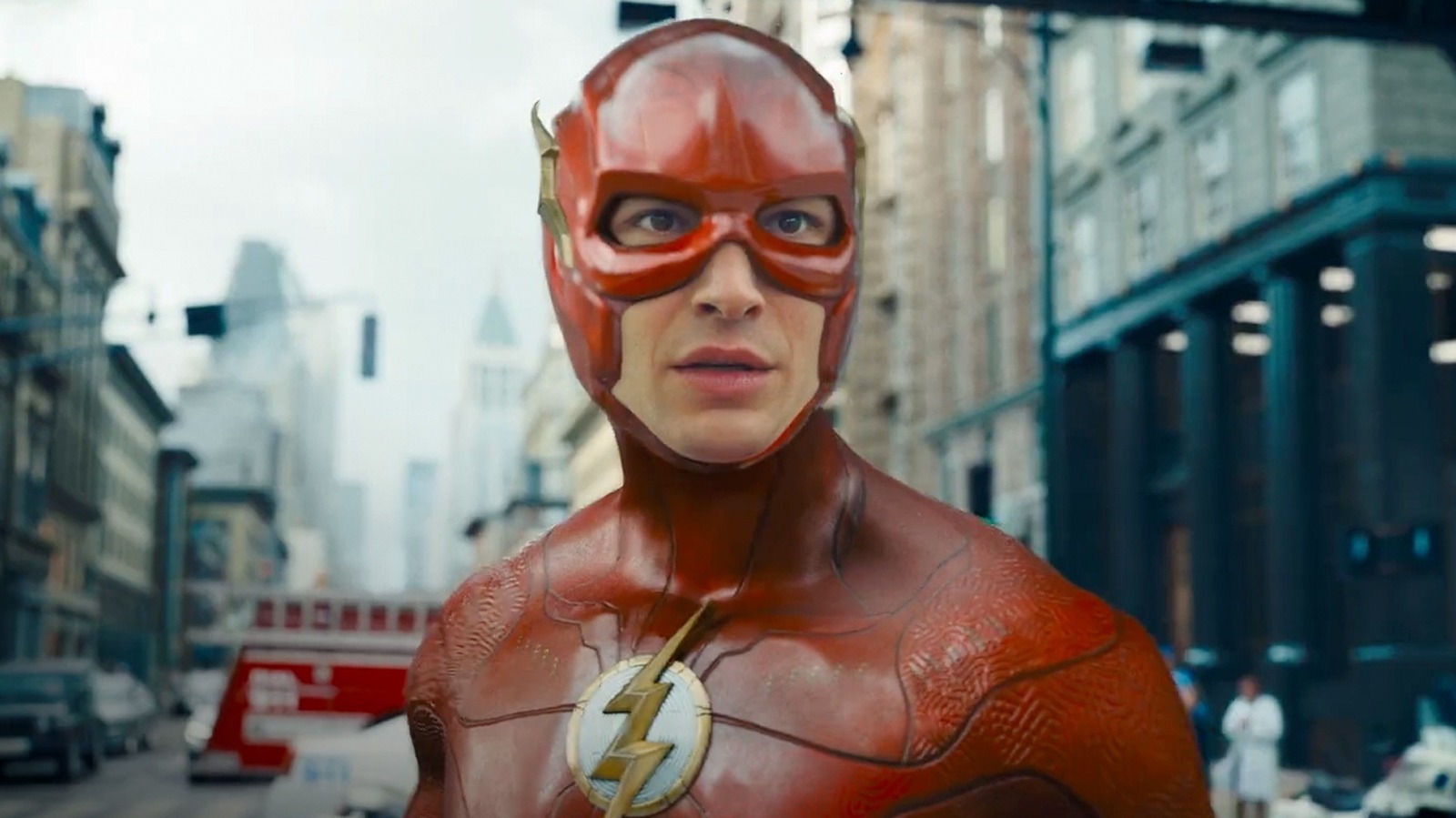
It wasn’t supposed to bomb. That’s technically true of every movie with a budget that must be recouped. However, “The Flash” was hyped up a year in advance as an especially sublime superhero movie that would prove all the haters wrong. With a massive marketing campaign and super advanced screenings meant to build up hype, “The Flash” was being teed up as a major smash for DC. Here was a movie that would finally give that speedster superhero the megahit he deserved, while washing away recent DC flops like “Wonder Woman 1984.”
Except that didn’t happen. Months of executives saying “The Flash” was remarkable didn’t translate into audience enthusiasm. “The Flash” was instead overshadowed in June 2023 by movies like “Spider-Man: Across the Spider-Verse” and divisive word of mouth from audiences. Moviegoers were outright disturbed by sequences like Barry Allen’s microwave baby scene, rather than demanding a sequel or diving into repeat viewings. After its disastrous opening weekend and scoring one of the 10 biggest comic book movie second weekend drops in history, this frontloaded blockbuster only grossed $108 million domestically and $271 million worldwide. That put it below “Green Lantern” and “Shazam!” in terms of DC movies at the domestic box office.
Given its $200 million budget, “The Flash” hadn’t made much of a profit, let alone become a pop culture sensation. Rather than setting a new bar of quality for superhero movies, it flat-out bombed at the box office.
The Return of Swamp Thing (1989)
While there are no recorded box office numbers for 1982’s “Swamp Thing,” it clearly did well enough either theatrically or on home video to generate a sequel. That follow-up materialized as “The Return of Swamp Thing,” a 1989 feature helmed by Jim Wynorski that co-starred Heather Locklear as Abby Arcane. This attempt to keep the “Swamp Thing” good times rolling received mixed reviews, with the most toxic remarks focusing on the ill-fated and cringeworthy attempts at zany comedy. If the kooky punchlines in “Return of Swamp Thing” didn’t click for a viewer, there was really nothing else here to capture their interest.
That would partially explain why “The Return of Swamp Thing” was such an enormous box office flop in its extremely fleeting theatrical run. Domestically, it only grossed $192,816. While other DC movies flopped even with $100+ million domestic cumes, this “Swamp Thing” sequel couldn’t even hit seven-digit box office figures while it played on the big screen. Its North American haul was so meager that it didn’t even reach the top 200 movies of 1989 in this territory. There was no end to the way one could describe how poorly this project had performed.
Most bizarrely, this financial fate befell a sequel. Being an extension of “Swamp Thing” should’ve ensured “The Return of Swamp Thing” some level of a reliable core audience that would turn out to see this feature in theaters. Those moviegoers never came, though, and everyone else stayed away.
The Losers (2010)
Zoe Saldaña owns the $2 billion box office, a testament to just how many massive blockbusters she’s appeared in. Across the “Avatar” trilogy, “Avengers: Endgame,” and tons of other smashes, she’s the queen of 21st century genre cinema. However, what often slips under the radar is that Saldaña also headlined a DC Comics movie. That project was 2010’s “The Losers,” which paired Saldaña with a cornucopia of nerd-friendly actors, including Jeffrey Dean Morgan, Chris Evans, and Idris Elba.
This project, based on a series of comics spanning 2003 to 2006 from DC’s Vertigo imprint, was oddly troubled before its release. Most notably, it kept on switching up its release date, with Warner Bros. struggling to figure out whether this title should drop in April or June 2010. Eventually, it landed in multiplexes on April 23, 2010, a release date that put it in competition against a slew of other action-oriented features, including “Kick-Ass.” Indecision over its theatrical release launchpad didn’t end up inspiring a tremendous box office run. “The Losers” only grossed $23.59 million domestically, a haul that was noticeably below its already meager $25 million budget.
Neither these “Losers” characters nor anyone in the film’s principal cast was big enough in April 2010 to secure moviegoer enthusiasm. Instead, “The Losers” came and went from theaters in a flash. Saldaña, of course, would quickly recover her box office prowess.
Batman & Robin (1997)
Out of all the box office flops attached to the DC brand name, 1997’s “Batman & Robin” might be the most infamous. For one thing, the film’s leading man, George Clooney, will happily make fun of the project at any given opportunity. Director Joel Schumacher apologizing for “Batman & Robin’s” quality has also lent it an extra layer of infamy. However, what’s really informed the enduringly poor reputation of this tentpole is its box office run. In 1989, “Batman” was a game-changing franchise that shattered box office records and spawned a merchandising empire. Though not as big globally as this Tim Burton directorial effort, “Batman Returns” and “Batman Forever” were still mighty box office performers, reaffirming how this superhero was extra powerful as a theatrical draw.
Then came “Batman & Robin,” which carried a heftier budget than its predecessors (a $125 million price tag) and a cast stacked to the brim with A-list stars. Despite everything working in its favor, the title only grossed $107.32 million domestically and $238.31 million worldwide. This was not a case of critics hating a movie that audiences couldn’t get enough of. “Batman & Robin” flopped theatrically and provided a stunning turnaround from the box office highs of earlier “Batman” installments. Capsizing a once-lucrative saga is one of “Batman & Robin’s” most towering transgressions.
It’s doubtful “Jonah Hex” or “The Losers” would’ve spawned sequels even under the best box office circumstances. “Batman & Robin’s” financial fallout, though, was much more pronounced and tragic.
The Suicide Squad (2021)
Warner Bros.
Today, James Gunn (alongside producer Peter Safran) leads DC Studios, a division in charge of projects like “Superman” and “Lanterns,” and is trying to make sure the various DC Comics characters are movie and TV superstars in the 2020s. Given his high standing in all things DC today, it’s remarkable to remember that Gunn’s only pre-2025 directorial effort involving DC Comics figures was the 2021 flop “The Suicide Squad.” This attempt to get the “Suicide Squad” brand name back on track after the initial 2016 film was a distinctly Gunn venture with its complicated tone and emphasis on obscure comic book characters.
One of the most expensive R-rated movies of all time, Warner Bros. clearly had high hopes that Gunn could make a “Guardians of the Galaxy”-sized smash out of “The Suicide Squad.” Unfortunately, the project, which cost $185 million to make, only grossed $55.8 million domestically and $168.71 million worldwide. That initial “Suicide Squad” movie had left such a sour taste in people’s mouths that audiences just weren’t craving more motion pictures (even what basically amounted to a reboot) involving this brand name. Then there was the grave problem that “The Suicide Squad” simultaneously debuted on HBO Max in North America.
That immediately diluted the specialness of this project, which needed all the help it could get with its restrictive R-rating and hefty budget. Despite “The Suicide Squad” losing so much money, Gunn and the DC brand name prospered in the long run thanks to hits like “Superman.”