
Britain’s looming change of Prime Minister has effectively brought the machinery of government to a standstill.
Lengthy assessments from the Office for Budget Responsibility and the Bank of England underline why the country can ill afford a period of drift and uncertainty as it awaits the expected elevation of Andy Burnham.
The OBR’s latest findings reinforce a warning Burnham — and the wider country — cannot ignore: Britain’s public finances are becoming “unsustainable,” despite Chancellor Rachel Reeves’ insistence that Labour’s fiscal rules have restored stability.
Taken together, the messages from the OBR and the Bank are stark. Britain, along with the wider global financial system, is balancing on a dangerous debt ledge, and it may not take much to push it into deeper trouble.
The artificial intelligence boom has helped drive soaring valuations for technology companies and lifted Wall Street to new highs. But much of that growth rests on fragile debt-fuelled foundations. In the wrong hands, AI also raises the threat of cyber-attacks and market manipulation.
The UK’s debt-to-GDP ratio is already close to 100 per cent. Difficult choices over how to fund welfare, the NHS and pensions are becoming unavoidable. Without action, debt as a share of national income could climb dramatically by the late 2040s.

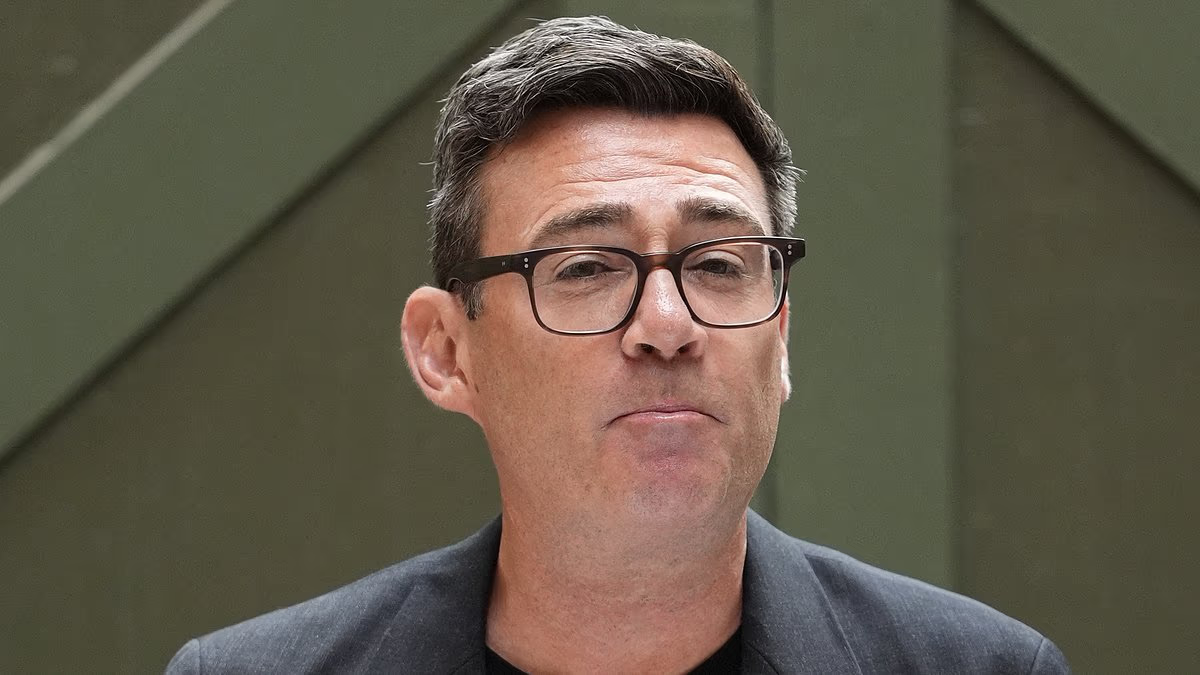
PM in waiting: Andy Burnham is expected to be named Britain’s new Prime Minister without a formal leadership contest and could take office as early as July 20
Over the past two decades, UK debt has risen as a share of national output faster than in any other advanced economy.
It is not just the Government that is hooked on borrowing. This week, a feeble board at no-frills airline Easyjet capitulated to a £5.5billion bid from private equity marauders Castlelake, fuelled by debt.
If the Government and regulators fail to draw a line in the sand, Easyjet will join another 520 corporations in Britain financed by private credit and private equity.
Together, these enterprises account for £230billion in revenue and £40billion of earnings, the Bank of England says.
The debt-fuelled structures are opaque and the Bank fears they could be a threat to stability.
The need for action to take Britain out of the fiscal danger zone – the cost of borrowing for the Government is the highest in the G7 – is urgent. The nation’s interest rate bill is running at £110billion in 2026-27.
This at a moment when Keir Starmer sits embarrassed at the Nato summit in Ankara because of Britain’s failure to properly fund defence.
History suggests that it requires a crisis, such as 1976 when the UK was forced to borrow from the International Monetary Fund (IMF), to turn the tide.
In recent times both Greece and Italy have been required by the IMF and EU authorities to confront their fiscal crises and emerged as healthier and growing economies.
If Burnham or other political leaders were willing to drink the Kool-Aid, there is nothing to suggest that the nation couldn’t conquer its fiscal difficulties.
We can do little about an ageing population but can reduce the cost to taxpayers. Abolition of the ‘triple lock’ on state pensions – and instead increasing them in line with consumer prices – would be a start.
The OBR also suggests that if inflation adjustment on welfare payments were switched to CPI from average earnings, then spending could be halved.
It is also clear from the OBR’s analysis that Labour’s current tax policy is doomed. It quotes a recent IMF analysis suggesting that Britain has reached peak taxation of labour income, with higher taxes producing diminishing returns.
Burnham appears to favour taxes on capital and housing by equalising levies on capital with those on income and mansion tax. As we know from Reeves’ changes, all that does is drive wealth, share listings and entrepreneurship overseas.
There are multiple crises on the horizon. Bond yields hit an 18-year peak in May and could pop again.
The Bank has cautioned that there could be a sharp correction in equity markets, with a potential 45 per cent fall on Wall Street over six months should hyped AI valuations be found out.
Regulators are drilling down into where the risks in private credit and equity lie. Fissures have already surfaced at UK upmarket mortgage lender Market Financial Solutions, US car parts group First Brands and sub-prime lender Tricolor.
Debt, public and private, is the enemy of stability.
DIY INVESTING PLATFORMS

AJ Bell
AJ Bell
Easy investing and ready-made portfolios

Hargreaves Lansdown
Hargreaves Lansdown
Free fund dealing and investment ideas

interactive investor
interactive investor
Flat-fee investing from £4.99 per month

Freetrade
Freetrade
Investing Isa now free on basic plan

Trading 212
Trading 212
Free share dealing and no account fee
Affiliate links: If you take out a product This is Money may earn a commission. These deals are chosen by our editorial team, as we think they are worth highlighting. This does not affect our editorial independence.
Compare the best investing account for you


