
Anthropic, the US technology company behind the Claude artificial intelligence platform, is preparing to go public within weeks in a flotation valued at $1.5 trillion.
The prospect of reserving as much as 20 per cent of the shares for private investors has intensified interest. Yet this exceptionally large IPO—described as being of “monumental importance” to financial markets—is arriving as investors grow increasingly uneasy.
Technology shares including Amazon, Google parent Alphabet and Intel have fallen sharply in recent weeks. Their latest results highlight the scale of their rising investment, with spending across the sector expected to exceed $1 trillion this year. The crucial question is whether that huge outlay will generate an adequate return.
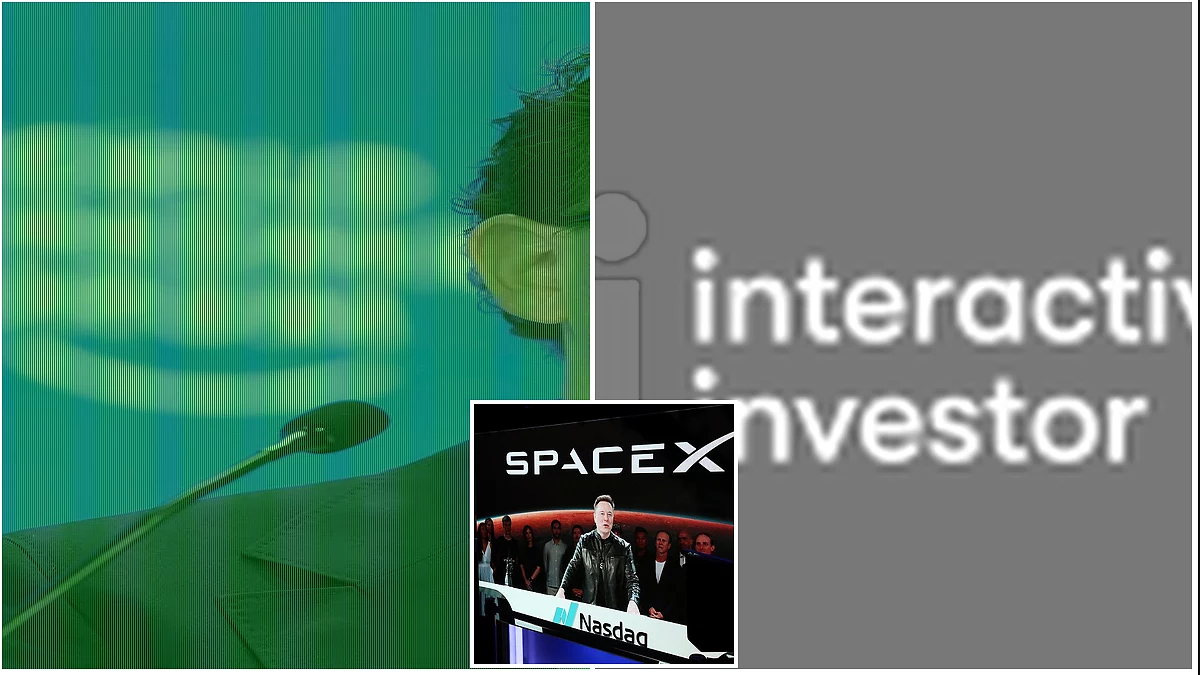
Against that backdrop, only investors with a high tolerance for risk should consider joining the Anthropic rush. The offering could even surpass this summer’s headline-making $1.3 trillion IPO of SpaceX, Elon Musk’s combined rocket and AI enterprise.
Anthropic was founded just five years ago with a pledge to build AI that is “helpful, honest and harmless”. However, its 335-page IPO prospectus makes clear that the company now intends to become a dominant force in artificial intelligence. That ambition carries unavoidable risks.
Chief executive Dario Amodei and his sister Daniella, the company’s president, could soon each hold a fortune of around $13 billion, alongside Anthropic’s five other co-founders. The question for investors is whether the leadership team can create comparable wealth for shareholders.
Here is what investors need to know about this extraordinary share sale.

Anthropic chief Dario Amodei is in line for a huge windfall when the company goes public
APPLYING FOR SHARES
Anthropic is encouraging potential investors to look beyond the current anxiety surrounding the technology sector.
Its prospectus says: “We encourage you, as a prospective owner of our stock, not to think of your purchase in purely transactional terms.”
That wording underlines the possibility that investing in Anthropic could be a nerve-racking experience. Simon Skinner, global head of investment at fund manager Orbis, says the company is so unusual that traditional valuation measures may offer limited guidance.
Skinner says: “This could be an amazing investment, or it could be terrible. You cannot know in advance.”
Even so, demand from private investors is likely to be intense when the retail portion of the IPO launches under the management of Wall Street giant JP Morgan.
For now, UK investment platforms including AJ Bell, eToro, Hargreaves Lansdown and Interactive Investor are saying little about how British customers will be able to buy Anthropic shares. The silence has been requested by the IPO’s US legal advisers.
Anyone interested should sign up for IPO email alerts from their investment platform. That will make it easier to act when details emerge, including the share price and minimum investment.
THE COMPETITION
Anthropic will trade under the ticker ANT. The small-insect association disguises the scale of the business and its extraordinary expansion during the AI revolution. As recently as last September, the company was valued at $185 billion.
Approximately 300,000 companies around the world already use Claude for advertising, marketing and other functions. Its applications are also spreading into fields such as pharmaceutical and drug development.
Chinese AI developers are making progress, but Anthropic identifies OpenAI, the company behind ChatGPT, and Alphabet’s Google Gemini as its principal competitors.
Claude can cost more than rival systems. However, Peter Singlehurst, head of private companies at Baillie Gifford, believes customers are prepared to pay for its ability to manage complex assignments.
“Some AI models are cheaper and perfectly good for routine tasks, but customers may pay substantially more for models that can reason better, tackle harder problems and work independently for longer.”
THE NUMBERS
Anthropic’s revenue reached $16.3 billion in the first six months of this year, up from just $1.2 billion during the same period a year earlier. Customers pay according to their use of Claude, which is measured in tokens.
To support and expand token usage, Anthropic is committing vast sums to “compute”—the hardware, microchips and data-centre infrastructure required to run advanced AI systems.
Alphabet, chip designer Broadcom and SpaceX are among the beneficiaries of that spending. SpaceX alone reportedly receives $3.1 billion a month for access to its Colossus 1 and Colossus 2 data centres in Memphis, Tennessee.
Amazon and Alphabet are also major Anthropic shareholders. The involvement of these technology giants suggests they see substantial long-term potential in the company.

UK investors rushed into SpaceX’s IPO in June, but the stock has experienced sharp swings
THE RISKS
Anthropic’s constitution says the company should “act for the global good”. Its name comes from the Greek word for human, anthropus.
Nevertheless, risk disclosures occupy 92 pages of the 335-page IPO prospectus. Among the concerns is recursive self-improvement, or RSI, in which an AI system such as Claude continually seeks to increase its own capabilities.
Claude is already replacing some human tasks. The prospectus also warns that the technology could “provide meaningful assistance to malicious actors seeking to develop chemical, biological, or other dangerous weapons” and potentially create “catastrophic or existential risks to humanity.”
The IPO poses a more immediate threat to investors’ wealth. Enthusiasm over the prospect of spectacular gains in Anthropic could encourage shareholders to sell positions in Amazon, Alphabet, Meta, Microsoft, Nvidia and other technology companies.
Such selling could depress the prices of stocks that feature heavily in private investors’ portfolios, either through direct holdings or global funds.
> Anthropic warns AI could have ‘catastrophic’ consequences
OTHER OPTIONS
Some investors may already have exposure to Anthropic through Aim-listed companies or investment trusts. Monks, RIT Capital Partners, HarbourVest Global Private Equity and Pantheon International hold small stakes. Baillie Gifford US Growth, Schiehallion and Scottish Mortgage, in which I am an investor, have more substantial holdings.
Each of those three funds also owns SpaceX. Its shares currently trade at $145, around 10 per cent above the $135 offer price.
I invested the minimum amount in the SpaceX IPO. The unsettling rises and falls that followed may offer a preview of the experience Anthropic shareholders could face.
SpaceX shares have recently rebounded after Musk announced plans to merge the company with his other vehicle, Tesla, in preparation for the “AI singularity”—the point at which artificial intelligence surpasses humans at every intellectual task.
That apocalyptic prospect has encouraged analysts to rate SpaceX a “buy”, with an average target price of $250. Such forecasts make it easier to find the confidence to hold the shares.
However, as scrutiny of Big Tech’s spending increases, I will be seeking to diversify into British companies benefiting from the AI boom.
The Edinburgh Investment Trust focuses on businesses making effective use of AI, including software group Sage, analytics company Relx and LSEG, the data provider that also operates the London Stock Exchange.
Trust manager Imran Sattar also points to Softcat, the IT infrastructure specialist benefiting from customer investment in cyber security and data centres. Its shares have gained 22 per cent this year to 1,729p.
Computacenter is another UK-based AI-related option. The FTSE 100 company supplies businesses with a broad range of technology services.
Demand for its services from US customers is growing, as this week’s results demonstrated.
Berenberg analysts rate Computacenter a “buy” and have set a target price of 6,750p.
Artificial intelligence is reshaping how we live, work and think. For investors, that makes exposure to the revolution increasingly important—but it also makes diversification essential.
Anthropic may become a global technology star. Maintaining some exposure to domestic companies could help spread the risk, which is likely to remain considerable despite the company’s stated commitment to responsible AI.
DIY INVESTING PLATFORMS
AJ Bell
AJ Bell
Simple investing with ready-made portfolios
Hargreaves Lansdown
Hargreaves Lansdown
Free fund dealing and investment ideas

interactive investor
interactive investor
Flat-fee investing from £4.99 per month

Freetrade
Freetrade
Stocks and shares Isa free on the basic plan

Trading 212
Trading 212
Commission-free dealing with no account fee
Affiliate links: If you take out a product This is Money may earn a commission. These deals are selected by our editorial team because we believe they are worth highlighting. This does not affect our editorial independence.
Compare the best investing account for you


