
A decade ago, copper changed hands for under $4,500 a ton. Now it is trading close to $13,500 a ton, and many in the industry believe the rally has further to run, with demand forecast to climb by 50 per cent.
The reason is straightforward: copper is the world’s lowest-cost major conductor and second only in effectiveness, making it indispensable across the electrical economy, from wiring and computers to power networks and electric cars.
It is also crucial to the data centres that underpin the internet and the rapid growth of artificial intelligence. One large facility can consume as much electricity as 100,000 households.
Together, these forces are set to reshape demand for electricity — and for copper — over the years ahead.
The metal is equally important in defence, where it is used across modern military hardware, including tanks, ships, aircraft and drones.

Copper, the world’s cheapest and second-most efficient conductor, is a key material in cable production
In short, copper sits at the heart of many of the most powerful trends shaping the global economy.
As a result, prices may continue to strengthen, while miners producing this critical metal could generate attractive returns for shareholders.
Now could be just the right time to get in on the action. While the long-term outlook is bright for both copper and copper miners, concerns about economic growth may hit prices in the short term, offering attractive bargains.
Trekor
Some lucky investors have already made serious money from copper.
Midas recommended Canada-based Taseko (now called Trekor) in 2020, when the shares were 65p. They have since soared almost eight-fold to £5.10 and there should be plenty more to come.

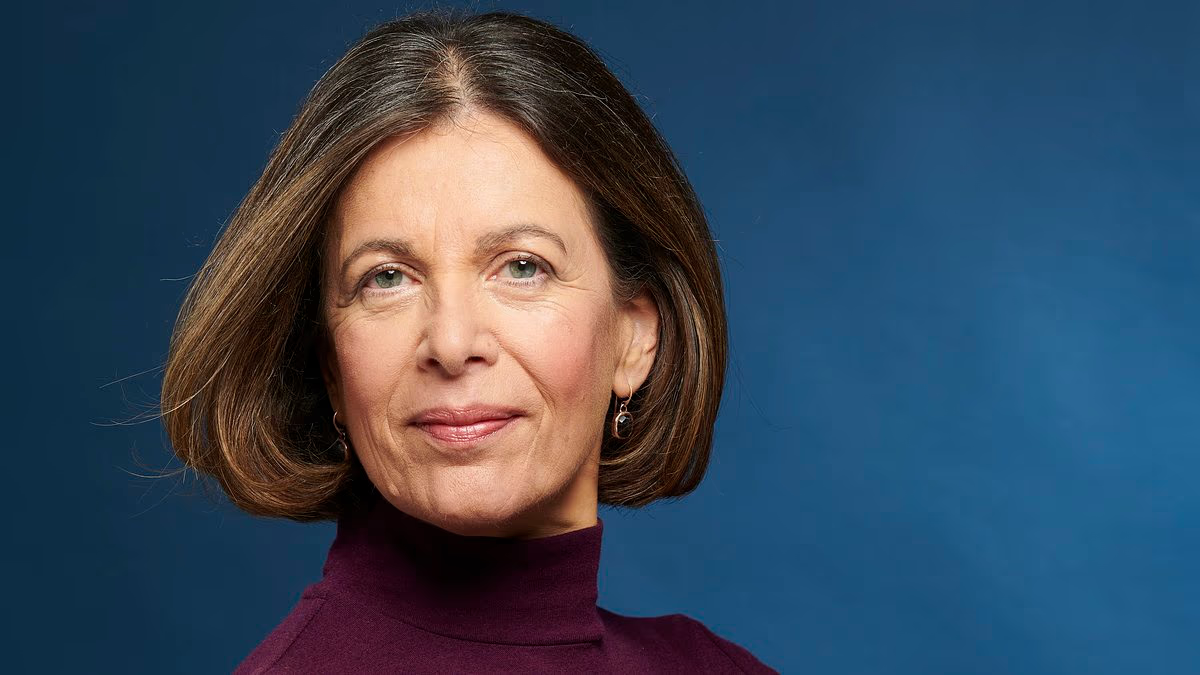
Demand for copper is expected to soar as it plays an integral role in dominant trends of the modern world, says Joanne Hart
Six years ago, Taseko had one mine in production, called Gibraltar, which was located in British Columbia. Acquired for just $1 in 1999, the site is now one of the foremost mines in North America.
This year, chief executive Stuart McDonald brought a second mine into production, called Florence, in the heart of Arizona. As the first major new copper mine in the US for more than a decade, Florence uses modern leaching technology that allows the ore to be processed into pure copper on site and sold directly to customers.
McDonald is hoping to produce about 65,000 tons of copper from both his mines this year, rising to nearly 90,000 tons by 2028, as Florence moves into gear.
Brokers expect a 55 per cent increase in sales to £550 million and a 60 per cent increase in underlying profits to almost £200 million in 2026, with further strong gains to come.
McDonald is also making progress with a third mine, again in British Columbia, scheduled to come on stream in the 2030s, and expected to double group production to 180,000 tons.
McDonald is thoughtful, softly spoken and seems more of an academic than a miner. But he gets things done and intends to continue in that vein.
He has just changed the company’s name to Trekor, but the culture and determination remain the same.
At £5.10, current shareholders have had a blast and may wish to take some profits, but there is still plenty of life in this stock.
Atalaya Mining
Atalaya is another gem. Based in Spain, its main mine was originally owned by mining giant, Rio Tinto.
Today, Rio Tinto has operations across the globe, but it started out in Victorian times, operating from an area in southern Spain known as Rio Tinto, or Red River in English.
An English community sprung up around the site, along with a gentlemen’s club that introduced football to 19th century Spaniards. Remnants of the village still exist, but the site is now owned by London-listed Atalaya Mining. It is run by Alberto Lavandeira, a former mining engineer who joined in 2014 when the business was valued at about £50 million and had yet to move into production.

While the long-term outlook is bright for both copper and copper miners, concerns about economic growth may hit prices in the short term, offering attractive bargains
Today, Atalaya is valued at more than £1.2 billion and produces about 50,000 tons of copper a year from its Rio Tinto site.
Profits are good and the company has been paying dividends to shareholders since 2021, but Lavandeira is hoping to deliver substantially more growth, with plans to double production over the next three years.
The main impetus should come from Proyecto Touro, a copper project in Galicia, northwest Spain. The site was operational in the 1970s and 80s but has lain dormant for decades.
Now Atalaya intends to rekindle production and teams are in place to begin construction.
Lavandeira is awaiting final permission from Galician officials, but there are strong signs that could be granted this summer. Then it will be full steam ahead.
Atalaya raised £125 million from shareholders in January, it has £220 million cash in the bank and plenty of access to debt if needed. The group is also keen to expand operations at Rio Tinto, which should boost production still further.
Brokers expect sales to jump from £411 million to £520 million this year with core profits up 65 per cent to £256 million and dividends doubled to about 20p a share.
Payouts should rise considerably as production increases.
Atalaya shares have motored in recent years, but the price has come off in the past few months from more than £10 to £7.84, hit by concerns about global economic prospects and worries about the Touro permits.
Insiders are highly optimistic, however, and analysts expect the stock to exceed £10 in the next 12 months. At current levels, they are a buy.
Meridian Mining
Meridian Mining has a link to Rio Tinto too, having acquired a mine in Brazil formerly owned by the London-listed giant. The site was too small for Rio but it is ideal for this up-and-coming firm.
Infrastructure is already in place, because the site ran for many years and, crucially, Meridian knows there is copper in the ground, topped up with a generous amount of gold.
The company is run by financially astute Australian Gilbert Clark, a former geologist with more than 20 years’ experience in mining and energy.
He expects to move the mine into production by 2028, delivering between 15,000 and 20,000 tons of copper and a lucrative 65,000 ounces of gold.
A financial plan should be published this year, but estimates suggest Clark will need somewhere in the region of £225 million. Meridian will almost certainly need to call on shareholders for some of this, but most of it is likely to come in the form of debt, and lenders are already declaring an interest.
Why? Because the mine is low-risk, costs are not high and there is plenty of potential growth, as Clark and his team develop the existing project and explore in the surrounding area.
Having been listed in Canada for a while, Meridian joined the London market on May 1. City analysts are big fans, suggesting it should double in value to about £750 million, taking the shares from 86p to nearly £1.70. That makes the stock an intriguing buy for the adventurous investor.
Antofagasta
Antofagasta is the Big Daddy of copper miners, producing 650,000 tons a year from four established mines in Chile.
Founded as a railway company in 1888, Antofagasta added mining to its roster almost a century later and has spent the past four decades building a dominant position in copper.
Growth has been a consistent theme and remains a key part of its strategy, with plans to raise production by 30 per cent to about 850,000 tons of copper over the next three years alone, along with a tasty side order of gold.

Copper prices are likely to rise and the companies that mine this critical metal should deliver robust rewards to shareholders
Three of Antofagasta’s Chilean mines are owned outright, while the fourth is jointly owned with gold giant Barrick Mining Corporation. The group also owns 19 per cent of a Peruvian miner, Buenaventura, a stake that is expected to make a strong contribution to profits.
Antofagasta is chaired by Jean-Paul Luksic, whose family has owned around 65 per cent of the business since the 1980s.
Dominant family holdings can worry investors, but most followers consider the Luksic stake to be a positive, giving the business an edge compared to peers.
The family holding may also play a part in Antofagasta’s dividend policy, under which at least 35 per cent of net cash is paid out to shareholders each year. A payment of about 50p is forecast for 2026, rising to 65p by 2028.
Dividends are supported by robust profits, with analysts forecasting a 33 per cent uplift in earnings this year to almost £5.2 billion, rising further in 2027 and beyond.
Antofagasta is often seen as a weathervane for the copper price, its shares rising and falling in line with the metal. But the group has a rich pipeline of growth and an established record of delivery.
For investors in search of a solid bet on copper, this is a great place to start, at £37.59 a share.
Halo Minerals
Like Antofagasta, Halo Minerals is based in Chile. But the group joined the AIM junior market little more than three months ago, it is valued at less than £12 million and the shares are just 10.6p apiece.
Halo Minerals is unusual because it is a mining company that has no mines but expects to produce 7,000 tons of pure copper and another 8,000 tons of concentrate annually from the end of 2028.
The firm is focused on copper tailings – material left behind by miners in days gone by – and its flagship project is Playa Verde, a three-mile stretch of beach littered with 250 million tons of the stuff.
They may be unsightly and toxic but tailings are rich in copper, and Halo has developed in-depth plans to process these piles and clean up the beach along the way.
Chief executive Andrew Dennan has done his homework, assessing the site and securing permits. Detailed plans will be unveiled this year, but Dennan knows he needs about £60 million to move Halo to commercial production.
He is already talking to contractors, trade buyers and royalty specialists about funding and has found strong support.
Halo listed in March at 18p, since when the shares have slumped by more than 40 per cent.
This seems unfair. The group expects to be throwing off cash in three years and it is sitting on copper that is worth more than £1 billion.
While there are risks in any young mining business, Halo will be using tried and tested technology, infrastructure is in place and Dennan is dedicated to making this business work. That makes the shares worth a punt.
How to invest through funds and trusts
For investors who may prefer to invest in copper-related funds, rather than individual stocks, there is no shortage of choice.
Sprott Copper Miners invests in more than 60 copper groups around the world as well as the physical metal. Antofagasta, Atalaya and Trekor all form part of its portfolio but so do dozens of others, from mainstream producers to young explorers.
The price has more than doubled to £15.72 over the past year but there should be further growth for patient investors.
Global X Copper Miners follows a similar theme and its returns have been impressive too, delivering average annual growth of almost 20 per cent over the past ten years.
The current price is £44.34 and should move higher in time.
Some investors might feel that they would like to go even further, investing in a spread of miners across different metals and minerals. At £8.87, BlackRock World Mining Trust is an ideal choice here. The fund invests in firms of every size, from big beasts such as Glencore and Rio Tinto to small unlisted businesses that would be hard to access otherwise.
Copper accounts for about 30 per cent of the trust’s total portfolio, and co-manager Evy Hambro believes the red metal has a lot further to go. The trust pays a quarterly dividend, too, and has a long track record of success.
Fidelity’s Transition Materials Fund offers another attractive option, focused on companies that will benefit from long-term global trends such as electrification, greater use of artificial intelligence, green energy and even agricultural efficiency.
The fund invests in businesses around the world but copper miners form a key part of the portfolio. At £1.17, the stock should deliver lasting gains.
Investing platform reviews


