
Becoming an Isa millionaire might seem beyond the reach of most investors, but it is certainly achievable.
The financial freedom would be considerable: a tax-free investment fund that could be accessed whenever needed, without the income tax that can apply to pension withdrawals. For many savers, it represents the ultimate financial security.
The latest figures from Revenue & Customs show that more than 7,700 investors held Isa portfolios worth at least £1million in April 2024. That was a 50 per cent increase on the previous year.
With stock markets rising by roughly 25 per cent since then, the number of Isa millionaires is likely to have climbed well into five figures.
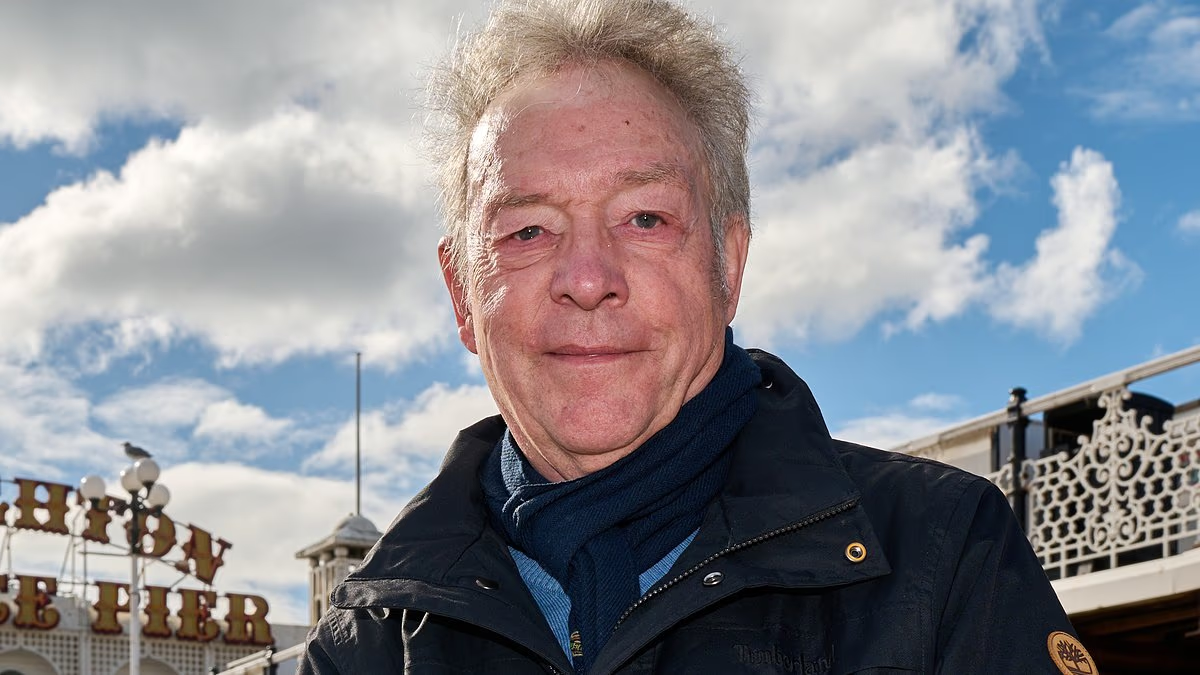
At an investor meeting attended by the Daily Mail and This is Money earlier this month, several guests were happy to describe themselves as Isa or investment millionaires. The event was organised by Edinburgh Investment Trust and included 75-year-old Stephen Pavey from Brighton, East Sussex.
Stephen bought his first shares jointly with his late mother 60 years ago. He still owns those Imperial Metal Industries shares and has kept the original certificate.

Stephen Pavey, 75, a retired university finance director, is proud to call himself an Isa investment millionaire
His wealth is spread across Isas, self-invested personal pensions and a substantial holding in the listed investment trust F&C. Combined, these investments mean he is approaching the status of a two-times investment millionaire.
His investment approach and practical tips are outlined in the box below.
Stephen, a retired finance director at the University of Sussex and a patron of Brighton Pavilion, believes his success rests on three habits: investing seriously from his early 30s, continuing to invest during both good and bad markets, and maintaining a diversified portfolio.
He counts legendary US investor Warren Buffett among his biggest influences. ‘Buy and hold is a key part of his investment strategy and it’s proved successful for me,’ he says. ‘I don’t mind if the market zigzags up and down – that doesn’t shake me. Staying invested through all weathers is what achieves results.’
Stephen’s portfolio is now large enough to fund a luxurious lifestyle, including fine dining, exotic holidays and regular shopping trips.
Yet luxury spending is not his main motivation. He is more interested in the difference his savings could make through charitable donations to causes that matter to him.
He also finds the investment journey rewarding in its own right. ‘Investing keeps me informed about what is going on in the world,’ he says.
‘When I go to fund and investment trust Annual General Meetings, managers share their latest thoughts on trends such as AI – so I often learn about social issues and changes far sooner than I might have otherwise.’
John Lee, now Lord Lee of Trafford, became the first recognised Isa millionaire in 2003. He built his fortune from a Personal Equity Plan (Pep), the tax-efficient investment scheme that preceded the Isa.
Now 84, Lord Lee remains an enthusiastic investor and wrote the book ‘How to Make a Million Slowly’. Below, he shares his key guidance alongside Stephen’s advice on building a place in the Isa millionaire club.
‘Yes, you need to think long term,’ he says, ‘and be prepared to invest a chunk of your take home pay every month rather than spend it – and be deadly committed. But with patience and a fair investment mind you can get there.’
Here is how you could work towards joining the Isa millionaire club – or, at the very least, build a substantial Isa fund capable of providing greater comfort in retirement.

Lord Lee of Trafford is credited with becoming the UK’s first Isa millionaire in 2003
Nine tips to put you on the road to becoming an Isa millionaire
We asked successful investors Lord Lee and Stephen Pavey to come up with tips on how to become Isa millionaires. They’re simple, common-sense advice.
- Start a stocks and shares Isa as soon as you can. This also applies to children. Set up Jisas for them and use the tax-free wrapper to invest, not save cash. Grandparents, godparents and friends can also lob money into the Jisa pot on the child’s behalf.
- Invest what you can afford. ‘Investing £50 is not like spending £50,’ says Stephen. ‘Your bank account may be £50 lighter, but by investing you have given yourself the chance to turn £50 into a much bigger sum over the long-term.’
- Try and use a chunk of your Isa allowance every year. ‘It’s a use it or lose it allowance,’ says Lord Lee. ‘Use as much as you can.’
- Build a diversified Isa portfolio. For example, Stephen has a mix of 15 shares and investment funds – stock market listed investment trusts – in his Isa. Shares such as Tesco, Unilever and Compass – and trusts that are invested in the UK (Edinburgh, Finsbury Growth & Income, Merchants) and globally (the likes of Murray International and Scottish Mortgage).
- In terms of UK shares, look for profitable companies paying dividends. Then reinvest the dividends in more shares, either automatically or by using the income to buy shares in other companies. ‘Compounding is very important,’ says Lord Lee.
- Don’t chop and change holdings when markets are volatile. Hold for the long term. But Lord Lee says: ‘If a holding is showing a loss and you feel you have made a mistake, dispose of it quickly.’
- Try not to take out money from your ‘tax free’ Isa pot while you are building retirement wealth.
- When it comes to funding your retirement, think about how you will use your Isa pot. ‘Don’t do nothing,’ says Stephen. ‘The temptation is to leave it untouched, but you should get enjoyment from the Isa wealth you have built through hard investing. Plan what you want to do with it ahead of retirement – and don’t feel guilty about using some of your Isa wealth to fund lifetime dream such as luxury holidays. ‘Also, think about it in terms of your overall inheritance tax planning and passing down money to family – or gifting money to charities.’
- Take an interest in your Isa. Stephen says: ‘I’ve learnt a lot about investing from attending the annual general meetings of the companies that I hold – and listening to the views of both fellow attendees and investment managers. As a result, I’ve become a shrewder investor and now even help some of my neighbours with their investment portfolios.’
How long would it take to become an Isa millionaire?
We asked wealth manager JM Finn to do some serious number crunching on Isas.
First, we got them to calculate the investment pot that you could build at age 65, assuming you are currently aged 21, 25, 35, 45 or 55.
We’ve chosen age 65 because it is around this point that most people start to switch from accumulating wealth to deploying it for retirement purposes.
Yet there is nothing to stop you continuing to use your Isa allowance as you move through retirement. Stephen, for example, still uses as much of his Isa annual allowance as he possibly can – and invests rather than saves into cash.
Using information from the latest Isa statistics published by Revenue & Customs on typical annual Isa subscriptions and Isa values, we assume an annual Isa contribution of £8,000 for all age groups – made at the start of the year – and that at each age they already have an Isa.
These are respectively valued at £8,000, £10,500, £14,000, £25,000 and £41,000.
We also asked JM Finn to do the same sums, but for an investor investing £650 a month. Most investors prefer to invest regularly because they can use their pay to fund Isa contributions.
Why turbo-charging your Isa contributions pays off
We then got JM Finn to look at the outcome if investors turbocharged their Isa contributions.
Although the investment returns you enjoy from your Isa will be the biggest determinant of how big your pot will grow to, how much money you feed into the tax wrapper is also key.
The more you put in, and the earlier you do it, the greater the chance you give yourself of building a sizeable Isa.
So we asked the wealth manager to work out the Isa pots that our five investors could look forward to building by age 65 if they invested £16,000 annually or £1,300 monthly (equating to an annual sum of £15,600) – and had already assembled Isas respectively worth £24,000, £31,500, £42,000, £75,000 and £123,000.
In terms of investment returns, JM Finn calculated two values for the Isas at age 65: using first an annual return of seven per cent (in line with long term returns from equities) and then a higher return of ten per cent (based on returns in more recent years).
The final figures that JM Finn produced for us were the ages at which our 21, 25, 35, 45 and 55-year-olds could become Isa millionaires.
Of course, there are many assumptions used in arriving at these figures which may not play out in reality. For example, future annual investment returns may not average out at 7 or 10 per cent.
Furthermore, there is no guarantee that future governments will keep Isas as they are: they could cut the annual £20,000 allowance or diminish the tax breaks. Also, the analysis excludes the erosive impact of both inflation and Isa plan charges.
But the numbers that JM Finn has come up with should, at the very least, inspire you to use as much of your annual Isa allowance as possible (finances, permitted) to invest for your financial future.
In so doing, you will give yourself a fighting chance of joining the Isa millionaire club.
Protect Your Money – sign-up to our six-week plan
If you want to be a highly successful investor, you need to know the essentials about saving, and investing.
In our new six-week Protect Your Money plan, Simon Lambert explains everything you need to know, from Isas to pensions and tax. If you’re an M+ subscriber, it’s completely FREE. Find out how to sign up at the link below
> Sign-up to Protect Your Money
How big a pot can you build?
Our 21, 25, 35, 45 and 55-year-olds, investing £8,000 a year into their stocks & shares Isa would produce respective Isa funds at age 65 of £2.61million, £2.01million £0.99million, £0.49million and £0.22million (all figures rounded).
This assumes they had existing Isas valued as mentioned (£8,000, £10,500, £14,000, £25,000 and £41,000) and that annual investment returns were 7 per cent.
In terms of ‘becoming’ Isa millionaires, they would reach this milestone at ages 52, 56, 66, 75 and 83.
Yet, if the annual Isa returns were higher at 10 per cent, these same investors would enjoy far bigger Isa pots at age 65 – and become Isa millionaires much earlier.
Their respective Isas would be worth £6.91million, £4.82million, £1.87million, £0.75million and £0.28million – and they would be Isa millionaires at ages 46, 50, 59, 68 and 77.
For those turbocharging their Isa contributions – and with bigger starting Isa pots – the outcomes are even better. The figures in the table indicate that with an annual investment return of 7 per cent, our 45 and 55-year-olds would achieve Isa millionaire status at 65 and 73 respectively.
For our regular investors putting £650 a month into their Isa, the 21, 25, 35, 45 and 55-year-olds would become Isa millionaires at ages 53, 57, 66, 75 and 84 respectively, assuming annual investment returns of 7 per cent.
This assumes starting Isa plans worth £8,000, £10,500, £14,000, £25,000 and £41,000 respectively. At 10 per cent, they hit the Isa million pound jackpot earlier: at ages 47, 50, 60, 69 and 77.
For those investing £1,300 a month and starting with bigger Isa pots, they get to Isa millionaire status much earlier: 44 for our 21-year-old, 73 for our 55-year-old if annual investment returns are 7 per cent: 40 and 69 if annual returns are 10 per cent.
> Long-term saving and investing calculator: See how returns compound

Stephen still uses as much of his Isa annual allowance as he can – and invests rather than saves into cash. He is pictured in front of Brighton’s Royal Pavilion of which he is a patron
Invest for youngsters for exceptional results
Of course, all our analysis so far has excluded Junior Isas (Jisas). These allow parents (also, grandparents, godparents and friends) to invest £9,000 a year in a tax-free wrapper on behalf of their children.
From age 18, the child can then start to invest in a stocks and shares Isa with the maximum annual investment set at £20,000.
Many parents underestimate the investment power of Jisas – and the financial empowerment they can give their children in later life – or when they embark on further education, enter the workforce or look to buy their first home.
If we assume £2,000 of the annual £9,000 Jisa allowance is used to invest every year up until age 18 – and then £8,000 is invested annually in a stocks and shares Isa thereafter – an Isa worth £4.9million would have accumulated at age 65.
This assumes 7 per cent annual investment returns. At 10 per cent, the pot at age 65 would be a mind-blowing £18.18million. They would be Isa millionaires at age 43 and 36 respectively. Mind blowing.
JM Finn says: ‘The best time to start an Isa may have been years ago, but the second best time is today. The numbers we have crunched clearly show that it is never too late to start investing.
‘Even if someone has nothing in an Isa by the time they are 50, they could still reach the million pound mark by the time they’re 71 if they invest the maximum £20,000 into an Isa and profit from annual investment returns of 7 per cent. It would make a super retirement pot alongside a pension.
‘Any advice we give to clients starts with making sure they use all tax-friendly allowances available to them. When it comes to accumulating wealth, Isas and pensions are the go to vehicles. Use them.’


