
The catalyst for the next financial market crisis remains uncertain, but currently, the AI sector is leading the charge. This week, significant events such as Google’s fundraising efforts, along with the public offerings of SpaceX and Anthropic, have captured attention.
Meanwhile, the ongoing deadlock in the Strait of Hormuz is causing concern for the Organisation for Economic Co-operation and Development (OECD).
However, it is the underlying issues within the shadow banking sector that pose the most significant risks. These hidden cracks in a crucial segment of the financial system are starting to show alarming signs of strain.
Terms like ‘private credit’ and ‘private equity’ might sound harmless, but they conceal a world where much happens behind closed doors, away from the scrutiny of regulators.
‘Private credit’ essentially refers to loans and debts generated outside the oversight of traditional banking institutions.
As for ‘private equity,’ the term is somewhat misleading. The industry is known for generating substantial wealth and enjoying tax benefits, which are anything but equitable.
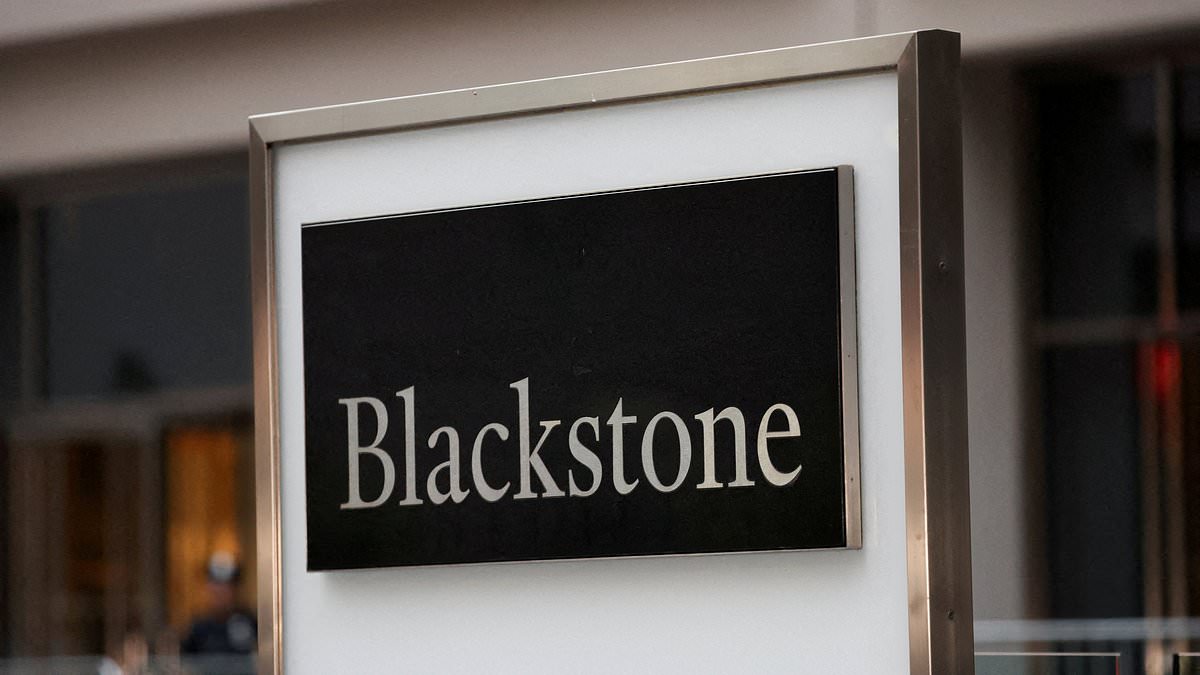
Jitters: In the last 48 hours the world’s biggest investor, Blackstone, has curbed withdrawals from its top private credit fund after $4.5bn of redemption requests
In the last 48 hours the world’s biggest investor, Stephen Schwarzman’s Blackstone, has curbed withdrawals from its top private credit fund after $4.5billion of redemption requests.
In Europe, for a second day, Zurich-based Partners Group has disclosed high withdrawals at several funds and admitted it would be paring back fundraising.
The frightening aspect of the pressure at Partners is the movement of cracks from private credit to private equity funds.
Until now, private equity has managed to conceal the true nature of the liquidity shortfall caused by an accumulation of stale assets.
It has done this through the creation of ‘evergreen’ funds, with no termination date, and ‘secondary’ funds, in which corporate assets are dumped into new entities. That allows partners in the original funds to cash out.
It is reckoned that up to $1trillion of operating companies and property assets have been parked in this way.
Blackstone joins Apollo, Blackrock, KKR and Ares Management, all of which blocked investors from pulling out cash earlier this year.
Partners Group reports a rush of redemptions at its $16billion Delaware-based private credit fund. It is limiting outflows from its $8.6billion private equity fund.
Other evergreen funds are under attack and Partners’ shares have taken a hammering.
Jamie Dimon of JP Morgan described the implosion at motor parts group First Brands as ‘cockroaches in the system’ after his bank had to write down indirect loans to private credit firms.
Anyone who has suffered from cockroaches (as once happened to my family) knows that ridding the premises requires poisonous spraying and being locked out of your own home.
When bankers Credit Suisse first reported withdrawals from its asset management arm in 2022-23 everyone assumed the disturbance would pass.
The idea of Switzerland’s second-largest bank in meltdown looked to be a fantasy.
Yet in March 2023 it collapsed and the remnant was rescued by UBS.
Stability in finance is fragile, and a trickle of redemptions could too easily become a raging torrent.
Dave’s pal
Efforts by disgraced financiers such as Jes Staley to challenge the authorities have led to embarrassing disclosures.
David Cameron protege Lex Greensill looks to have made the right decision in settling with the Insolvency Service over the default of Greensill Capital.
The Aussie’s career is effectively over following a deal which bans him from serving as a company director for nine years. The £327million of losses he parked at Credit Suisse played a big role in its downfall.
It would be nice to think Downing Street has learned its lesson and dodgy financiers will no longer get passes to No 10.
But the Mandelson affair suggests the Government nose for rascals is still not finely tuned.
Musk lift-off
In Britain our biggest companies, such as Unilever, seem intent on slimming down. In the US, the trend is in the other direction. The SpaceX £1.3 trillion initial public offering is still in the foothills.
There already is speculation that Elon Musk’s next move might be to bring Tesla into SpaceX’s orbit.
Semi-conductor production already is shared. SpaceX’s share offer may be an eye-popping preliminary.
DIY INVESTING PLATFORMS
AJ Bell
AJ Bell
Easy investing and ready-made portfolios
Hargreaves Lansdown
Hargreaves Lansdown
Free fund dealing and investment ideas
interactive investor
interactive investor
Flat-fee investing from £4.99 per month
Freetrade
Freetrade
Investing Isa now free on basic plan
Trading 212

Trading 212
Free share dealing and no account fee
Affiliate links: If you take out a product This is Money may earn a commission. These deals are chosen by our editorial team, as we think they are worth highlighting. This does not affect our editorial independence.
Compare the best investing account for you


