
Share this @internewscast.com
Iranian protesters have found a powerful ally in their quest to share details of widespread unrest with the outside world, thanks to SpaceX’s Starlink satellite internet service. Activists reported on Wednesday that the service has reduced its fees, making it easier for Iranians to bypass the government’s intense efforts to keep information contained within the country.
This development comes in the wake of Iran’s complete telecommunications and internet blackout on January 8. The shutdown affected the nation’s 85 million residents amid growing protests over Iran’s struggling economy and the plummeting value of its currency. The move by SpaceX, led by Elon Musk, has been a significant counter to these restrictions.
While SpaceX has not officially confirmed the fee reduction and did not respond to requests for comment, activists informed The Associated Press that since Tuesday, Starlink has been accessible for free to anyone in Iran who possesses the necessary equipment.
“Starlink has been crucial,” said Mehdi Yahyanejad, an Iranian activist whose organization, Net Freedom Pioneers, has facilitated the smuggling of Starlink units into Iran. He cited a video showing rows of bodies at a forensic medical center near Tehran as evidence of the service’s impact.
In an interview from Los Angeles, Yahyanejad remarked, “That footage, which revealed hundreds of bodies, was shared because of Starlink. I believe those images significantly altered global perceptions of the situation, as people could see the reality for themselves.”
Since the protests began on December 28, the death toll has reportedly surpassed 2,500, comprising mostly protesters but also some security personnel, according to the US-based Human Rights Activists News Agency.

Starlink is banned in Iran by telecommunication regulations, as the country never authorized the importation, sale or use of the devices. Activists fear they could be accused of helping the US or Israel by using Starlink and charged with espionage, which can carry the death penalty.
Cat-and-mouse as authorities hunt for Starlink devices
The first units were smuggled into Iran in 2022 during protests over the country’s mandatory headscarf law, after Musk got the Biden administration to exempt the Starlink service from Iran sanctions.
Since then, more than 50,000 units are estimated to have been sneaked in, with people going through great lengths to conceal them, using virtual private networks while on the system to hide IP addresses and taking other precautions, said Ahmad Ahmadian, the executive director of Holistic Resilience, a Los Angeles-based organisation that was responsible for getting some of the first Starlink units into Iran.

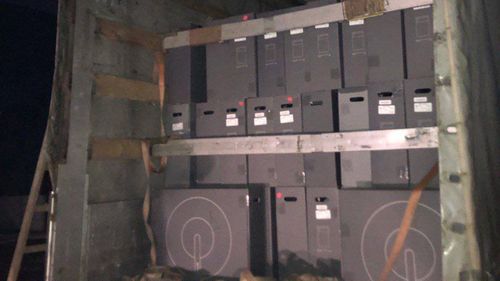
Starlink is a global internet network that relies on some 10,000 satellites orbiting Earth. Subscribers need to have equipment, including an antenna requires a line of site to the satellite, so must be deployed in the open, where it could be spotted by authorities. Many Iranians disguise them as solar panels, Ahmadian said.
After efforts to shut down communications during the 12-day war with Israel in June proved to be not terribly effective, Iranian security services have taken more “extreme tactics” now to both jam Starlink’s radio signals and GPS systems, Ahmadian said in a phone interview. After Holistic Resilience passed on reports to SpaceX, Ahmadian said, the company pushed a firmware update that helped circumvent the new countermeasures.
Security services also rely on informers to tell them who might be using Starlink, search internet and social media traffic for signs it has been used, and there have been reports they have raided apartments with satellite dishes.
“There has always been a cat-and-mouse game,” said Ahmadian, who fled Iran himself in 2012, after serving time in prison for student activism.
“The government is using every tool in its toolbox.”
Still, Ahmadian noted that the government jamming attempts had only been effective in certain urban areas, suggesting that security services lack the resources to block Starlink more broadly.
A free Starlink could increase the flow of information out of Iran
Iran did begin to allow people to call out internationally on Tuesday via their mobile phones, but calls from outside the country into Iran remain blocked.
Compared to protests in 2019, when lesser measures by the government were able to effectively stifle information reaching the rest of the world for more than a week, Ahmadian said the proliferation of Starlink has made it impossible to prevent communications. He said the flow could increase now that the service has been made free.
“This time around they really shut it down, even fixed landlines were not working,” he said.

“But despite this, the information was coming out and it also shows how distributed this community of Starlink users is in the country.”
Musk has made Starlink free for use during several natural disasters, and Ukraine has relied heavily on the service since Russia’s full-scale invasion in 2022. It was initially funded by SpaceX and later through an American government contract.
Musk raised concerns over the power of such a system being in the hands of one person, after he refused to extend Ukraine’s Starlink coverage to support a planned Ukrainian counterattack in Russian-occupied Crimea.
As a proponent of Starlink for Iran, Ahmadian said the Crimea decision was a wake-up call for him, but that he couldn’t see any reason why Musk might be inclined to act similarly in Iran.
“Looking at the political Elon, I think he would have more interest … in a free Iran as a new market,” he said.
Julia Voo, who heads the International Institute for Strategic Studies’ Cyber Power and Future Conflict Program in Singapore, said there is a risk in becoming reliant on one company as a lifeline, as it “creates a single point of failure,” though currently there are no comparable alternatives.
China has already been exploring ways to hunt and destroy Starlink satellites, and Voo said the more effective Starlink proves itself at penetrating “government-mandated terrestrial blackouts, the more states will be observing.”
“It’s just going to result in more efforts to broaden controls over various ways of communication, for those in Iran and everywhere else watching,” she said.