Share this @internewscast.com

Throughout the United States, agents from Immigration and Customs Enforcement (ICE), often masked, are causing fear in communities by entering homes and detaining families. In response, concerned citizens and activists are capturing these incidents on their smartphones and cameras, documenting the actions they believe to be unjust.
With instances of ICE misconduct being caught on camera, the freedom to record such events has become increasingly vital. Surprisingly, however, New York City is attempting to significantly restrict this freedom through a case currently before the New York State Court of Appeals.
In the wake of George Floyd’s murder by Police Officer Derek Chauvin in Minneapolis in 2020, both the New York State Legislature and the New York City Council passed laws aimed at increasing police accountability. These included provisions that formally recognized civilians’ rights to film law enforcement activities.
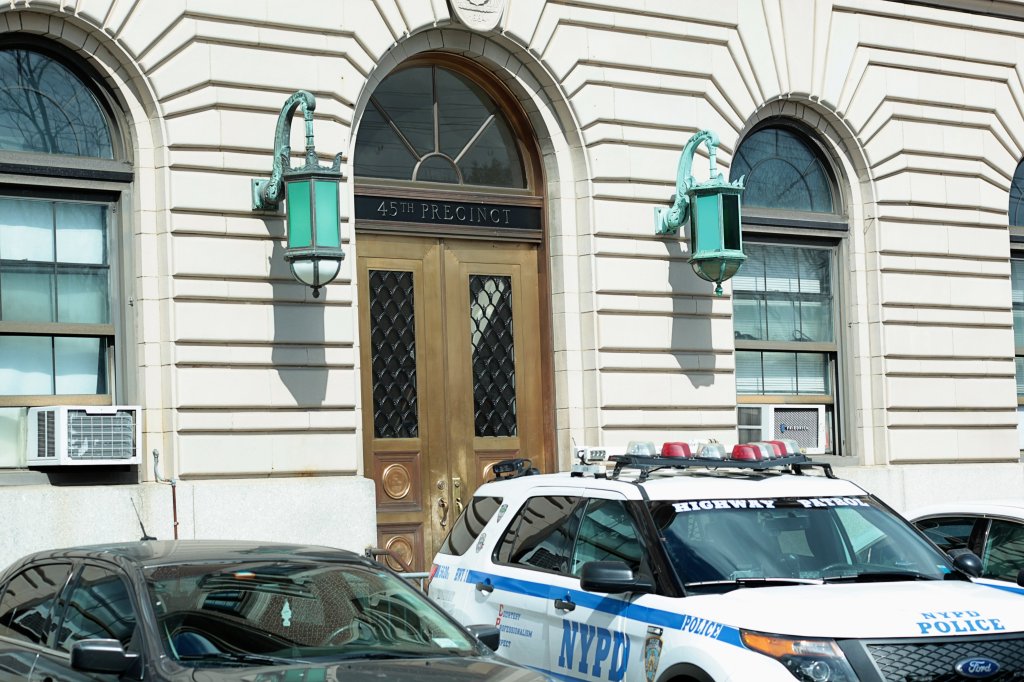
LatinoJustice is currently representing SeanPaul Reyes, who was arrested in April 2023 for recording in the public lobby of an NYPD precinct. Although the Right to Record Acts are in place, the NYPD argues that these laws do not apply within precinct lobbies, which are public spaces accessible around the clock.
The NYPD insists that, as precinct lobbies are considered “NYPD property,” it has the authority to establish its own rules regarding these areas. This stance has led to several contentious arrests, including that of a 61-year-old grandmother who was apprehended while attempting to obtain necessary paperwork for her insurance.
New York City is supporting the NYPD’s position in the state Court of Appeals, contending that the Right to Record Acts do not override the NYPD’s rights as a property owner to regulate activities within its precinct lobbies. Should the court rule in favor of this argument, the ability to record law enforcement could face significant limitations.
If the government can bar people from recording on government property, recording the police could be made illegal in the subways, on the steps of City Hall, or even in the city’s parks, which unlike NYPD lobbies are closed to the public at night.
Recording the actions of law enforcement has been instrumental to exposing police misconduct and holding officers accountable ever since George Holliday hoisted his new Sony Handycam onto his shoulder and recorded six police officers beating Rodney King in 1991.
Recently, the Department of Homeland Security falsely claimed that recording ICE agents is illegal and said that video recordings were “threats” that amounted to “doxxing. Using that spurious justification, ICE agents have detained, assaulted, and even — in the case of Minneapolis ICU nurse Alex Pretti — killed people for recording.
Activists will continue to record law enforcement whether or not the Court of Appeals agrees that the government can arrest people who record the police on government property. After all, it was illegal for Erik Crespo to turn on an MP3 player in 2007 and record Detective Christopher Perino’s unlawful interrogation, but he did it anyway. And three brave men who secretly recorded the brutal conditions in Alabama’s prisons have been punished with solitary confinement — even as the film they made has been nominated for an Oscar.
We feel confident that when the Court of Appeals hears our case in May, they will recognize that the Legislature meant what the bill’s lead sponsor, Assemblyman Nick Perry, said when he introduced it, that it protects “the right to monitor to the greatest extent… so long as you do not interfere with the police activity.”
At a time when masked secret police brutalize, kidnap, detain, and kill our neighbors, any retreat on the right to record law enforcement is unacceptable. LatinoJustice stands with the copwatchers and those who hold law enforcement accountable, and is ready to defend the right to record in court.
Case is senior counsel at LatinoJustice.