
Share this @internewscast.com
Rolls-Royce shares have astonishingly surged by 1,178% over the past five years, and today’s impressive financial results have propelled them even higher.
So, is it too late to hop on the bandwagon? Can these shares maintain their remarkable ascent? Or, if you’re fortunate enough to already hold them, is it time to cash in your gains and explore other investment opportunities?
Our financial analyst, Patrick Tooher, delves into the future prospects for Rolls-Royce and its investors.
Picture yourself having invested £1,000 five years ago, armed with the gift of perfect foresight. Where would that money have been best placed?
The most obvious choice is Nvidia, the American microchip giant that has soared to prominence alongside the artificial intelligence boom.
Nvidia has skyrocketed to become the world’s largest company, boasting a staggering £3.5 trillion market capitalization. Just last night, it revealed another set of stellar financial results.
That £1,000 would be worth more than £14,000 today as Nvidia’s early bet on AI pays off big time. Matching such a spectacular return would take some doing. But one company has pretty much done that.
Even more remarkably, it’s not another shiny new tech titan riding the AI wave but Rolls-Royce, a 120-year-old engineer synonymous with British manufacturing prowess and heritage. (The famous car-making unit was separated out in 1973 and is now owned by Germany’s BMW.)

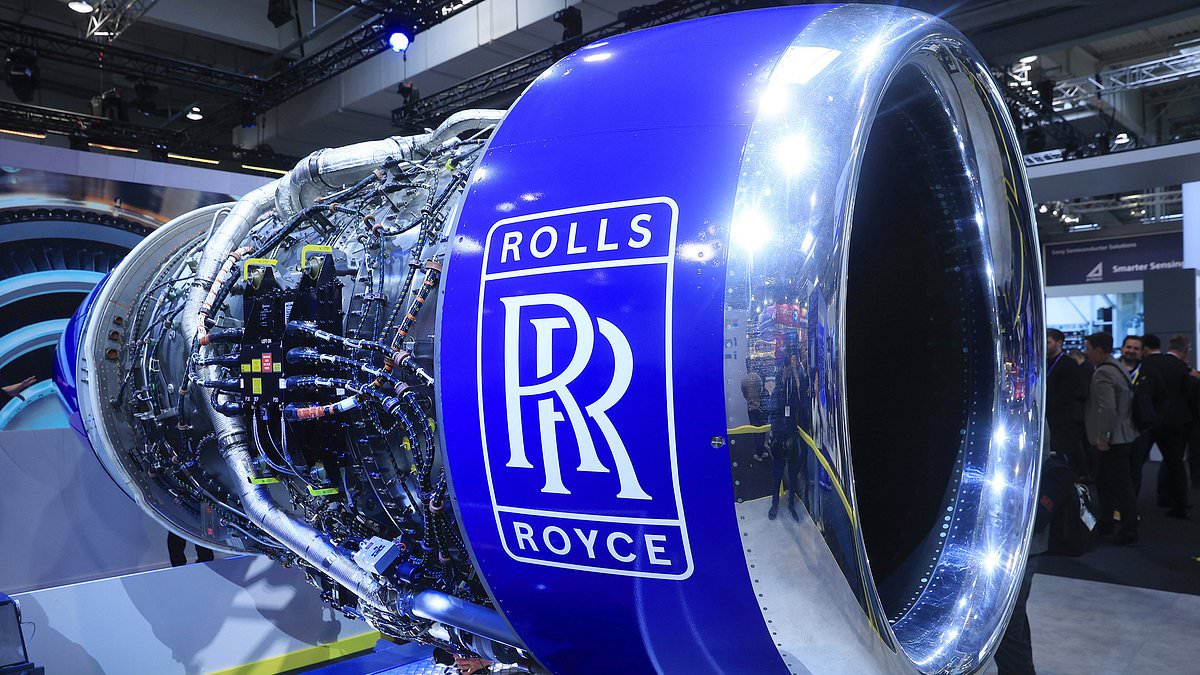
Having lost £4billion in a year during the pandemic, Rolls-Royce revealed in results today it had made operating profits of £3.5billion last year, its highest ever
Over the past five years, Rolls-Royce shares have rocketed 1,178 per cent.
But back in 2021, Rolls-Royce was rapidly running out of runway. It had dropped out of the FTSE 100 index of leading companies as losses and debts piled up, and problems with its flagship Trent engines persisted.
The pandemic had grounded the planes powered by its engines – airlines pay Rolls-Royce based on how many hours’ flying time they clock up.
There was even talk of another taxpayer-funded bail-out or even re-nationalisation.
Fast forward five years and Rolls-Royce is the best-performing blue chip. Its £116billion valuation makes it the fifth biggest company on the London stock market, just behind Dove soap maker Unilever.
That £1,000, most likely invested more in hope than expectation in the dark days of 2021, would have swelled to almost £13,000. Not quite on a par with Nvidia’s stellar returns but not far off either.
Is it too late for investors to join the Rolls-Royce party?
Having lost £4billion in a year during the pandemic, Rolls-Royce revealed in results today it had made operating profits of £3.5billion last year, its highest ever.

The rise of Rolls-Royce is largely attributed to its Turkish-born boss, Tufan Erginbilgic who took over what he described as a ’burning platform’ in 2023
This figure could rise to £4.2billion in 2026 and reach £5.2billion by 2028, based on the company’s upgraded guidance.
It also said it would buy back up to £9billion of its own shares between now and 2028 and pay out almost a third of its net profits in dividends to shareholders.
The news, which was even better than expected, propelled the shares to a new high of £13.81 in early trading, up another 6 per cent.
So, is it too late to join the party? Can the shares continue their incredible run? Or, if you’re lucky enough already to own them, is now the time to take your profits?
The Phoenix-like rise of Rolls-Royce is largely attributed to its Turkish-born boss, Tufan Erginbilgic who took over what he described as a ’burning platform’ in 2023.
Nicknamed ‘Turbo’ for his ferocious work ethic, Erginbilgic steered the aero-engine maker back from near-bankruptcy by cutting costs, slashing 2,500 jobs and re-negotiating loss-making turbine contracts with airline customers.
The turnaround is all the more impressive because it was done amid a post-pandemic shortage of spare parts and components.
Posting today’s bumper results, Erginbilgic said: ‘We are consistently achieving outcomes that were not possible before our transformation. With our new capabilities and mindset, we have navigated challenges from supply chain to tariffs, and delivered a strong performance in 2025, all while we built the foundations for significant growth for years to come.
‘We continue to see significant growth from existing businesses as well as from new business opportunities.
Yet some naysayers suggest Erginbilgic – who has pocketed £18million in the last two years, including £7.5million to persuade him to leave his former employer, BP – is a ‘lucky general’.
His arrival at Rolls-Royce coincided with a rebound in flying among business passengers and holidaymakers as Covid travel restrictions were dropped.
He also took the helm just a year after Russia’s invasion of Ukraine prompted a major rethink of Britain’s military capabilities.
Investors are pinning their hopes on the company winning even more defence contracts as Nato countries rearm – aside from turbines for aeroplanes, Rolls-Royce makes engines for combat vehicles, fighter jets, submarines, ships and helicopters. It describes demand for its kit as ‘robust’.
‘Given the current elevated-threat environment, defence budgets across many countries are on the rise,’ says Aarin Chiekrie, equity analyst at investment platform Hargreaves Lansdown.
‘With positions in combat aircraft and nuclear submarines, Rolls-Royce looks well-placed to capture some of the increased spending,’ he adds.
The bold vision for Rolls-Royce’s future
Defence accounts for less than a quarter of Rolls-Royce’s £20billion of annual sales.
What really excites share owners is the prospect of ‘jam tomorrow’ in the shape of two as yet unproven technologies that may come to define Erginbilgic’s legacy.
One is the next generation of small modular nuclear reactors. Rolls-Royce recently won a competition to build the first of these in the UK, on the island of Anglesey in north Wales.
SMRs are a new and untested technology aimed at producing nuclear power stations in factories at lower cost and higher installation speeds.
The Government is pumping £2.5billion into the project, reducing the risk to Rolls-Royce shareholders.
Erginbilgic is also seeking state support to build a new engine for short-haul, narrow-bodied planes – a growing market that Rolls-Royce has so far missed out on.
He’s looking for an upfront subsidy of up to £200million a year from the taxpayer in return for creating jobs and boosting growth but there’s a snag.
Rolls-Royce is making so much money that it is buying back up to £2.5billion of its own shares this year – and it said today that it will buy back up to £9billion by 2028.
Buybacks are loved by corporate executives because by reducing the number of shares in the market, they should boost share prices. Critics argue the company should use this spare cash to invest in its core civil aerospace activities, rather than push for more state handouts.

Rolls-Royce recently won a competition to build the first small modular nuclear reactor in the UK, on the island of Anglesey in north Wales
Should you buy, hold or cash in Rolls-Royce shares?
Rolls-Royce has a loyal army of around 150,000 small shareholders who have stuck with the company through thick and thin since it was privatised under the Thatcher government in 1987.
Younger investors are also enjoying the ride. Rolls-Royce is one of the most popular shares on investment platforms such as Trading 212 which are used by the next generations of share owners.
Many buy Rolls-Royce shares for the simple reason that they keep going up. This so-called ‘momentum’ investing strategy has proved incredibly profitable so far, but can it continue to deliver?
One way of judging if the shares remain good value is to look at what is known as the price-to-earnings (PE) ratio. This investing industry standard divides a share price by earnings per share and basically measures how much investors are prepared to pay for each pound of profit earned. The higher the PE ratio, the more expensive the shares.
Rolls-Royce has a PE of more than 47 times current earnings, which is more than double the FTSE 100 index’s average rating.
Fans say that’s because Rolls-Royce’s growth prospects are far better than most of its blue-chip peers – and today’s upgraded forecasts would appear to back that up.
Experts reckon the shares can go even higher, though the going is likely to get tougher.
‘Of course, with punchier valuations come higher expectations and more pressure to keep growing earnings to stay in line,’ said Richard Hunter, head of markets at Interactive Investor.
‘However, there is nothing in this sparkling set of results which casts any immediate doubt either on the group’s current ability to deliver, nor indeed its outlook over the coming years,’ he added.
But Rolls-Royce’s lofty valuation is now even higher than Nvidia’s, which trades on multiple of 40 times earnings after its results yesterday.
That suggests investors think Rolls-Royce’s future is even brighter than Nvidia’s, which requires quite a leap of faith.
Calling the top of a vertiginous share price run like the one Rolls-Royce is on is a mug’s game. It is clear Rolls-Royce is going great guns, but better value may be found elsewhere.
What shares could you buy to re-invest Rolls-Royce profits?
As an investor putting all your eggs in one basket is to be avoided at all costs.
A nice problem that investors can have when they hold stocks which have risen by a huge amount is they then become an oversized holding in your portfolio.
For example, a company that started as one twentieth of your overall holdings, could climb to a fifth – leaving your wealth over-exposed to its fortunes.
So, selling some Rolls-Royce shares and re-investing the profits elsewhere to spread risk is definitely worth considering.
The safest approach is to buy a low-cost tracker fund that mirrors the performance of the wider stock market. This can diversify your investments in shares around the world, or at least around all the companies in a national stock market index.
Among the most popular global trackers last month were Invesco MSCI World and Vanguard FTSE All-World funds, while the Vanguard S&P 500 covering the US and the iShares Core FTSE 100 exchange traded fund (ETF) in the UK were prominent national stock market picks, according to fund manager Fidelity.
If you want more spice in your portfolio – and prefer buying individual company shares – then shares in companies hammered recently on fears AI would wreck their business models may be worth a look.
These include data provider RELX, software firm Sage, credit reference agency Experian and online car platform Autotrader.
They have seen their shares rebound in recent days, but they are still down between 30 per cent and 40 per cent over the year, presenting a possible buying opportunities for the braver investor.
‘Investors initially panicked but might now be taking the view that too much bad news is now in the price and these names could have what it takes to fight off AI disruption,’ says Russ Mould, investment director at broker AJ Bell.
As for a purer-play defence business than Rolls Royce, consider Chemring.
Its Roke unit, which designed the ball tracking Hawk-eye system used at Wimbledon, recently won a £22.5milion missile defence contract from the Ministry of Defence.
Deutsche Bank analyst Richard Paige rates the share a buy with a 650p price target, compared to 515p today.
If you want to back British high-fliers, another option would be to look at some of the other UK stocks coming up hard on Rolls-Royce’s heels but that haven’t made the same stratospheric gains.
As the FTSE 100 hit another record high yesterday, the Daily Mail and This is Money identified the Tasty 20 – the companies whose shares have all risen by more than 50 per cent over the past year.
Despite Rolls-Royce’s astonishing share price gains, its 116 per cent return over the past year doesn’t put it at the top of this pile. The biggest risers have been miners Fresnillo, up 448 per cent, Endeavour Mining, up 191 per cent, Airtel Africa, up 149 per cent and Antofagasta, up 138 per cent.
Fellow defence stock Babcock is also up 118 per cent in the past year, while BAE systems is up 64 per cent.
These companies may not keep rising, but the UK stock market looks like fertile territory for investors turning their attention away from US tech giants. Mould says the Footsie is ‘changing its reputation from unloved to admired’.
DIY INVESTING PLATFORMS
AJ Bell

AJ Bell
Easy investing and ready-made portfolios
Hargreaves Lansdown
Hargreaves Lansdown
Free fund dealing and investment ideas
interactive investor

interactive investor
Flat-fee investing from £4.99 per month
Freetrade

Freetrade
Investing Isa now free on basic plan
Trading 212

Trading 212
Free share dealing and no account fee
Affiliate links: If you take out a product This is Money may earn a commission. These deals are chosen by our editorial team, as we think they are worth highlighting. This does not affect our editorial independence.
Compare the best investing account for you