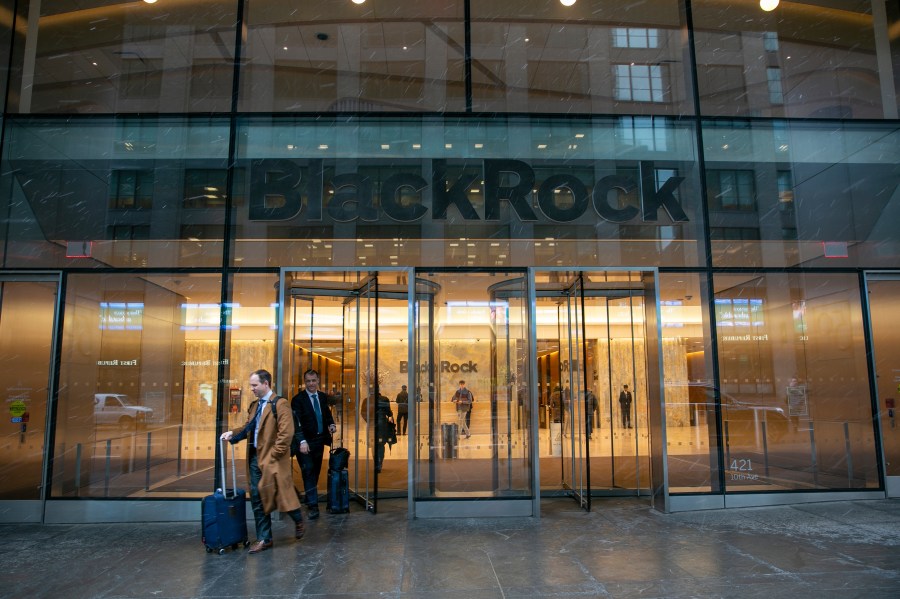

HARRISBURG, Pa. (AP) — Private investment firms fueling America’s race in artificial intelligence and expanding energy-intensive data centers are showing interest in the local utilities that supply electricity to everyday consumers and servers running AI.
Billions from these firms are now directed at electric utilities in areas like New Mexico, Texas, Wisconsin, and Minnesota, providing power to over 150 million customers through extensive power networks.
“The reason is very simple: because there’s a lot of money to be made,” stated Greg Brown, a finance professor at the University of North Carolina at Chapel Hill who studies private equity and hedge funds.
Successful investments in infrastructure over the past 15 years are strongly motivating private firms to back data centers, power plants, and their supporting services. This comes at a time of rapid growth and intensified demand following the late 2022 launch of OpenAI’s ChatGPT, Brown mentioned.
BlackRock’s CEO Larry Fink said as much in a July interview on CNBC, saying infrastructure is “at the beginning of a golden age.”
“We believe that there’s a need for trillions of dollars investing in infrastructure related to our power grids, AI, the whole digitization of the economy” and energy, Fink said.
Deals are in the works
Recently, private equity firm Blackstone has moved to acquire regulatory approval to purchase utilities like the Albuquerque-based Public Service Company of New Mexico and Lewisville, Texas-based Texas New Mexico Power Co.
Wisconsin earlier this year granted the buyout of the parent of Superior Water, Light and Power and the owner of Northern Indiana Public Service Co. last year sold a 19.9% stake in the utility to Blackstone.
However, a fight has erupted in Minnesota over the buyout of the parent of Duluth-based Minnesota Power and the outcome could determine how such firms expand their holdings in an industry that’s a nexus between regular people, gargantuan data centers and the power sources they share.
Under the proposed deal, a BlackRock subsidiary and the Canada Pension Plan Investment Board would buy out the publicly traded Allete, parent of Minnesota Power, which provides power to 150,000 customers and owns a variety of power sources, including coal, gas, wind and solar.
Both sides of the fight have attracted influential players ahead of a possible Oct. 3 vote by the Minnesota Public Utilities Commission. Raising the stakes is the potential that Google could build a data center there, a lucrative prospect for whoever owns Minnesota Power.
Opponents of the acquisition suspect that BlackRock is only interested in squeezing bigger profits from regular ratepayers. Allete makes the opposite argument, that BlackRock can show more patience because it is free of the short-term burdens of publicly traded companies.
More buyouts worry opponents
Opponents also worry that a successful Minnesota Power buyout will launch more such deals around the U.S. and drive up electric bills for homes.
“It’s no secret that private equity is extremely aggressive in chasing profits, and when it comes to utilities, the profit motive lands squarely on the backs of ratepayers who don’t have a choice of who they buy their electricity from,” said Karlee Weinmann of the Energy and Policy Institute, which pushes utilities to keep rates low and use renewable energy sources.
The buyout proposals come at a time when electricity bills are rising fast across the U.S., and growing evidence suggests that the bills of some regular Americans are rising to subsidize the rapid buildout of power plants and power lines to supply the gargantuan energy needs of Big Tech’s data centers.
Mark Ellis, a former utility executive-turned-consumer advocate who gave expert testimony against the Minnesota Power buyout, said he’s talked to private equity firms that want to get into the business of electric utilities.
“It’s just a matter of what’s the price and will the regulator approve it,” Ellis said. “The challenge is they’re not going to come up for sale very often.”
That’s because electric utilities are seen as valuable long-term investments that earn around 10% returns not on the electricity they deliver, but the upcharge that utility regulators allow on capital investments, like upgrading poles, wires and substations.
That gives utility owners the incentive to spend more so they can make more money, critics say.
Big players on both sides
The fight over Minnesota Power resembles some of the battles erupting around the U.S. where residents don’t want a data center campus plunked down next to them.
Building trades unions and the administration of Democratic Gov. Tim Walz, who appointed or reappointed all five utility commissioners, are siding with Allete and BlackRock.
On the other side are the state attorney general’s office and the industrial interests that buy two-thirds of Minnesota Power’s electricity, including U.S. Steel and other owners of iron ore mines, Enbridge-run oil pipelines and pulp and paper mills.
In its petition, Allete told regulators that, under BlackRock’s ownership, Minnesota Power’s operations, strategy and values wouldn’t change and that it doesn’t expect the buyout price — $6.2 billion, including $67 a share for stockholders at a 19% premium — to affect electric rates.
In essence, Allete — which solicited bids for a buyout — argues that BlackRock’s ownership will benefit the public because, under it, the utility will have an easier time raising the money it needs to comply with Minnesota’s law requiring utilities to get 100% of their electricity from carbon-free sources by 2040.
Allete has projected needing to spend $4.3 billion on transmission and clean energy projects over five years.
However, opponents say Allete’s suggestion that it’ll struggle to raise money is unfounded, and undercut by its own filings with the U.S. Securities and Exchange Commission in which it says it is “well positioned” to meet its financing needs.
Skepticism from regulators
It hasn’t been smooth sledding for BlackRock.
In July, an administrative law judge, Megan J. McKenzie, recommended that the commission reject the deal, saying that the evidence reveals the buyout group’s “intent to do what private equity is expected to do – pursue profit in excess of public markets through company control.”
In recent days, a utility commission staff analysis echoed McKenzie’s concerns.
They suggested that private investors could simply load up Minnesota Power’s parent with massive debts, borrow at a relatively low interest rate and turn a fat profit margin from the utility commission granting a generous rate of return.
“For the big investors in private equity, this is a win-win,” the staff wrote. “For the ratepayers of the highly leveraged utility, this represents paying huge profits to the owners if the private equity ‘wins’ and dealing with a bankrupt utility provider if it loses – it is a lose-lose.”
___
Follow Marc Levy on X at: