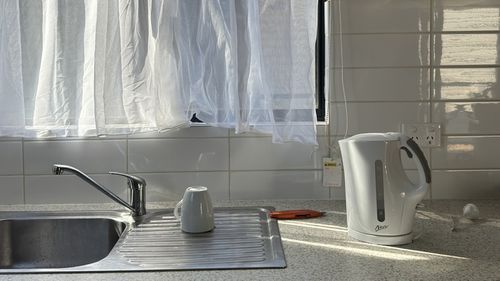

Plastic kettles release millions of microplastics into every cuppa, study finds
Share this @internewscast.com

Researchers at the University of Queensland have discovered that plastic kettles are releasing microplastics into our drinking water during the boiling process. This unsettling revelation highlights a potential health risk posed by a common household item.

The study revealed that the highest concentration of nano and microplastics is released during the initial uses of a new kettle. However, even after being boiled 150 times, these kettles continue to emit millions of particles. This indicates that the issue persists long after the kettle has been broken in.

Dr. Elvis Okoffo, one of the researchers leading the study, emphasized the need for consumer awareness regarding the potential hazards associated with plastic kettles. He advocates for warning labels to be placed on these products to inform users of the possible risks involved in their everyday tea or coffee-making routine.
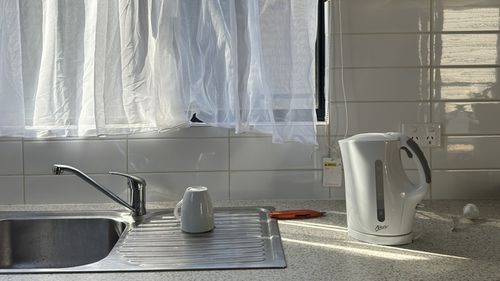
Your plastic kettle is releasing nano and microplastics into your water.(Getty)

“This study provides compelling evidence that plastic kettles are a significant source of daily exposure to nanoplastics and microplastics,” stated Dr. Okoffo. He further explained that new plastic kettles, in particular, release considerable amounts of these particles into the water during boiling.

The research quantified these findings, revealing that a new plastic kettle’s first boil can release nearly 12 million nanoparticles per milliliter. This translates to almost 3 billion particles in a standard 250ml cup of tea. Even after 150 uses, the study found that approximately 820,000 nanoparticles per milliliter remained, equating to 205 million particles per cup.

After 150 boils, there were still 820,000 nanoparticles detected per millilitre, or 205 million per cup.

Simply rinsing a kettle before use did not achieve the same result as repeat boiling and discarding.

“Many people may overlook or skip this step, highlighting the need for clearer product labelling and instructions,” he said.

“I would call on manufacturers, policymakers and regulators to inform consumers with safety guidelines or product labels warning about plastic particle release.

“Although particle concentrations drop with repeated use, our research shows there is a continuous, low-level exposure risk.”

He said further investigation was needed to better understand the human health implications of the exposure.

“The study fills an important knowledge gap about how plastic products used in homes can contribute to daily plastic exposure and how small, practical changes in everyday routines can reduce exposure to plastics.

“By combining better product design, improved labelling, and public awareness, we can help limit the amount of plastic entering both our bodies and the environment.”
The research also found hard tap water significantly reduced the amount of nanoplastic particles released, likely due to minerals forming a protective coating inside the kettle.
Share this @internewscast.com
You May Also Like
Queensland flood rescue

Heroic Rescues Amid Severe Flooding in North Queensland

Several people have been rescued as rising floodwaters impact already sodden parts…
White House press secretary Karoline Leavitt lashed out at a journalist on Thursday (US time).

White House Official’s Explosive Rant: Inside the Fiery Clash with a Journalist

White House press secretary Karoline Leavitt has launched a tirade at a…

Discover the Fascinating World of Two Australians and Their Passion for Pigeons

They might have a reputation as “rats with wings”, but to some,…
Prime Minister Anthony Albanese's reforms will be voted on next week.

Federal Government to Split Hate Speech Legislation Following Withdrawal of Greens’ Backing

Prime Minister Anthony Albanese has announced that the federal government will strategically…
Iranian worshippers walk past a mural showing the late revolutionary founder Ayatollah Khomeini, right, Supreme Leader Ayatollah Ali Khamenei, left, and Basij paramilitary force, as they hold a poster of Ayatollah Khomeini and Iranian and Palestinian flags in an anti-Israeli gathering after their Friday prayer in Tehran, Iran, Friday, April 19, 2024.

Tensions Rise in Iran as Hard-line Cleric Demands Executions Amid Quiet Streets

As Iran returned to uneasy calm after a wave of protests that…

Donald Trump Forms Groundbreaking Gaza Peace Board with Tony Blair and Marco Rubio

The White House has announced names of the so-called “Board of Peace”…

Melbourne Baker Offers Refuge Amidst Devastating Fires

Chris Mansour knows what it means to depend on the kindness of…
Donald Trump has threatened tariffs on any country that opposes his Greenland annexation plans.

Trump Considers Tariffs on Nations Challenging His Greenland Plans

“I might consider imposing tariffs on countries if they don’t cooperate with…
Debris balls have washed up on several NSW beaches again, but authorities are unsure whether they are related to the ones that were previously found along dozens of Sydney beaches.

Sydney’s Battle Against Beach Debris: Multi-Billion Dollar Effort to Keep Shores Pristine

Sydney’s wastewater system will be upgraded under a $3 billion plan following…
Harcourt on January 14, 2026.

Stunning Satellite Images Reveal Transformation of Towns Before and After Devastating Victorian Fires

Satellite images of bushfire-ravaged towns have captured the devastating extent of the…

Trump Considers Tariffs for Non-Supporters of Greenland Acquisition: A Bold Geopolitical Move

United States President Donald Trump has warned that he could place tariffs…

Controversy Surrounds Labor’s Proposed Hate Speech Laws Amid Coalition Skepticism and Greens’ Opposition

Support for Labor’s hate speech laws appears to be on life support,…