
With rising temperatures sweeping across Australia, there’s an increased risk of heat-related illnesses.
While factors like age, overall health, and environmental conditions play significant roles, experts caution that medications can also heighten vulnerability to conditions such as heat stress, heat exhaustion, and even heat stroke.
Here’s what you need to understand.
Dr. Kim Loo, the deputy chair of the Royal Australian College of General Practitioners in NSW and ACT, explained that our bodies employ several strategies to maintain a core temperature of approximately 37°C.
However, certain prescription and over-the-counter medications can disrupt these natural processes.
“Some drugs can affect the way people sweat, while others may impact the body’s ability to regulate temperature,” she shared with SBS News.
“You have different drugs that can alter the way people sweat … then you have medication that alters the ability of the patient to thermoregulate,” she told SBS News.
Dehydration is another side effect, which can increase the risk of heat-related illness.
Medications used to manage mental health conditions, ADHD, heart disease, blood pressure, diabetes, migraines, allergies, and constipation are among those that can alter how effectively your body responds to heat.
Consultant pharmacist Deborah Hawthorne said many heart and diabetes drugs, in particular, can be “quite dangerous” if you’re dehydrated.
“These medicines can actually cause something called acute kidney injury … so we actually get a lot of people going into hospital for doing the right thing — continuing to take their medicines, but forgetting the need for water,” she told SBS News.
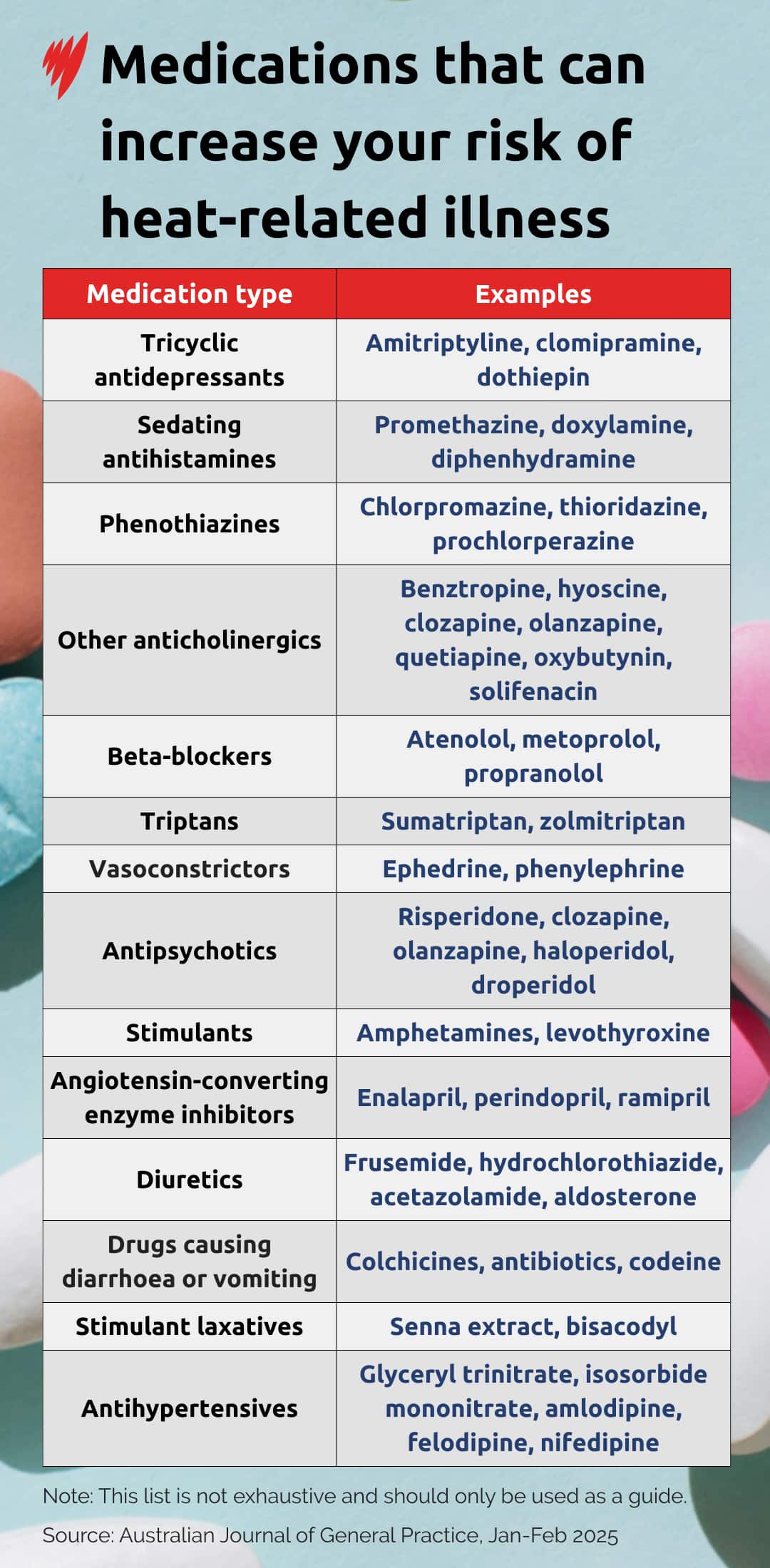
Hawthorne said certain medications, such as those used to treat acne, can also increase your sensitivity to sunlight, making it especially important to practice sun safety when taking them.
Loo said anyone taking regular medication, or giving it to their children, should speak to their GP or pharmacist about whether it could make them more susceptible to heat-related illness and what precautions they need to take on hot days to reduce their risk.
“The complexity of how medications impact the human body will be dependent on the individual patient,” she said.
All prescription medicines, and some over-the-counter medicines, have Consumer Medicine Information (CMI) listing possible side effects. Check this information and talk to your GP to understand what it means for you.
Where to store your medications
It’s also important to ensure your medication is stored correctly, as its active ingredients can break down when exposed to extreme temperatures, Hawthorne said.
“You don’t always see the tablet degrade,” she said.
“Sometimes you can be taking medicines and think, ‘Oh yeah, integrity looks good. The coating’s on there. It should be fine.’ But actually, the medicine inside is no longer as effective.”
Hawthorne said keeping your medication in your glove box at any time of year is an absolute no-no, as the temperature inside cars is often significantly higher than outside.
“Most tablets need to be kept below 30C, or sometimes even below 25C, in a cool, dry place — so in a nice, cool cupboard that’s not west-facing,” she said.
Some medications, including insulin, weight-loss injections, and liquid antibiotics, need to be kept in the fridge.
Anyone concerned that their medication has degraded due to incorrect storage should ask their local pharmacy for a replacement, Hawthorne said.
“They’re very happy to do that,” she said.
If you want to make sure you’re storing and managing your medication correctly, Hawthorne said to organise a free Home Medicines Review through your GP.
Knowing the signs of heat-related illnesses and when to seek medical attention can be life-saving.
Loo said symptoms of heat stress can include tiredness, dizziness, weakness, muscle cramps, irritability, and general discomfort.
“Those are all the signs that you need to rest and have a drink because those are signs of dehydration,” she said.
If you don’t move to a cool, shaded area and rehydrate yourself, it can turn into heat exhaustion, Loo said.
“You can get [core body] temperatures up to 38C, sometimes you can reduce the amount of sweating because you have less fluids, and you can get nausea, vomiting, headaches and fainting,” she said.
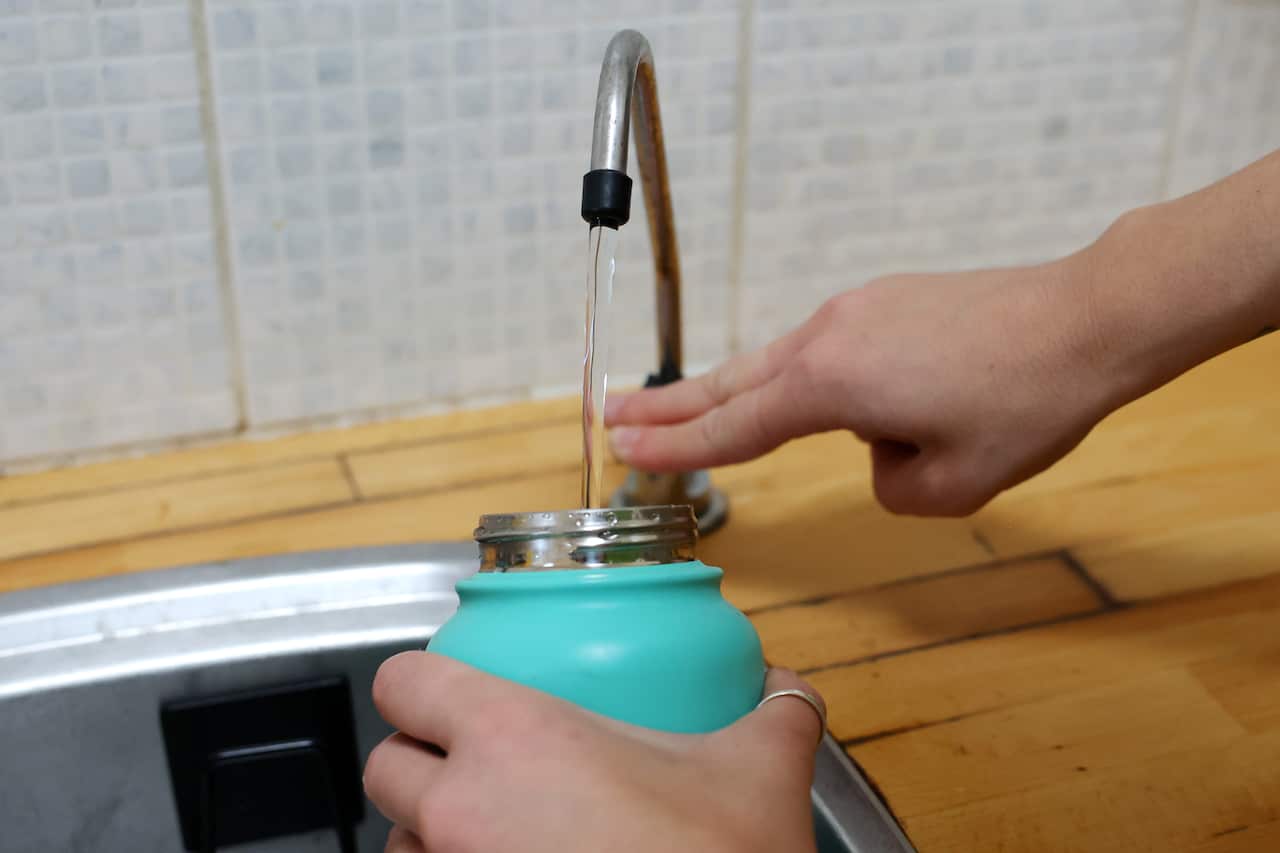
Staying hydrated can reduce your risk of heat-related illness. Source: AAP / Con Chronis
Loo warned that if heat exhaustion is left untreated, it can lead to heatstroke — a life-threatening condition that requires urgent medical attention.
“With heat stroke, the core body temperature goes up to 40.5C … it’s a medical emergency,” she said.
“They can be very confused, have reduced alertness, their skin is red and hot, and they don’t sweat because they don’t have enough fluids left to sweat.”
Disclaimer: This article is for general information only and should not be relied on as a substitute for professional medical advice. Readers are advised to consult a qualified health professional for guidance specific to their situation.
For the latest from SBS News, download our app and subscribe to our newsletter.