in brief
- The treasurer says the upcoming May budget will show “restraint” as the government manages global economic shocks.
- Economists say the negative impacts from overseas conflicts will be felt even more in the coming months.
The forthcoming federal budget is set to highlight more challenging economic times, characterized by slower economic growth, decreased employment rates, and pricier exports. The government has announced that expectations for revenue have been adjusted downward due to the unpredictable global economic climate.
Increased costs in sectors such as healthcare and defense are partly due to external events, including the ongoing conflict in the Middle East, according to a statement from the Treasury released on Friday.
Treasurer Jim Chalmers emphasized that “responsible economic management and spending restraint” will be central themes in the budget set for release on May 12.
“This approach is essential given the significant and unavoidable spending pressures we face,” Chalmers explained in the announcement.
Chalmers stated that the government is prioritizing budget allocations for critical areas like hospitals, defense, responses to natural disasters, the Pharmaceutical Benefits Scheme (PBS), and addressing the Bondi terror attack. However, he cautioned that funding for these areas might not meet previous expectations.
He also noted that the conflict in the Middle East is expected to increase borrowing costs on inherited debt, which will significantly impact the budget, alongside inflation that could lead to higher payment expenses.
Some of the biggest pressures on the budget will be expenditure on hospitals, defence investment, and PBS listings, new Treasury and Finance figures show.
Also foreshadowing difficult fiscal decisions, Finance Minister Katy Gallagher warned “there are ongoing budget pressures and global uncertainty we have to manage” and said the budget “will continue to be about responsible choices”.
Slower hiring expected to hit employment rate
While the Australian Bureau of Statistics (ABS) recently reported that Australia’s seasonally adjusted unemployment rate remained unchanged at 4.3 per cent in March, some economists are warning that the nation’s historically strong employment rate could be at risk.
Westpac senior associate economist Ryan Wells said economic shocks typically hit the labour market with some lag, and he doesn’t expect the unemployment rate to remain at its current level.
“Higher fuel costs and global uncertainty take time to work through household spending, into margins, and eventually decisions around investment and staffing,” he said in a labour force analysis video.
“While employers may pause new hiring fairly quickly, they are often reluctant to cut headcount due to the difficulty and costs involved in securing and training new staff.”
Wells said he expected the unemployment rate to rise due to slower hiring, rather than mass job losses.
“We expect the unemployment rate to rise to around 5 per cent in 2026, and stay around that level in 2027,” he said.
However, fuel-reliant industries like logistics, construction and tourism would likely feel employment pressures sooner, he added.
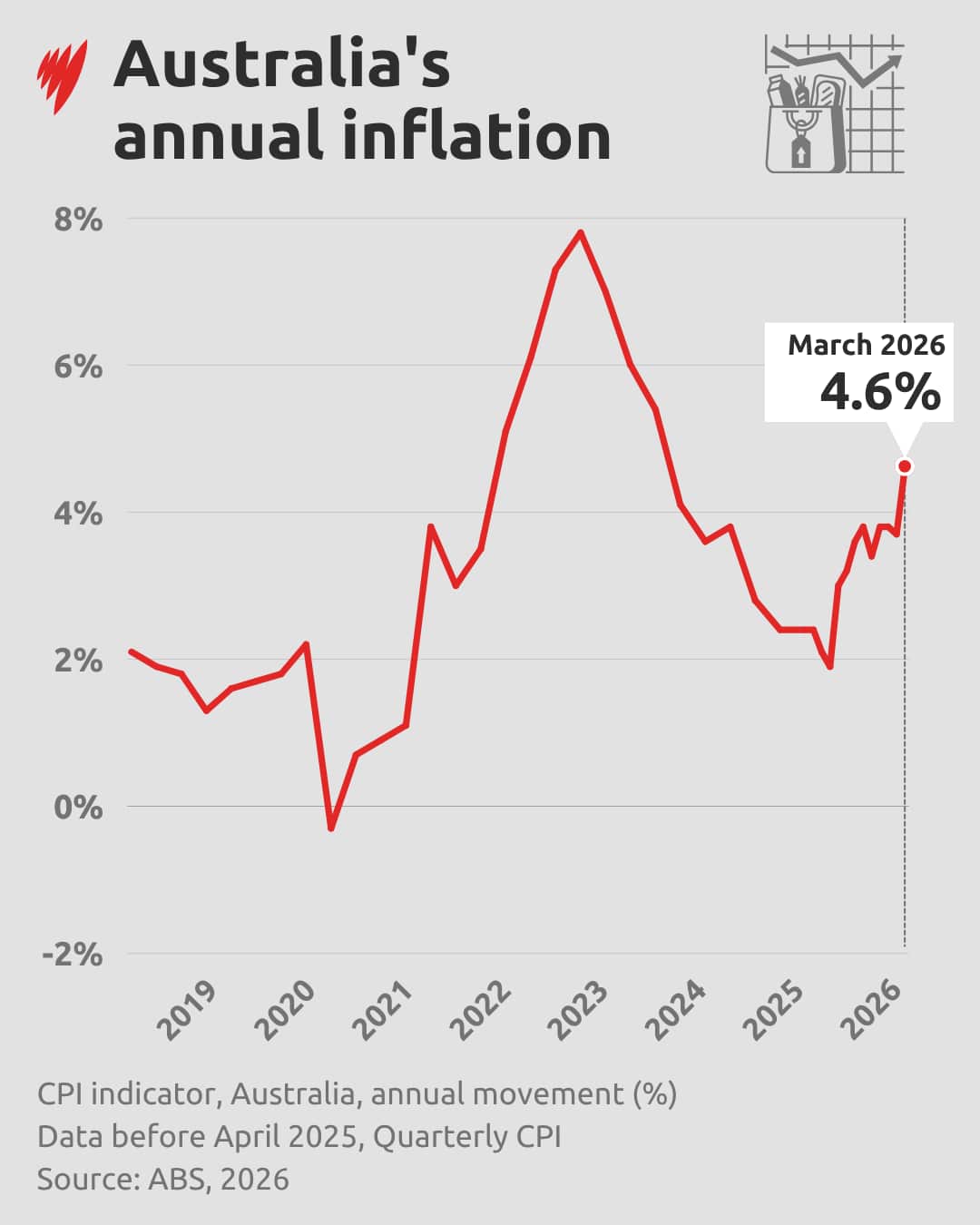
Inflation has risen to its highest level since 2023, surging from 3.7 per cent to 4.6 per cent in March.
New data released by the ABS on Wednesday shows that rising fuel costs, driven by the war in the Middle East, have pushed the Consumer Price Index up 0.9 per cent.
Energy Minister Chris Bowen said on Saturday that Australia was “very well-placed to weather this storm” but warned that, even if the war in the Middle East was resolved today, economic disruption would continue.
“Even if the Strait of Hormuz opened tonight, there would still be impacts on supply chains,” he said — referring to the crucial transport route for oil and other commodities that has been largely closed by Iranian and United States blockades since the war began.
For the latest from SBS News, download our app and subscribe to our newsletter.