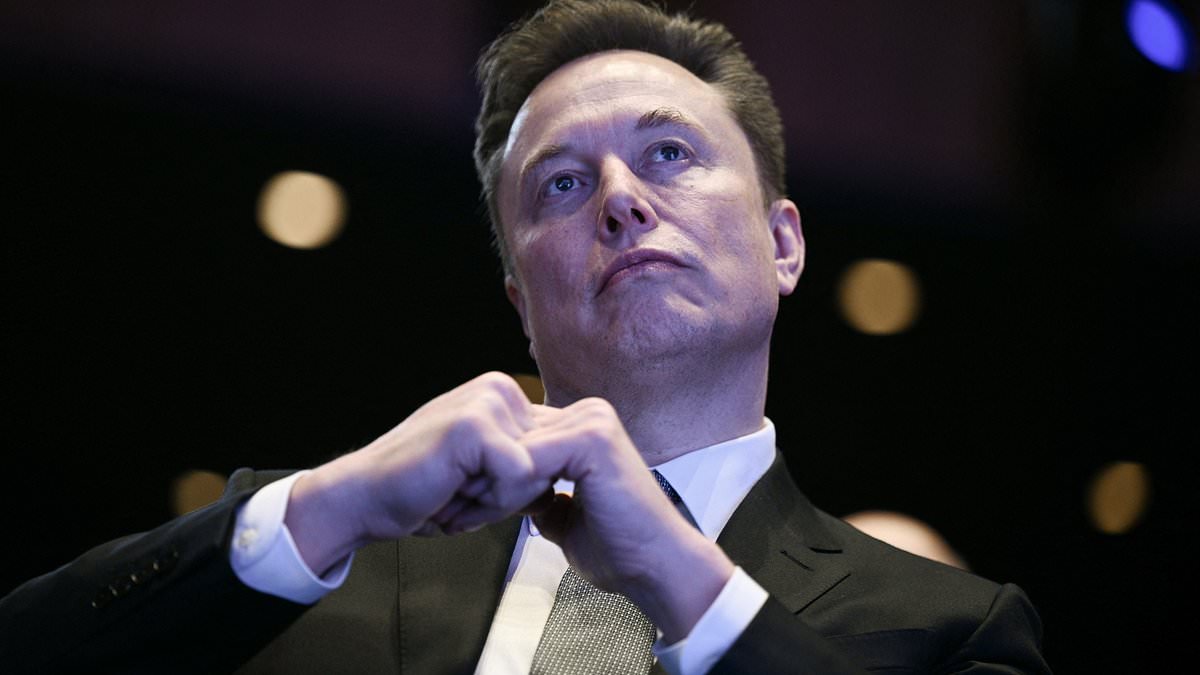

What makes the SpaceX flotation so astonishing is not merely its scale, though the numbers alone are enough to dazzle. Consider this: in a single day, a young company has created 4,400 employee millionaires, from engineers and technicians to cleaners and kitchen staff. Its founder has, on paper, crossed into trillionaire territory. This is the largest stock-market debut ever seen, while the banks involved have collected hundreds of millions simply for steering the deal to market. Yet for a moment, set aside the record-breaking figures. Tune out the applause from Wall Street and look past the roaring clouds of cosmic hype swirling around the launch pad. Because as SpaceX lifts off, the most remarkable element in its prospectus is that it is built around a mystery. This extraordinary mountain of money rests on a wager — a gamble of historic size placed on one person’s vision and his power to transform imagination into reality. And “imagination” may even be too definite a word.
SpaceX’s $28 trillion mystery
In truth, we do not yet have anything as concrete as a fully defined dream, at least not in the sense of a clearly mapped-out destination. Elon Musk has said the company’s “Total Addressable Market” is worth $28 trillion. By that logic, SpaceX would ultimately need to sell around $3,500 in products or services to every person on Earth. That is a staggering proposition. And while investors may be willing to believe it, the truly extraordinary part is that nobody can yet say with certainty what those future products or services will actually be.
Chasing cosmic dreams without a roadmap
The SpaceX craft is already in motion, racing skyward, even though its final destination and exact purpose remain hazy. Musk has described the company’s mission as being “to extend the light of consciousness to the stars.” It is a stirring and grand statement, full of ambition and wonder, but it leaves open the obvious question: what does success look like in practical terms, especially for life here on Earth? The honest answer is that we do not know. And that, perhaps more than anything else, is what makes the entire spectacle so compelling.
Space: harsh realities for humans
We don’t know whether we will really be able to make a go of Life on Mars, and in truth it all sounds a bit forbidding, what with the temperatures at -60C and no air to breathe. We haven’t the faintest idea how to get to the stars, or what we would do once we got there. As for the parts of space nearer our planet, they seem barely more hospitable to human beings. It’s either extremely hot or extremely cold, your muscles atrophy through lack of gravity, and you are in constant danger of being taken out by some tiny coin-sized fragment of another satellite that was left to disintegrate, decades ago, by the Chinese.
SpaceX bets big on the unknown
We don’t yet know how to get rid of all this space debris, or how to make these data centres in space, or even how to transmit solar energy from the heavens to Earth. We aren’t even entirely sure how to make space weapons, of the kind seen in James Bond, because it turns out that the clouds block the lasers (I asked the MoD). We know so little about the possibilities of space that this SpaceX flotation is a colossal act of speculation, perhaps the biggest ever; and yet I support it and believe in it passionately – because it is exactly this kind of risk-taking, driven almost always by the energy of one man, that is the engine of capitalism and progress.
Space power could transform energy on Earth
Think of Amazon. Jeff Bezos didn’t set out to become a vast global retailer; he wanted to be a bookseller. Facebook started out as a wheeze to keep university chums in touch. I don’t know exactly what SpaceX is going to deliver, and nor does anyone else, including Musk. But think what the company has already done – cutting the cost of sending stuff into orbit by a factor of ten. The objective, as I understand it, is to keep cutting that cost – with more and bigger and ever more efficient rockets – and then suddenly all kinds of things might become possible. If I had to guess, I think we will indeed crack the problem of harvesting the rays of the sun, and then sending unlimited quantities of clean, green energy down to Earth, possibly via microwaves. Imagine the benefits for humanity. No more Miliband madness. No more turbines marching over our moors and killing our birds. No more Net Zero panic – and all because we were willing to take a punt on space.
Gigabit coverage leaps from 7% to 70%
As evidence for my hunch I would remind readers of the process by which this article is transmitted to the Daily Mail. When I was in government we put a huge amount of money, time and effort into rolling out gigabit coverage across the nation. We hired new engineers, at a time when engineers were in short supply, and by superhuman effort – involving ministers such as Nadine Dorries and Oliver Dowden – we increased coverage from about 7 per cent of premises to 70 per cent of premises. I think it was a pretty stunning effort by the UK Government.
Beaming my words via satellite
Alas, we had some parts of the country still uncovered at the time I left office, and here in this part of Oxfordshire things are very much the same as they were three or four years ago. There was one UK provider of whom I had high hopes. This company had taken quite a lot of taxpayers’ money to get people connected. I was therefore very cheesed off to get a pathetic letter, saying that they were being forced to give up, owing to some overwhelming technical difficulty – the cost of getting the council to approve the digging, tree roots, bats, whatever. So I had no choice. I need fast and reliable broadband, and there was only one other solution – and that was to put a satellite aerial on the roof, and link up to Elon’s low Earth orbit array. In a few minutes I will finish this piece, and it will be sent up the throbbing nose-cone of some celestial Musk gizmo, and then whanged down again to the Earth. This piece is going to travel vast gulfs of space, when it should be pumped through British gigabit broadband the relatively short distance to London.
Private ambition drives bold innovation
It is crazy that I am relying on an American trillionaire to perform this everyday task, but there is a huge lesson here for this country. It is very often only the private sector that is capable of taking the risks, and developing the technology, that will change our lives. That is because private companies are driven by the individual effort of their owners or founders or leaders – their desire to succeed, or achieve, or leave their mark. Elon Musk is currently the supreme example of this phenomenon, though there are thousands of others. It is thanks to that competitive, individualistic, ego-driven lust to excel that SpaceX could yet be a technological boon for the whole human race.


