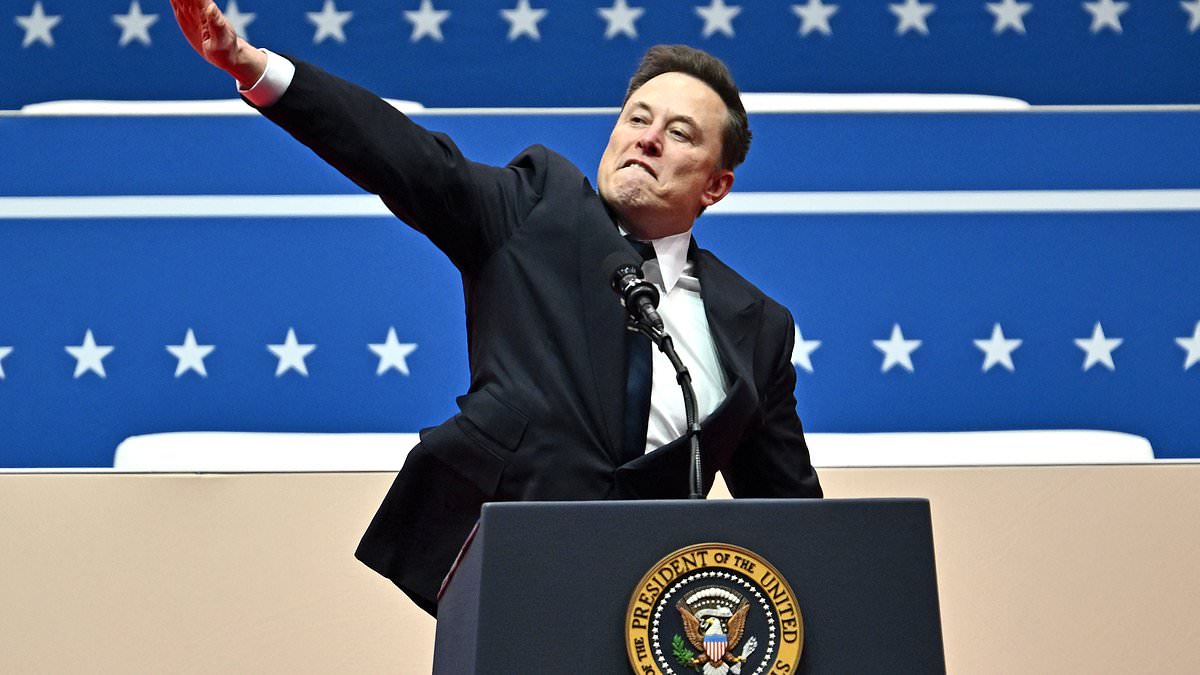

Elon Musk is on the verge of achieving an unprecedented milestone: becoming the world’s first trillionaire. Notably, he may reach this summit without reaping any immediate benefits from Tesla’s groundbreaking pay package. The CEO of both Tesla and SpaceX has witnessed his wealth soar at such a swift pace that experts anticipate he could surpass the $1 trillion net-worth mark by the end of the year. This meteoric rise is largely attributed to the skyrocketing valuations of his private aerospace venture and a series of favorable legal outcomes, all while his contentious new Tesla compensation plan remains untapped. This remarkable achievement underscores Musk’s status as the richest individual globally, with his wealth expanding significantly amidst various political and business challenges. As reported by the Wall Street Journal, Musk’s net worth has surged to approximately $726 billion, more than doubling in a year and bringing him tantalizingly close to entering the elite ‘four-comma club.’
A tale of two companies
SpaceX, not Tesla, has been a major driver of this upward trajectory. The company has seen a dramatic increase in valuation, reaching as high as $800 billion in recent secondary share transactions. With Musk owning around 42% of SpaceX, a long-awaited public offering—anticipated to be one of the most substantial IPOs in history—could swiftly propel his personal fortune beyond the trillion-dollar threshold. This remarkable development is occurring even before Musk receives any returns from Tesla’s recently sanctioned compensation agreement. The deal has the potential to be valued at nearly $1 trillion itself, contingent upon Musk achieving a challenging set of performance goals that could transform Tesla into a leader in artificial intelligence and robotics. Meanwhile, Tesla’s market struggles continue to unfold.
The new EV king
Recently, Tesla announced that it delivered 1.64 million vehicles in 2025, marking a 9% decrease from the previous year and representing its second consecutive annual decline. The company has also lost its position as the leading electric vehicle seller globally, overtaken by China’s BYD, which sold 2.26 million vehicles last year. This downturn is attributed to a backlash from customers over Musk’s right-wing political views, the expiration of U.S. tax incentives, and intensifying competition worldwide, particularly in Europe and China. Despite these setbacks, Wall Street’s response has been largely indifferent.
Beyond the steering wheel
Investors instead rallied behind Musk’s vision of Tesla’s future as something far beyond a car company. He has repeatedly said he expects software updates to allow hundreds of thousands of Teslas to operate autonomously with zero human intervention by the end of this year. The company is also planning to begin production in 2026of its AI-powered Cyber cab, a vehicle with no steering wheel or pedals. It’s the long-term bet with Tesla as a robotics and artificial-intelligence platform that persuaded shareholders to approve Musk’s record-breaking compensation plan at the company’s annual meeting in November.
Musk’s personal fortune was further supercharged two weeks ago when the Delaware Supreme Court reversed a prior ruling that had blocked his 2018 Tesla pay package, now valued at roughly $139 billion. The decision cleared a major legal obstacle that had hovered over his wealth for years. Meanwhile, SpaceX has continued to push toward full reusability of its massive Starship rocket – a cornerstone of Musk’s ambitions for the moon and Mars – even as he openly discusses building AI data centers in space and factories on the moon. All of this has unfolded against a backdrop of political chaos.
Over the past year, Musk rose to extraordinary influence in Washington, becoming a near-constant presence around President Donald Trump, before their relationship imploded in spectacular fashion. Musk later appeared to soften tensions following the killing of conservative activist Charlie Kirk, and he now appears poised to funnel substantial sums toward Republican candidates ahead of this years midterm elections. Musk has framed the chaos through his long-running fascination with simulation theory – the idea that reality may not be real at all, but rather an elaborate digital construct. During a recent podcast appearance, Musk explained his worldview bluntly. ‘I do have this theory about predicting the future, which is that the most interesting outcome is the most likely,’ Musk said. ‘Another way to think of it is like we could be an alien Netflix series and that series is only going to get continued if our ratings are good,’ he said.
‘If you apply Darwin to simulation theory then only the most interesting simulations will continue. Therefore, the most interesting outcome is most likely because it’s either that or annihilation.’ Musk has been publicly musing about simulation theory for more than a decade, arguing that the rapid evolution of technology, from early video games like Pong to photorealistic, massively multiplayer virtual worlds, suggests that advanced civilizations would inevitably create realities indistinguishable from our own. ‘Given that we’re clearly on a trajectory to have games that are indistinguishable from reality…it would seem to follow that the odds we’re in based reality is one in billions,’ Musk said in 2016. ‘So tell me what’s wrong with that argument.’


