
In February 2024, Rashee Rice appeared to be one of the NFL’s brightest young stars. During his rookie season with the Kansas City Chiefs, the wide receiver helped Patrick Mahomes and Travis Kelce capture another Super Bowl, followed a breakout campaign, and remained under a four-year, $6.5 million contract. His career—and financial future—seemed to be heading in one direction: up.
Nearly three years later, the 26-year-old has filed for Chapter 7 bankruptcy. Court documents show more than $3.45 million in liabilities, just $677,054 in assets, and a combined $13,640 in three checking accounts.
The filing, submitted November 4, 2026, in the U.S. Bankruptcy Court for the Northern District of Texas, details a stunning financial reversal for a young player who has already earned millions in the NFL. Much of the debt stems from a March 2024 street-racing crash in Dallas that caused multiple injuries and led to criminal charges and costly civil litigation. Rice’s debts exceed his listed assets by roughly $2.8 million, and even his $160,000 Super Bowl championship ring has been pledged as security for legal expenses.
The timing adds another remarkable layer to the story: Rice could be only months away from landing the largest contract of his NFL career. His rookie deal ends after the 2026 season, and several comparable receivers have recently signed contracts worth between $35 million and $70 million. If Rice can have some of his existing legal obligations discharged in bankruptcy, creditors whose claims are eliminated would generally be unable to pursue income from a lucrative future NFL contract…
The 119 MPH Crash That Triggered The Financial Crisis
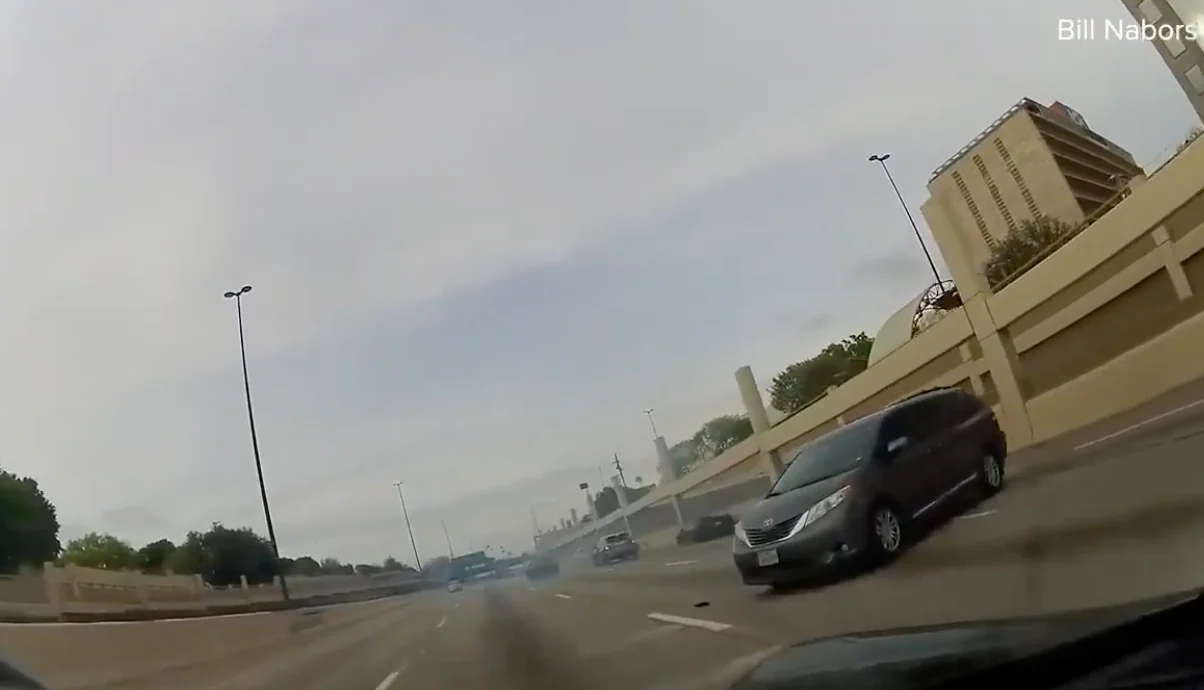
On March 30, 2024, Rice was driving a rented Lamborghini Urus on U.S. Highway 75 in Dallas while former SMU teammate Theodore Knox operated a Chevrolet Corvette nearby. Investigators said the two vehicles were traveling at dangerous speeds before losing control and setting off a six-car chain-reaction crash.
Authorities determined that Rice’s Lamborghini had been moving at approximately 119 miles per hour shortly before the collision. Several people were hurt, while Rice and other occupants of the two sports cars left the scene before officers arrived.
A dashcam operated by a nearby driver recorded the violent crash.
Only days later, on April 3, 2024, CelebrityNetWorth published a story posing a question that now looks strikingly prophetic: “How Much Money Could This Alleged Street Racing And Running Incident Cost Rashee Rice?”
Rice had just finished the first year of his $6.5 million rookie contract. At the time, we explored the possibility that he could lose millions in remaining salary, damage his NFL career, and miss out on a future deal potentially worth $40 million to $60 million.
In April 2024, those outcomes were only possibilities. Today, the financial consequences are documented in court filings.
A $1 Million Settlement And A Growing List Of Legal Claims
One of the largest obligations in Rice’s bankruptcy schedule is owed to Kathryn Kuykendall, who was riding in an Uber involved in the crash. Kuykendall was injured and later brought a lawsuit seeking damages from Rice.
Rice reached a $1 million settlement with Kuykendall in April 2025. A judge entered a judgment for that amount, along with interest and attorney fees. Rice’s bankruptcy filing says the remaining balance is approximately $979,837.
Marc Lenahan, Kuykendall’s attorney, told NBC 5 Dallas-Fort Worth that Rice’s Kansas City Chiefs paychecks had been garnished as part of the collection effort.
However, Kuykendall is only one of Rice’s creditors.
The filing lists more than $2.1 million in liabilities tied to civil lawsuits, including cases that have been resolved as well as claims that remain headed toward trial. Rice also faces other demands from people injured in the crash, including roughly $700,000 in disputed claims.
In a separate case, Rice’s former girlfriend, Dacoda Jones, filed a civil lawsuit alleging repeated abuse during their relationship. Rice contests a $200,000 obligation connected to that litigation.
Altogether, the bankruptcy documents name 20 creditors.
How Did His Finances Reach This Point?
The most revealing aspect of Rice’s filing may be the detailed snapshot it provides of his personal finances.
Although he has earned millions from football, Rice reports total assets of only $677,054. A large portion—$421,825—is categorized as deferred compensation, meaning it is not simply money available in a conventional bank account.
His reported assets include:
- $421,825 in deferred compensation
- $160,000 Super Bowl LVIII championship ring
- $53,800 2023 Mercedes-Benz
- $13,640 across three checking accounts
- $5,000 in NFL jerseys and hats
- $3,500 associated with his apartment lease
Rice also listed jewelry and other personal belongings. He does not own real estate and currently lives in a rented apartment.
His monthly budget offers another striking detail.
According to the filing, Rice receives approximately $32,640 per month after deductions. His listed monthly expenses total $29,030, leaving him with an estimated $3,610 in disposable cash flow.
For an athlete who signed a multimillion-dollar contract only a few years ago, that is an unusually tight financial position. Nearly 89% of his monthly take-home pay is reportedly consumed by expenses, leaving little available to address the substantial judgments and claims against him.
Rice also disclosed that he paid his bankruptcy lawyer $30,000 in fees and expenses shortly before filing.
Rice Has Pledged His $160,000 Super Bowl Ring
Among the filing’s most startling disclosures is the treatment of Rice’s championship ring, awarded after the Chiefs defeated the San Francisco 49ers in Super Bowl LVIII on February 11, 2024.
Rice placed the ring’s value at $160,000. Rather than listing it only as a valuable possession, however, he revealed that he had pledged it as collateral to attorney Thomas McMurray, who is representing him in ongoing civil cases.
Court records indicate that Rice owes McMurray approximately $185,226 in legal fees.
The ring symbolizes one of the defining accomplishments of Rice’s young career. It is now also directly connected to the legal and financial troubles that have followed him through the NFL.
The Criminal Proceedings And His NFL Suspension
The civil litigation represents only part of the fallout from the Dallas collision.
In July 2025, Rice pleaded guilty to two third-degree felony charges: collision involving serious bodily injury and racing on a highway causing bodily injury. Under the plea agreement, he received five years of deferred probation and was required to serve 30 days in jail.
The NFL separately suspended Rice for the first six games of the 2025 season without pay after determining that he had violated the league’s personal conduct policy.
In May 2026, a judge ordered Rice to complete his jail sentence after he violated probation by testing positive for marijuana. He served the 30 days and was released in June.
Despite the criminal case, lawsuits and suspension, Rice has continued playing professionally. He returned to the Chiefs after his suspension and has remained an effective receiver when healthy, though injuries have also affected his availability.
Could Bankruptcy Erase The Crash-Related Debts?
The central issue in Rice’s bankruptcy is whether he can avoid paying millions connected to the Dallas crash. The answer may be yes in part, but nothing is guaranteed.
Chapter 7 bankruptcy normally creates an automatic stay, temporarily stopping creditors from collecting debts, enforcing judgments or pursuing certain civil actions against the filer. For Rice, that could pause the garnishment of his NFL wages and efforts to collect the unpaid settlement unless the bankruptcy court permits those actions to continue.
The larger question is whether the debts can ultimately be discharged. Federal bankruptcy law generally protects obligations arising from intentionally inflicted injuries, but the U.S. Supreme Court has drawn a distinction between intentional harm and reckless or negligent behavior. Rice was accused of driving at 119 mph and pleaded guilty to felony offenses, but those facts alone do not automatically determine whether the resulting civil judgments are protected from discharge. The answer will depend on the facts and on how creditors and the court address the claims.
The same issue could affect lawsuits that have not yet reached a final judgment. Since the crash took place before the bankruptcy filing, claims stemming from it may potentially be discharged even if damages are awarded later. Some obligations—including qualifying criminal restitution and debts based on willful and malicious injury—can survive bankruptcy. Liabilities arising from incidents after the filing generally would not be covered.
That distinction could become especially important as Rice approaches the end of his rookie contract. His deal expires after the 2026 season, potentially making him an unrestricted free agent in March 2027. If the bankruptcy court eliminates a significant portion of his current debt, earnings from a future contract could be protected from creditors whose claims have been discharged.
The consequences for the crash victims could be substantial. They might receive a portion of what they are owed through the bankruptcy process, but full recovery is far from certain. Whether Rice is ultimately released from millions of dollars in legal obligations will depend on which debts the court discharges and whether creditors successfully challenge those requests.
Could Rashee Rice Still Sign A Contract Worth Tens Of Millions?
Rice’s financial outlook becomes even more complicated when his NFL future is considered. His four-year, $6.5 million rookie contract ends after the 2026 season, potentially making him an unrestricted free agent in March 2027. Despite his legal history and injury concerns, he is still 26 and has shown that he can produce at a high level as an NFL wide receiver.
Recent contracts for comparable players illustrate the potential market. In 2026, Rashid Shaheed signed a three-year, $51 million deal with the Seattle Seahawks, Romeo Doubs agreed to a four-year, $70 million contract with the New England Patriots, and Wan’Dale Robinson received a four-year, $70 million agreement from the Tennessee Titans. Jalen Nailor, who entered free agency with significantly less production than Rice, still secured a three-year, $35 million deal from the Las Vegas Raiders.
Those deals make a three-year agreement worth $45 million—or possibly more—conceivable for Rice if teams are willing to look past his injury history and off-field conduct. A $45 million contract would be nearly seven times the total value of his rookie deal.
The most extraordinary possibility is what could happen if Rice has his existing settlements and civil judgments discharged. Creditors holding discharged claims would generally have no legal ability to garnish the salary or signing bonus from a hypothetical $45 million contract. Claims that survive the bankruptcy could still be pursued, but debts that are eliminated would no longer be collectible.
That leaves open the possibility of a dramatic financial turnaround: Rice could enter bankruptcy with more than $3.45 million in debt and less than $14,000 in his checking accounts, then sign a contract worth tens of millions of dollars only months later—without using that future income to repay obligations the bankruptcy court has wiped away.


