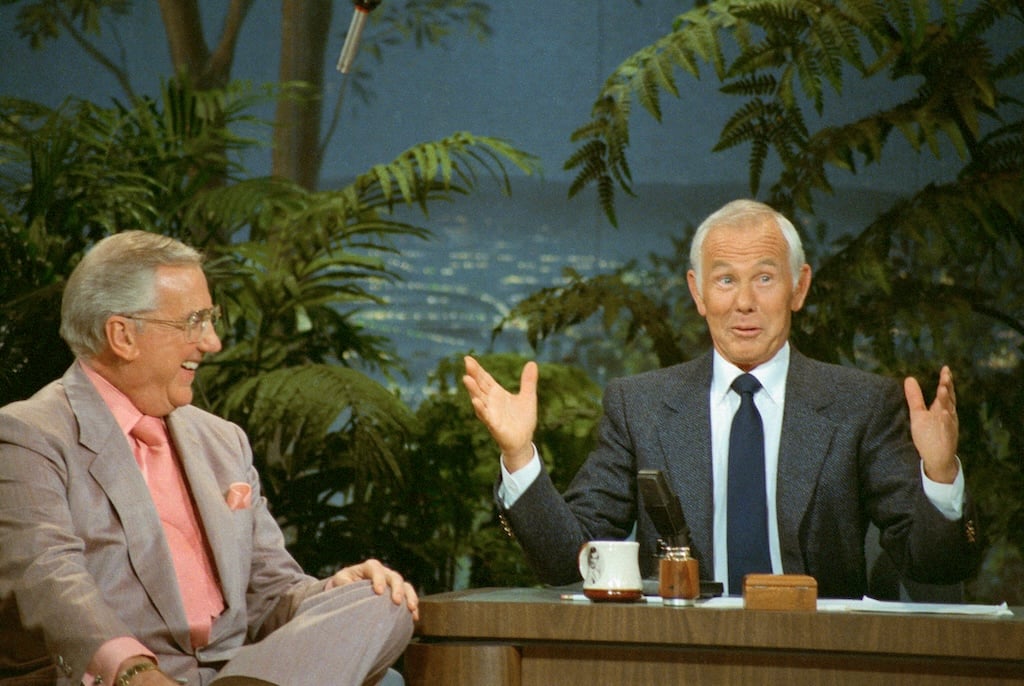

Over the past six decades, the landscape of late-night television has experienced a radical shift. Initially a lucrative and straightforward network programming slot, it evolved into a fierce arena teeming with intense competition over ratings, influential personalities, ownership stakes, network affiliations, and groundbreaking contracts.
For many years, hosting a late-night show was among television’s most coveted positions. A host’s role extended beyond mere comedic delivery; they cultivated an audience, established a brand, offered a reliable advertising venue, and provided a springboard for movie stars, all while generating potentially hundreds of millions in annual revenue for their network. During the format’s prime, figures like Johnny Carson, David Letterman, Jay Leno, and Jon Stewart commanded salaries akin to sports franchise stars.
However, the industry has evolved. The rise of streaming services, viral YouTube snippets, declining traditional TV viewership, and network budget cuts have redefined the valuation of a late-night host. The recent cancellation of Stephen Colbert’s show after over ten years at CBS might be seen as marking the close of the era marked by astronomical late-night salaries.
Here, we explore the journey of how iconic late-night hosts negotiated their earnings, expanded their influence, and amassed their fortunes. It’s worth noting that while we would have liked to include Arsenio Hall, reliable information about his earnings remains elusive due to the unique structure of his show. Launched in 1989, “The Arsenio Hall Show” operated outside traditional network ownership, being sold directly to local stations via first-run syndication. This model likely resulted in significant earnings for Arsenio.
Johnny Carson: The Blueprint
Johnny Carson was more than just the host of “The Tonight Show”; he was the architect of late-night television’s modern economic framework.
When Carson assumed the role of host in 1962, NBC compensated him with an annual salary of $100,000, which would equate to about $1 million today. While impressive for the time, this figure soon paled in comparison to the empire Carson constructed.
Johnny Carson’s salary progression was staggering:
- 1962: $100,000 per year, roughly $1 million today
- 1967: $400,000 per year, roughly $4 million today
- 1970: $1 million per year, roughly $7 million today
- 1975: $4 million per year, roughly $25 million today
- 1991: $25 million per year, roughly $60 million today
By the mid-1970s, “The Tonight Show” was reportedly generating $50 million to $60 million per year for NBC, the equivalent of $300 million to $360 million today. In other words, Carson was no longer just a performer. He was the face of one of the most profitable programs in television history.
But his most important deal came in 1980, when he used his enormous leverage to force NBC into a groundbreaking agreement. Through Carson Productions, Johnny gained ownership rights tied to “The Tonight Show” and the time slot that followed it, which soon became “Late Night with David Letterman.”
That deal transformed Carson from a highly paid employee into a late-night mogul. He had salary, control, and backend economics. Nobody after him ever quite matched that total package.
Carson’s fortune also extended beyond his NBC checks. He owned real estate, invested in media assets, and built a quiet business empire. He was also secretly one of Hollywood’s most generous philanthropists. Years after his death, an IRS filing revealed that his estate had transferred more than $156 million to the John W. Carson Foundation, eventually helping turn it into one of the best-funded celebrity charities in America.
But from a salary perspective, the takeaway is simple: Johnny Carson set the ceiling. Everyone who came after him was, in some way, chasing the financial world he created.
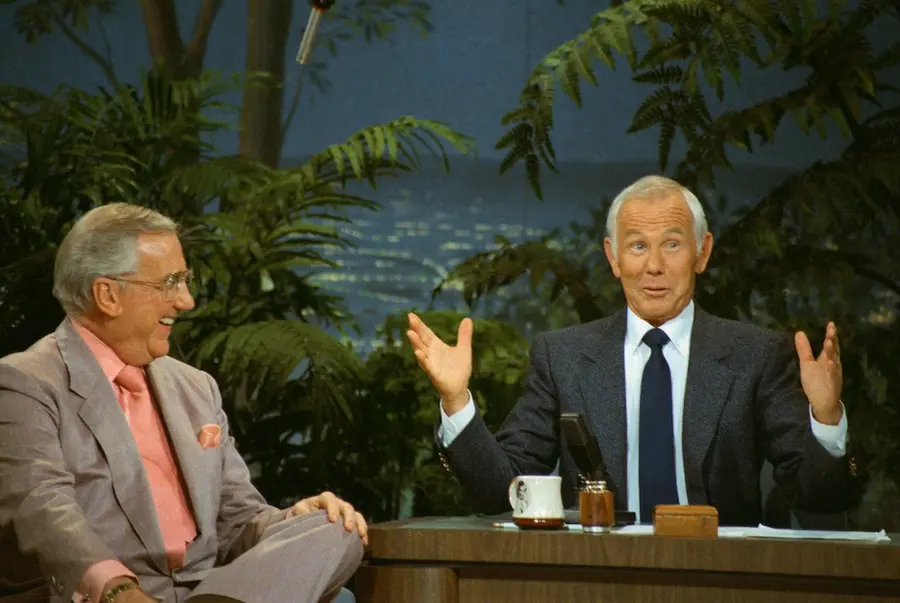
Talk show host Johnny Carson gestures while talking to co-host Ed McMahon on The Tonight Show.
David Letterman: The Worldwide Pants Mogul
David Letterman became the next great example of how late-night leverage could be converted into wealth.
Letterman spent years hosting “Late Night with David Letterman” after Carson’s “Tonight Show,” developing a fiercely loyal audience and a reputation as the heir apparent to Carson. But when Carson retired in 1992, NBC controversially handed “The Tonight Show” to Jay Leno instead.
That decision triggered one of the most famous bidding wars in television history.
David Letterman’s salary progression looked like this:
- NBC era: Reportedly earning around $7 million per year before leaving NBC
- 1993 CBS deal: Three years, $42 million total, or $14 million per year
- Late 2000s/early 2010s: Approximately $31.5 million to $32 million per year
- Peak late-night rank: For years, Letterman was widely regarded as the highest-paid host in late night
But the real value was not just the salary. CBS also allowed Letterman to own his show through his production company, Worldwide Pants. That meant Letterman had a Carson-style arrangement, or at least the closest thing to it in the modern era. He was not simply collecting a paycheck to sit behind a desk. He had a production company, ownership, and control.
Worldwide Pants also produced other shows, most notably “Everybody Loves Raymond,” which became one of the most successful sitcoms of its era. That added another layer to Letterman’s fortune. Like Carson, Letterman understood that the richest people in television are rarely just the faces on camera. They are the owners behind the camera.
Jay Leno: The Blue-Collar Saver
Jay Leno won the battle for “The Tonight Show” and became a ratings juggernaut, but his financial story is very different from Carson’s or Letterman’s.
Leno did not build his fortune primarily through backend ownership or a sprawling production empire. He built it through salary, ratings dominance, relentless stand-up work, and famously frugal habits.
Jay Leno’s salary progression at “The Tonight Show” was remarkably consistent once he hit his stride:
- 1992: Approximately $1 million for his first year as host
- Early 2000s: Around $20 million per year
- 2009: Approximately $30 million
- 2010: Approximately $30 million
- Final two seasons: Around $15 million per year
- Total “Tonight Show” salary, 1992-2013: Approximately $320 million
That $320 million number becomes even more remarkable when paired with Leno’s most famous financial habit: he claims he never spent a dime of his NBC salary. Instead, he banked his television checks and lived off the money he earned from stand-up comedy, often performing more than 150 gigs per year.
Leno’s salary came down near the end, reflecting NBC’s broader budget pressure and the changing economics of late-night television. In 2012, Leno also voluntarily took a multi-million-dollar pay cut to help prevent layoffs among his staff.
Leno may not have matched Carson’s inflation-adjusted peak or Letterman’s ownership upside, but as a pure salary machine, he is one of the most successful hosts in television history.
Conan O’Brien: The Buyout, The Pivot, And The Podcast Fortune
Conan O’Brien’s late-night salary history is defined by one of the strangest and most lucrative disasters in television history.
For years, Conan hosted “Late Night with Conan O’Brien” in the 12:30 a.m. slot after Leno. During that era, he used outside interest from Fox to leverage NBC into a raise reportedly worth around $8 million per year. NBC eventually promised him “The Tonight Show,” setting the stage for the chaotic transition that followed.
Conan O’Brien’s salary and deal timeline breaks down roughly like this:
- “Late Night” era: Eventually rose to around $8 million per year
- 2009: Took over “The Tonight Show”
- 2010 NBC exit package: $45 million total
- Conan’s share of the buyout: Approximately $33 million
- Staff severance portion: Approximately $12 million
- TBS era: Signed a lucrative deal to host “Conan”
- 2018: Launched “Conan O’Brien Needs a Friend”
- 2022: Sold Team Coco to SiriusXM for $150 million, plus a five-year talent deal
That buyout became the headline number, but it was not the end of Conan’s financial story. In some ways, it was the beginning of the more important chapter.
After leaving NBC, Conan moved to TBS and launched “Conan.” More importantly, his TBS arrangement allowed his company, Team Coco, to own and monetize digital clips from the show. That meant interviews, sketches, and musical performances could be posted to platforms like YouTube, with Team Coco keeping the revenue.
That digital ownership helped Conan build a modern media company around his own brand. In 2018, Team Coco launched the podcast “Conan O’Brien Needs a Friend.” The show became a massive hit, and Team Coco later expanded into a broader podcast network. By mid-2022, the network was reportedly generating around 16 million downloads per month, or roughly 200 million per year.
Then came the big payday. On May 23, 2022, Conan sold Team Coco to SiriusXM for $150 million. The deal also included a five-year talent contract. SiriusXM gained the right to earn revenue from Team Coco’s YouTube channel, but Conan retained ownership of the underlying intellectual property.
That makes Conan one of the most fascinating financial figures in late-night history. His NBC exit was humiliating in the moment, but it freed him to build a digital and podcasting business that may have earned him more than traditional late-night ever did.
Jon Stewart: The Cable King
Jon Stewart never hosted a traditional network late-night show, but financially and culturally, he belongs in this conversation.
Stewart turned “The Daily Show” into one of the most influential comedy programs in America. It aired on Comedy Central, which meant it did not have the same broadcast economics as NBC, CBS, or ABC. But Stewart’s cultural importance, political influence, and unmatched credibility with younger viewers made him far more valuable than the average cable host.
Jon Stewart’s salary progression reportedly looked like this:
- Mid-2000s: Around $14 million per year
- Late “Daily Show” peak: Approximately $25 million to $30 million per year
- 2015 departure: Left Comedy Central as one of the highest-paid hosts in late-night television
That was an extraordinary number for basic cable. For context, Stephen Colbert, whose “Colbert Report” aired after Stewart’s show, was reportedly earning far less during much of that same period.
Stewart’s salary reflected something important about the changing business. He did not need a traditional network desk to become essential. Like Carson, he became the gravitational center of a comedy universe. Like Letterman, he launched other major careers. And like Conan, he proved that influence could sometimes matter as much as raw ratings.
Stephen Colbert: The Final Late Show Titan
Stephen Colbert’s salary arc tells the story of both the final golden age of network late-night and its unraveling.
Colbert first became nationally famous as a correspondent on “The Daily Show” before launching “The Colbert Report” on Comedy Central. On that show, he played a fictionalized conservative pundit and turned the character into one of the defining satirical creations of the 2000s.
Colbert’s late-night salary progression breaks down like this:
- “The Colbert Report” era: Reportedly earned roughly $4.5 million to $6 million per year near the end of his Comedy Central run
- 2015 CBS debut: Initial “Late Show” base salary of approximately $4.6 million
- Early CBS years: Overall compensation averaged closer to $6 million with bumps and incentives
- 2019 extension: Salary reportedly increased to $15 million per year
- Final CBS contract: Salary reportedly peaked around $20 million per year
- Final episode: Aired May 21, 2026, after CBS canceled “The Late Show with Stephen Colbert”
The early CBS transition was rocky. Colbert had to drop the character that made him famous and establish himself as a more traditional network host. But as politics became central to late-night during the Trump era, Colbert found his footing. “The Late Show with Stephen Colbert” climbed to #1 in total viewers, and CBS rewarded him accordingly.
That makes Colbert one of the last true network late-night salary giants. But his cancellation in 2026 also illustrates how much the business changed underneath him. A host could still be famous, respected, influential, and highly paid, and yet the old economics no longer guaranteed survival.
Jimmy Fallon: The Franchise Player
Jimmy Fallon represents a different model of late-night value.
Fallon took over “The Tonight Show” in 2014 and helped push the franchise into the viral video era. His games, celebrity sketches, lip-sync battles, and musical segments were built for YouTube and social sharing. For a time, Fallon was the perfect late-night host for an internet-driven entertainment culture.
Jimmy Fallon’s salary and compensation picture looks like this:
- “Late Night” era: Established himself as NBC’s preferred successor to Leno
- 2014: Took over “The Tonight Show”
- Base salary: Generally reported around $16 million to $18 million per year
- Broader NBC compensation: Potentially higher when producing fees and other projects are included
- Additional NBC projects: Includes producing and hosting-adjacent work tied to shows such as “Password”
- Current extension: Reportedly keeps him tied to NBC through 2028
Fallon is not a Carson-style owner and not a Leno-style ratings bulldozer. His value is more tied to brand extension. He can host “The Tonight Show,” produce network-friendly programming, generate viral clips, and serve as a safe, familiar face for NBC.
That makes Fallon one of the last major network hosts still attached to the traditional late-night model for the foreseeable future.
Jimmy Kimmel: The Steady Anchor
Jimmy Kimmel has quietly become the longest-tenured active major late-night host.
“Jimmy Kimmel Live!” premiered on ABC in 2003. At the time, Kimmel was still best known for “The Man Show” and “Win Ben Stein’s Money.” Over the next two decades, he matured into one of ABC’s most important entertainment personalities, balancing celebrity interviews, political monologues, viral bits, and major hosting gigs like the Oscars.
Jimmy Kimmel’s salary progression has been steadier than explosive:
- 2003: “Jimmy Kimmel Live!” premieres on ABC
- Long-term ABC tenure: Gradually becomes one of the network’s most important entertainment personalities
- Current base salary: Approximately $15 million to $16 million per year
- Per-episode equivalent: Around $88,000 to $100,000 per episode across a 140-160 episode season
- Current contract: Runs through mid-2026
Kimmel never had Carson’s absolute dominance, Letterman’s ownership machine, Leno’s ratings run, or Conan’s post-TV podcast windfall. But he has had something incredibly valuable: durability. For more than two decades, he has given ABC a stable late-night identity.
His current contract places him at the same crossroads as the rest of the industry. The question is no longer simply how much a major late-night host is worth. The question is how much a network is willing to keep paying for late-night itself.
John Oliver: The HBO Powerhouse
John Oliver is not a nightly network host, but “Last Week Tonight with John Oliver” has become one of the most important late-night franchises of the streaming and premium-cable era. Like Jon Stewart, Oliver proved that a host did not need a traditional five-night-a-week broadcast desk to command top-tier late-night money. In fact, on a per-episode basis, Oliver may be the most highly paid late-night host in the world.
John Oliver’s salary progression at HBO has been extraordinary:
- Original HBO contract: Two years at $8 million per year
- 2017 extension: Three years, $45 million total, or $15 million per year
- Next extension: Three years at $30 million per 30-episode season
- Per-episode equivalent: $1 million per episode
- 2023 extension: Three more years with no raise
- 2024-2027 salary: $30 million per year
The key difference between Oliver and the traditional network hosts is volume. Carson, Leno, Letterman, Colbert, Fallon, and Kimmel all worked under the brutal rhythm of nightly television. Oliver produces roughly 30 episodes per season. That means his $30 million annual salary works out to around $1 million per episode, a staggering figure that puts him in a class of his own.
Oliver’s deal also shows how late-night economics evolved beyond the old broadcast model. HBO was not paying him to grind out five episodes a week. It was paying for prestige, awards, viral segments, subscription value, and a distinctive editorial voice that gave the network a signature weekly franchise.
| Host & Show | Annual Salary |
|---|---|
| David Letterman
Late Show with David Letterman |
$32,000,000 |
| Jay Leno
The Tonight Show |
$30,000,000 |
| Jon Stewart The Daily Show |
$30,000,000 |
| John Oliver
Last Week Tonight |
$30,000,000 |
| Johnny Carson
The Tonight Show |
$25,000,000 |
| Stephen Colbert The Late Show with Stephen Colbert |
$20,000,000 |
| Jimmy Fallon
The Tonight Show |
$18,000,000 |
| Jimmy Kimmel
Jimmy Kimmel Live! |
$16,000,000 |
| Trevor Noah The Daily Show |
$16,000,000 |
| Craig Ferguson
The Late Late Show with Craig Ferguson |
$13,000,000 |
| Bill Maher
Real Time with Bill Maher |
$10,000,000 |
| Chelsea Handler Chelsea |
$10,000,000 |
| James Corden
The Late Late Show with James Corden |
$9,000,000 |
| Conan O’Brien
Late Night with Conan O’Brien |
$8,000,000 |
| Greg Gutfeld Gutfeld! |
$7,000,000 |
| Seth Meyers
Late Night with Seth Meyers |
$5,000,000 |
(function() {
var _fbq = window._fbq || (window._fbq = []);
if (!_fbq.loaded) {
var fbds = document.createElement(‘script’);
fbds.async = true;
fbds.src=”
var s = document.getElementsByTagName(‘script’)[0];
s.parentNode.insertBefore(fbds, s);
_fbq.loaded = true;
}
_fbq.push([‘addPixelId’, ‘1471602713096627’]);
})();
window._fbq = window._fbq || [];
window._fbq.push([‘track’, ‘PixelInitialized’, {}]);


