
With an estimated net worth of $55 billion, Giovanni Ferrero ranks among Italy’s wealthiest people. Much of that fortune was inherited from his father, Michele Ferrero. But how did Michele build what was, for decades, Italy’s largest privately held fortune?
He certainly didn’t invent Ferrari—that was Enzo Ferrari. Enzo’s son, Piero Ferrari, is also among Italy’s richest citizens. His family history includes a remarkable legal complication: divorce remained illegal in Italy until the 1970s. Born in 1945 to Enzo and his mistress rather than Enzo’s wife, Piero could not formally claim the Ferrari name or inheritance until Enzo’s wife died in 1978, when Piero was 33. Today, he owns approximately 10% of publicly traded Ferrari (ticker symbol “RACE”), a holding valued at roughly $9 billion.
Giovanni Ferrero and Piero Ferrari share more than similarly recognizable surnames. Both had siblings who died unexpectedly at young ages, both inherited their wealth from their fathers, and both carry family names that are inseparable from their companies. The difference is that Giovanni’s family business produces beloved confectionery rather than high-performance automobiles.
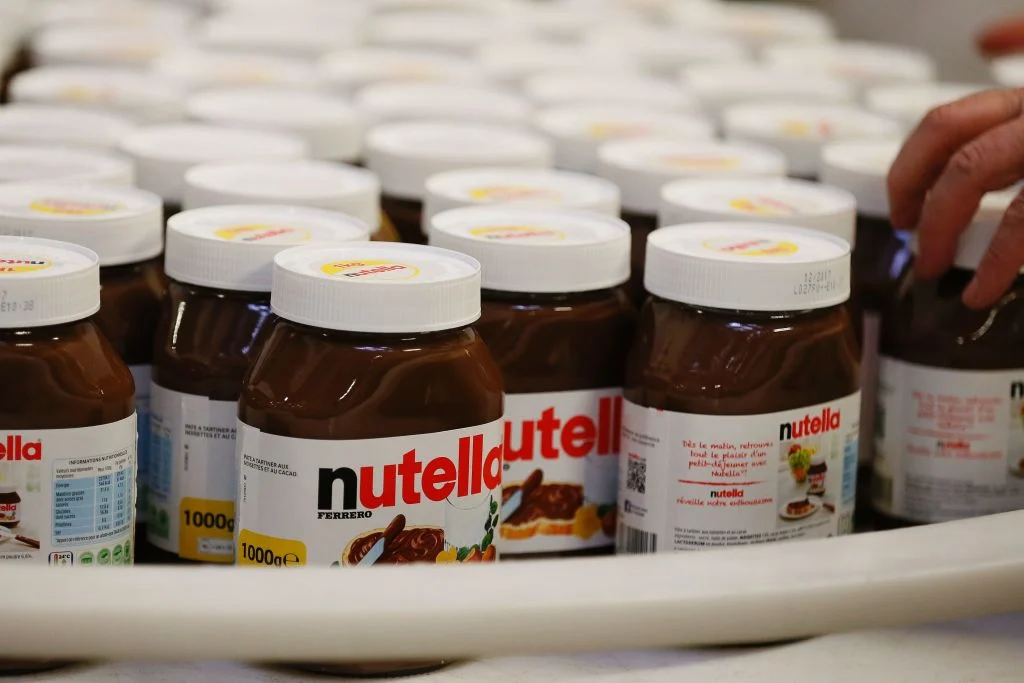
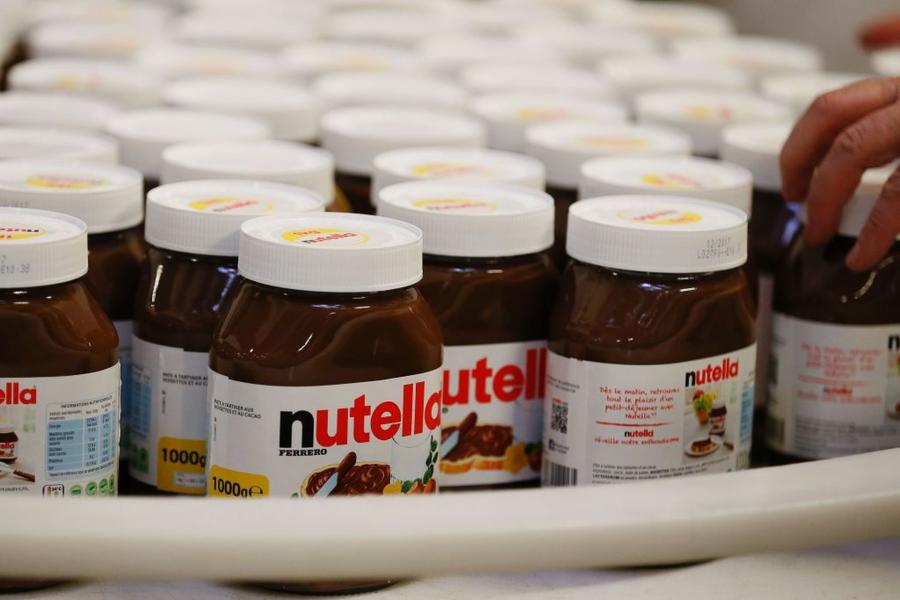
You may know Ferrero through Ferrero Rocher, Kinder or Tic Tac. Yet the empire behind those brands—and one of Italy’s greatest private fortunes—began with a modest product created during World War II, when rationing made traditional ingredients scarce. That product would eventually become Nutella.
(CHARLY TRIBALLEAU/AFP/Getty Images)
From Family Shop To Factory Empire
The story started in a small pastry shop in Alba, a town set among the rolling hills of Italy’s Piedmont region. In the final years of World War II, the country was impoverished and hungry, while sugar and cocoa were difficult to obtain. For baker Pietro Ferrero, keeping his business open required ingenuity.
Piedmont was surrounded by hazelnut trees, and Pietro saw an opportunity in the abundant local crop. With cocoa both scarce and expensive, he ground hazelnuts into a paste and blended them with the limited cocoa available. The result was a firm, sweet loaf called Pasta Gianduja—a combination of chocolate and hazelnut created out of necessity. Wrapped in foil, it was sliced and spread on bread. For families emerging from years of war and rationing, the product was an instant sensation.
Its popularity quickly moved beyond the village. Mothers placed slices of the hazelnut loaf in their children’s lunches, while shopkeepers struggled to keep up with demand. Pietro and his brother Giovanni soon established Ferrero SpA and opened a small factory in Alba. Giovanni concentrated on distribution, developing a network that helped transform the pastry shop into a growing enterprise.
Then, in 1949, tragedy reshaped the family business. Pietro Ferrero died suddenly, leaving the company to his 24-year-old son, Michele.
The Reluctant Heir
When Michele assumed control, Italy was still recovering from the war. He had no university degree and no formal business training, but he possessed intense curiosity and a strong sense of responsibility. His father’s creation had already won a loyal following, and Michele set out to improve it and take it far beyond Italy.
By the early 1960s, Michele had reworked the original recipe, fine-tuning the balance of sugar and cocoa while making the hazelnuts smoother. In 1964, he introduced a new name for the product: Nutella. Within months, jars were moving rapidly from grocery shelves across Europe.
The Relentless Innovator
Nutella’s success only deepened Michele Ferrero’s fascination with confectionery. Rather than rely on a single hit, he pursued a broader portfolio of products. Ferrero launched Kinder Chocolate in 1968, Tic Tac breath mints in 1969 and Ferrero Rocher pralines in 1982. Each brand reflected years of experimentation and refinement.
Michele’s commitment to perfection became legendary. He could work late into the night alongside chemists and tasters, testing texture, aroma and sweetness until every element met his expectations. Even after Ferrero had become one of Europe’s biggest chocolate companies, he continued to insist on personally approving major recipes.
The strategy delivered extraordinary results. By the 1970s, Nutella was a breakfast staple throughout Europe. By the 1980s, Ferrero products were being sold across five continents. The company’s rise was driven by more than clever advertising; it rested on flavor, precision and unwavering consistency.
The Monk Of Chocolate
Despite his enormous wealth and influence, Michele lived far removed from material extravagance. He gave no interviews, turned down public honors and kept away from politics and the media. A devout Catholic, he attended Mass every day, made yearly pilgrimages to Lourdes and required every Ferrero factory worldwide to display a statue of the Virgin Mary.
Employees remembered him as both compassionate and demanding. Michele knew many workers by name, asked about their families and quietly offered financial assistance when people faced hardship. He viewed Ferrero’s workforce as an extension of his own family.
That belief was reflected in the company’s benefits. Ferrero employees received free health care, organized holidays and dependable bus service from nearby villages to the Alba factory. At annual celebrations, workers sang a song in dialect thanking “Monsù Michele”—“Mister Michele”—for the livelihoods he had helped provide.
In one letter to his employees, Michele summarized his commitment this way:
“I pledge myself to devote all my activities and efforts to this company. I shall only feel satisfied when I have managed, with concrete results, to guarantee you and your children a safe and tranquil future.”
For Michele, that promise extended beyond words. Over more than five decades, Ferrero’s Italian employees never went on strike.
Faith, Family, And Secrecy
As the company grew, Michele became increasingly protective of its inner workings. He refused to take Ferrero public and insisted on keeping product formulas secret. The recipe for Nutella, for instance, is guarded as tightly as Coca-Cola’s. Prospective executives were rumored to be observed through a two-way mirror before being interviewed face-to-face.
The secrecy extended to his personal life. During Italy’s turbulent 1970s, when kidnappings of wealthy industrialists by radical groups like the Red Brigades were common, Michele quietly moved his family to Monaco for safety. From there, he commuted to the Alba headquarters by helicopter, often flying in unannounced to taste new products or review operations firsthand.
In 1962, Michele married Maria Franca Fissolo, a fellow Piedmont native who shared his faith and humility. The couple had two sons, Pietro and Giovanni, both of whom joined the family business as adults. Like their father and grandfather before them, they were raised to view Ferrero not as a corporation, but as a duty.
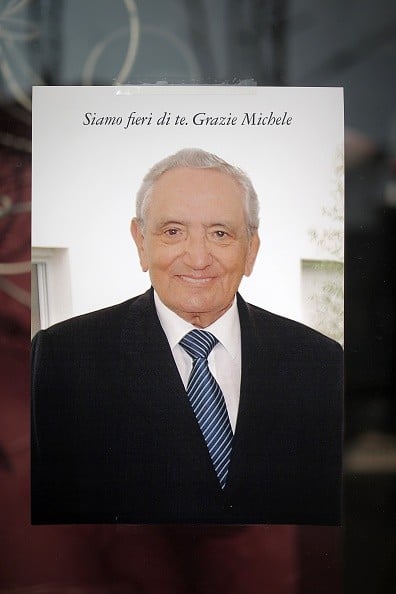
Even a decade after his death, only a few photos of Michele exist on the internet. Here is the sole photo of Michele on Getty Images. It’s a pamphlet from his funeral. The writing at the top says, “We are proud of you. Thanks Michele“
(MARCO BERTORELLO /AFP)
Tragedy And Transition
In 1997, Michele formally passed day-to-day control of Ferrero SpA to his two sons, Pietro and Giovanni, while he continued to oversee the company’s strategic direction. The transition appeared smooth — until tragedy struck in 2011.
While cycling in South Africa, Michele’s eldest son Pietro suffered a fatal heart attack. He was 47. The loss devastated the family and shook the company’s leadership. Michele, then in his mid-80s, returned to a more active role for a time, before his health began to decline.
Michele Ferrero died on February 14, 2015, at the age of 89. He left behind his wife, Maria Franca, and his surviving son, Giovanni, who inherited control of the Ferrero Group.
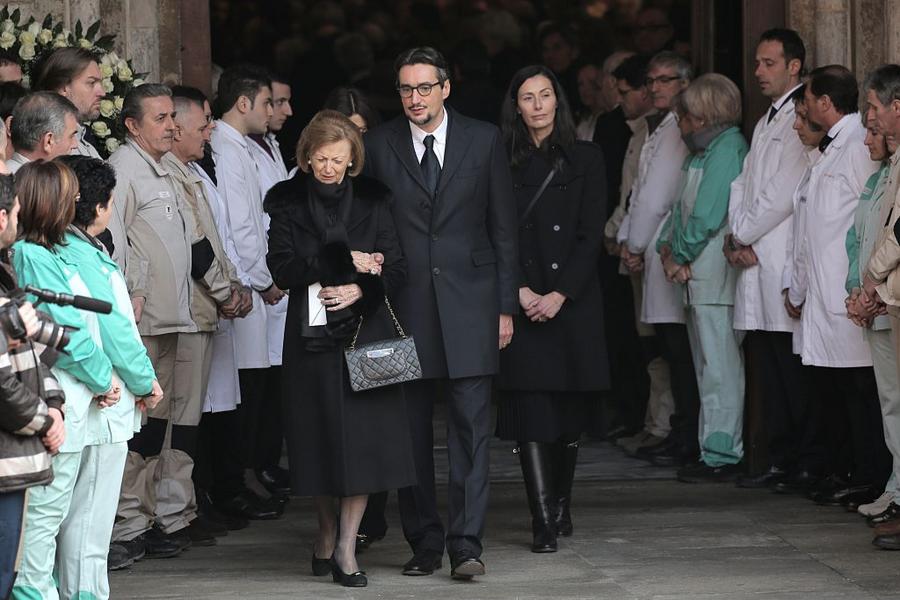
Maria and Giovanni at Michele’s funeral (MARCO BERTORELLO/AFP/Getty Images)
The Empire Endures
Under Giovanni’s leadership, the Ferrero empire has continued to expand far beyond chocolate. The company now sells products in more than 170 countries, employs nearly 49,000 people, and generated €19.3 billion in revenue during its most recent fiscal year.
Giovanni has also transformed Ferrero through acquisitions. In 2018, the company paid $2.8 billion for Nestlé’s U.S. candy business, bringing “Butterfinger,” “Crunch,” and “Baby Ruth” under the Ferrero umbrella. Ferrero later expanded into cookies, snacks, and ice cream through a series of additional purchases.
In 2025, Ferrero went even bigger, paying $3.1 billion for WK Kellogg, adding an enormous portfolio of breakfast cereals including “Frosted Flakes,” “Froot Loops,” “Rice Krispies,” “Corn Flakes,” “Apple Jacks,” and “Raisin Bran.” The acquisition was completed in September 2025, pushing Ferrero even further beyond the confectionery business that created the family’s fortune.
That acquisition spree has continued in 2026. Ferrero announced deals for Brazilian protein-snack company Bold Snacks and American granola and wellness brand Purely Elizabeth, further expanding the company into protein snacks, cereal, granola, and other food categories well beyond candy.
Giovanni, like his father, has maintained the company’s private structure and low profile. Ferrero remains a family-owned business headquartered in Alba, still known for its loyalty, secrecy, and consistent quality.
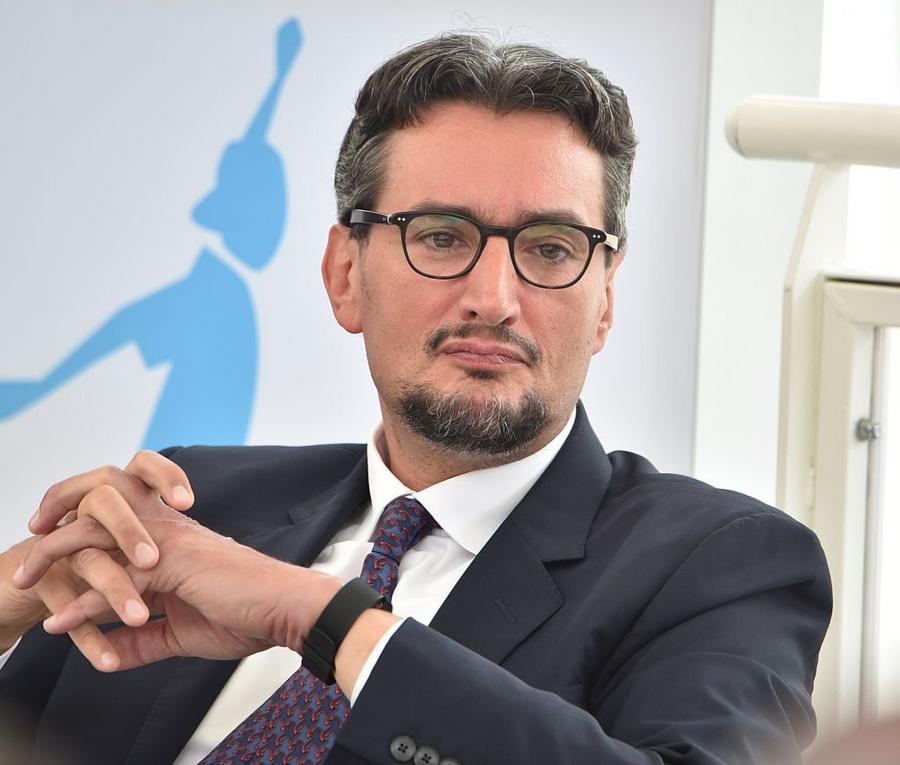
Giovanni Ferrero (GIUSEPPE CACACE/AFP via Getty Images)
Legacy Of A Quiet Billionaire
When Michele Ferrero died, he was the richest man in Italy, with a fortune estimated at roughly $26 billion. Yet he never seemed to care about money. His legacy wasn’t luxury yachts or flashy estates — it was the enduring culture of kindness and excellence he built.
He transformed a wartime improvisation into one of the most beloved brands on the planet. He expanded a family bakery into a global powerhouse without ever compromising on privacy, humility, or faith. And he created a company that treats its workers as partners in success — a rarity in modern capitalism.
In his lifetime, Michele Ferrero helped make “Nutella” a household word and “Ferrero Rocher” a global symbol of elegance. He was, by every measure, a titan of industry — yet he remained guided by the same values that shaped him in postwar Piedmont: simplicity, faith, and devotion to family.
(function() {
var _fbq = window._fbq || (window._fbq = []);
if (!_fbq.loaded) {
var fbds = document.createElement(‘script’);
fbds.async = true;
fbds.src = ”
var s = document.getElementsByTagName(‘script’)[0];
s.parentNode.insertBefore(fbds, s);
_fbq.loaded = true;
}
_fbq.push([‘addPixelId’, ‘1471602713096627’]);
})();
window._fbq = window._fbq || [];
window._fbq.push([‘track’, ‘PixelInitialized’, {}]);


