
Back in 2008, Spotify emerged as a humble Swedish tech startup with an ambitious vision: to become the go-to platform for streaming music worldwide. However, there was a significant hurdle to overcome. To attract users, Spotify needed a vast library of songs. These were controlled by major record labels who had little motivation to hand over their prized music collections to an unproven venture without substantial compensation.
To resolve this, Spotify and the record labels struck an unconventional deal. Rather than just paying standard licensing fees, Spotify offered equity in the company. In return for streaming rights to popular music, the major labels received a combined 18% ownership stake in Spotify.
- Sony Music walked away with 6%
- Universal Music Group (UMG) took 5%
- Warner Music Group secured 4%
And what was the cost to the labels for these shares? Collectively, they paid a mere €8,800—a practically negligible amount.
Over time, these stakes evolved. Universal Music Group’s (UMG) share briefly increased to 7% after acquiring EMI but eventually reduced to about 3% as Spotify attracted more investors and went public. While Sony and Warner began selling significant portions of their stock in 2018, UMG held onto its shares for 18 years. At today’s market value, UMG’s 3% ownership is approximately worth $2.7 billion.
This week, UMG announced a major move: selling half of its Spotify shares for an impressive $1.4 billion.
In the conventional music industry, a billion-dollar profit from a zero-dollar investment typically enriches the upper echelons, bolstering the bottom line and funding corporate buybacks. However, this scenario is markedly different. A substantial portion of the proceeds is set to flow directly into the pockets of thousands of musicians, marking a significant shift in how such windfalls are distributed.
The reason? One non-negotiable dealbreaker Taylor Swift insisted upon when she signed her record deal eight years ago.
The Trap of the “Unrecouped” Artist
When a record label signs an artist, it typically pays an advance to cover living expenses, studio time, music videos, marketing, and tour support. In the music business, all of those costs go on a permanent tab. The label keeps the lion’s share of the money your music earns until you clear that debt—a process known as recoupment.
The grim reality is that most artists never see a standard royalty check. According to the Berklee College of Music, an estimated 96% of major-label artists never earn enough to clear their tab. They spend their entire careers essentially “in the red” with their label.
Because Sony and Warner were both original stakeholders in Spotify, they were the first to face the music on how to handle this windfall when the streaming giant went public. When they began selling off their Spotify stakes in 2018, they took wildly different approaches.
Sony sold half its shares for $768 million and distributed $250 million (roughly 32.5%) directly to its artists in cash, regardless of their unrecouped debt. Warner, however, sold all of its shares for $504 million and used its $126 million (25%) artist pool primarily to pay down what those artists owed the label. For many Warner artists, the “payout” didn’t put a single dollar of fresh cash into their pockets.
The Taylor Swift Masterstroke
In late 2018, Taylor Swift was a free agent negotiating a massive new contract with UMG’s Republic Records. She held the ultimate leverage, and she used it to ensure UMG couldn’t pull a “Warner.”
Swift outright refused to sign her new deal unless UMG committed to the Sony model in writing. UMG had already pledged to share a portion of any future Spotify sale with its roster, but Swift demanded that this distribution be strictly non-recoupable. Cash, not credit. She wrote at the time that the clause “meant more to me than any other deal point.“
She didn’t demand that 100% of UMG’s stock sale go to artists—an impossibility in corporate label politics—but she secured the mechanism of the payout, noting UMG had agreed to terms “much better than paid out previously by other major labels.“
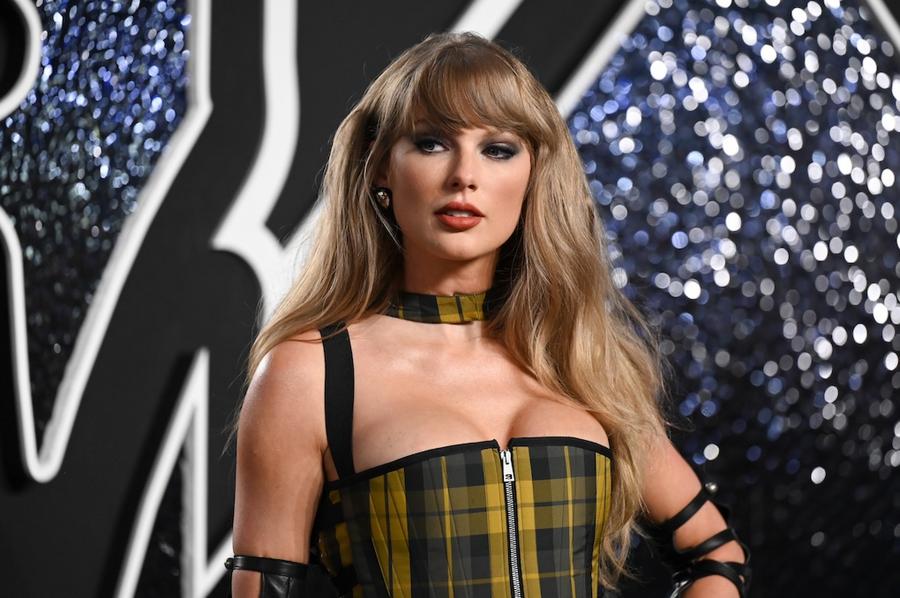
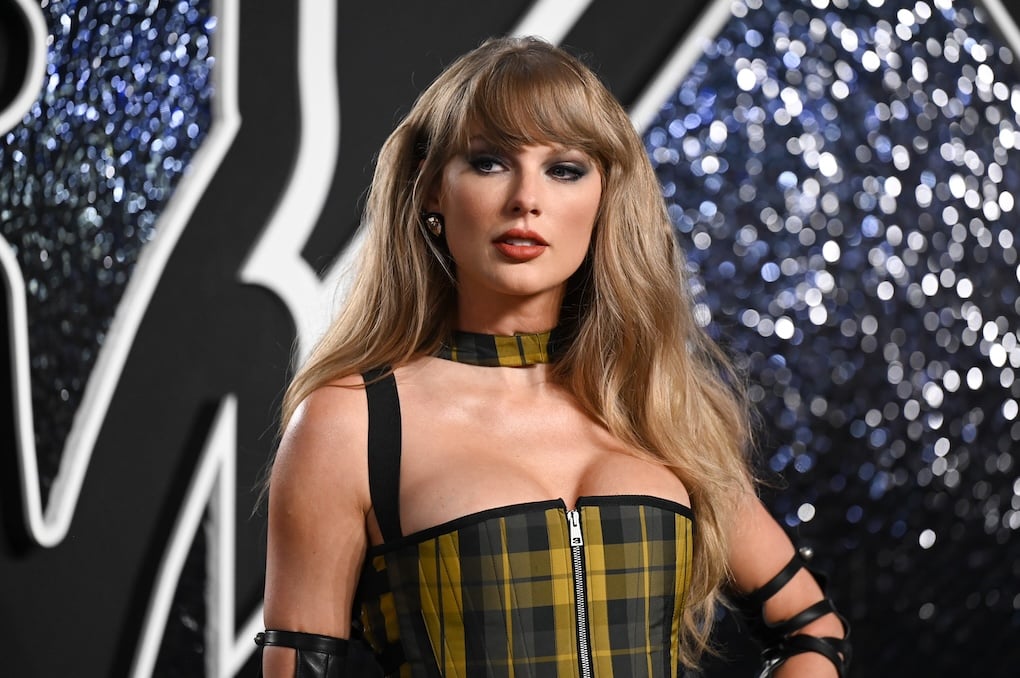
(Photo by Gilbert Flores/Billboard via Getty Images)
How Much Will Artists Get?
With UMG finally pulling the trigger on selling $1.4 billion worth of its Spotify equity, Swift’s shrewd negotiating is activating a massive, industry-wide payday.
Just how much money is actually hitting bank accounts? If UMG honors Swift’s hint that their terms beat the 32.5% standard set by Sony, the total cash pool earmarked for UMG artists will likely land somewhere north of $450 million.
Because record labels distribute this money on a “pro-rata” basis (meaning payouts are tied to how many streams an artist’s catalog generated to help build Spotify’s valuation in the first place), this isn’t a simple flat-rate bonus. Across UMG’s massive roster of an estimated 10,000 to 15,000 streaming artists, the wealth will likely be distributed across three main tiers:
- The Megastars (Top 1%): The roster’s biggest names, whose hits drive a massive chunk of global streams, will likely take home bonus checks ranging from $1.5 million to $2 million each.
- The Working Class (Top 10-20%): Successful artists with solid, consistently streaming catalogs who aren’t necessarily household names could see payouts between $20,000 and $100,000.
- The Long Tail (The Remaining 80%): Legacy acts, cult-favorite indie bands, and one-hit wonders from decades past will see smaller slices, likely ranging from $500 to $5,000.
Because of the “non-recoupable” stipulation Swift secured, that outstanding debt is legally ignored. That $2,500 goes directly into the checking account of a working musician who might currently be holding down a day job to pay rent. Most of the thousands of artists receiving this windfall have never met Taylor Swift, yet they are all about to benefit from a single demand she refused to compromise on eight years ago.
And the best part? UMG is only selling half of its Spotify shares right now. They still retain a roughly 1.5% stake in the streaming giant. That means for the thousands of artists cashing a surprise check this week, there is a second massive payday waiting in the wings whenever UMG decides to sell the rest.
(function() {
var _fbq = window._fbq || (window._fbq = []);
if (!_fbq.loaded) {
var fbds = document.createElement(‘script’);
fbds.async = true;
fbds.src=”
var s = document.getElementsByTagName(‘script’)[0];
s.parentNode.insertBefore(fbds, s);
_fbq.loaded = true;
}
_fbq.push([‘addPixelId’, ‘1471602713096627’]);
})();
window._fbq = window._fbq || [];
window._fbq.push([‘track’, ‘PixelInitialized’, {}]);