
Jay Rockefeller, the former governor of West Virginia and five-term U.S. senator, died today at 89. His long public-service career would easily merit an obituary in any major American newspaper. But why is his story featured on CelebrityNetWorth.com?
Born John D. Rockefeller IV, Jay was the great-grandson of John D. Rockefeller, the Standard Oil founder who became the world’s first billionaire and one of history’s wealthiest individuals. Jay entered the world on June 18, 1937—just 26 days after his celebrated great-grandfather died.
At the peak of his financial influence, the elder Rockefeller’s fortune was worth an estimated $630 billion in today’s economic terms. CelebrityNetWorth’s ranking of the richest people in history places him second, behind only Elon Musk’s reported peak fortune of $1 trillion.
Fortunes of that scale often fade after a generation or two, but the Rockefeller family wealth has endured. A complex network of family trusts, combined with generations of elite wealth management, has allowed John D. Rockefeller’s money to continue benefiting his descendants more than a century later. Jay Rockefeller was a striking example: during his years in public office, he was regularly counted among Congress’s richest members, and when he joined the Senate in 1985, he was its wealthiest senator.
What made Jay Rockefeller’s life particularly distinctive, however, was the path he chose. Instead of pursuing careers in banking, oil, or corporate leadership like many of his relatives, he moved in his twenties to a struggling Appalachian coal-mining community. He would ultimately spend three decades representing one of the poorest states in America in the U.S. Senate.

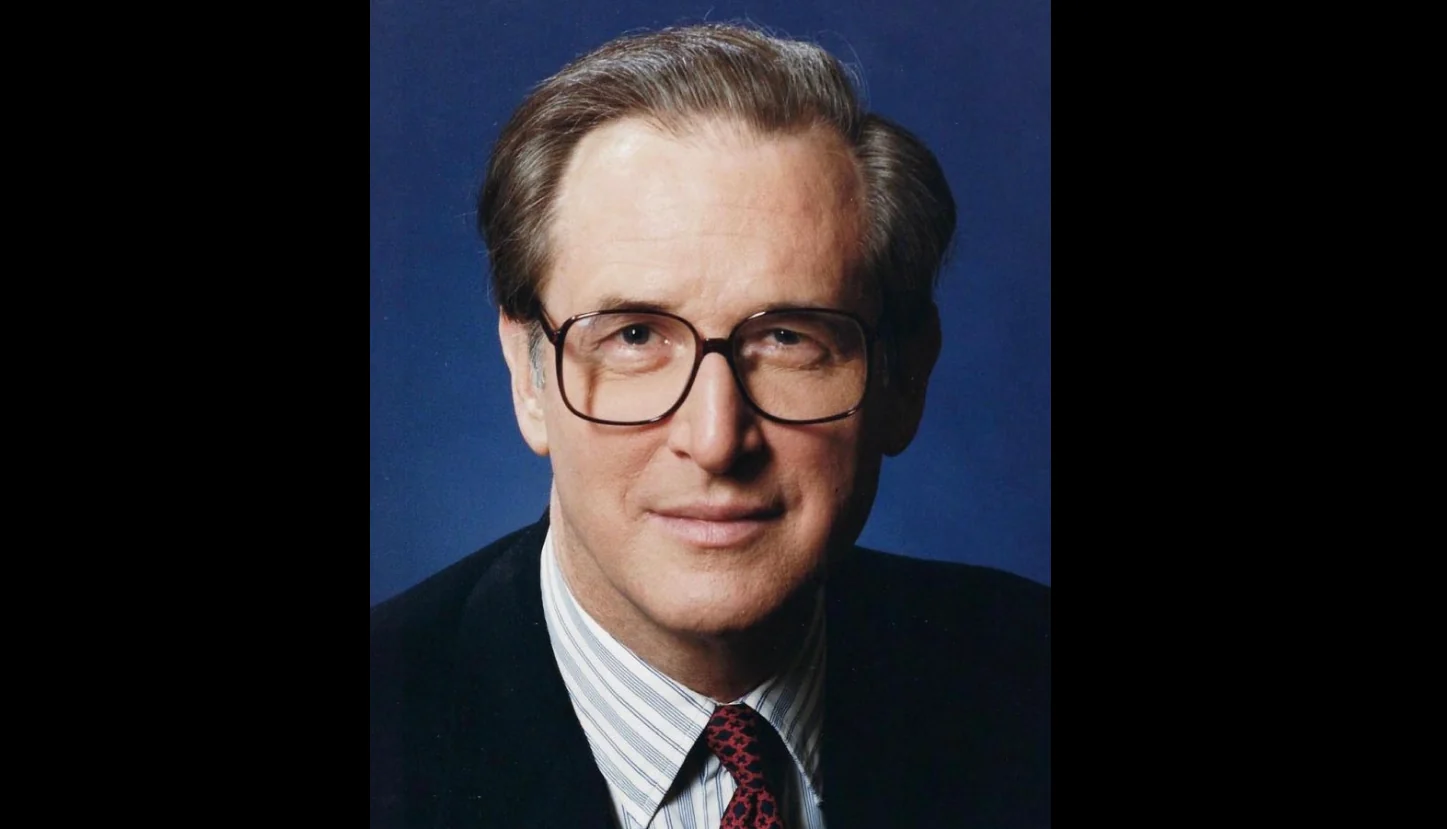
Jay Rockefeller in 1993 (Public Domain)
The $630 Billion Fortune That Started It All
To appreciate the financial legacy Jay Rockefeller inherited, you have to go back more than 150 years to the rise of Standard Oil.
His great-grandfather, John D. Rockefeller, founded Standard Oil in 1870 and gradually transformed it into the most powerful petroleum company in the world. Through aggressive acquisitions, consolidation, and control of transportation infrastructure, Standard Oil came to dominate roughly 90% of America’s oil refining industry.
By the early 20th century, Rockefeller had accumulated a personal fortune so large that conventional comparisons became almost meaningless. He was America’s first billionaire at a time when the federal government itself operated on a fraction of the scale it does today.
In our updated ranking of the richest people in history, we estimate Rockefeller’s peak fortune at the equivalent of $630 billion. That figure isn’t simply the result of multiplying his historical wealth by ordinary consumer inflation. It also reflects the extraordinary percentage of the American economy his fortune represented at the time.
Rockefeller’s personal wealth approached 1.5% of the country’s entire economic output, an almost unimaginable concentration of private financial power. For comparison, our historical ranking places Andrew Carnegie, the steel magnate, at $459 billion, while figures such as Henry Ford and Cornelius Vanderbilt accumulated fortunes equivalent to roughly $200 billion.
Rockefeller’s empire eventually attracted intense scrutiny from federal regulators. In 1911, the U.S. Supreme Court ordered Standard Oil broken up into dozens of separate companies. But the breakup didn’t destroy Rockefeller’s fortune. Because he retained ownership stakes in the successor businesses, the subsequent appreciation of those companies actually helped preserve and expand his enormous wealth.
By the time he died in 1937 at age 97, Rockefeller had already transferred much of his fortune to family members and philanthropic institutions, setting in motion one of the most successful multigenerational wealth transfers in American history.
How The Rockefeller Fortune Passed Down Through Generations
The original Rockefeller fortune passed through several generations of carefully structured family wealth.
John D. Rockefeller’s son, John D. Rockefeller Jr., inherited control of much of the family’s fortune and became a major philanthropist and real estate developer. His projects included Rockefeller Center in Manhattan, while his charitable activities helped fund universities, museums, conservation efforts, and other institutions.
The younger Rockefeller also established substantial trusts for his children and descendants, allowing the family’s wealth to remain invested and professionally managed across generations rather than being divided entirely into individual inheritances.
By the mid-1970s, congressional testimony indicated that trusts established by John D. Rockefeller Jr. for his descendants in 1934 and 1952 collectively contained nearly $750 million. That’s equivalent to around $5 billion in today’s dollars, an enormous family fortune even before accounting for decades of subsequent investment growth.
Jay’s father, John D. Rockefeller III, devoted much of his life to philanthropy and was instrumental in establishing Lincoln Center for the Performing Arts. Jay’s uncles included Nelson Rockefeller, the governor of New York who later became vice president of the United States, and David Rockefeller, the longtime head of Chase Manhattan Bank.
Each generation inherited financial resources, family connections, and responsibilities associated with the Rockefeller name. Some pursued business, others devoted themselves to philanthropy, and several entered politics.
Jay became one of the family’s most prominent political figures, although he was unusual in one respect: while most of the Rockefeller dynasty had been associated with the Republican Party, Jay became a Democrat.
How Rich Was Jay Rockefeller?
When Rockefeller arrived in Washington as a newly elected senator in 1985, nearly half a century had passed since John D. Rockefeller’s death. The oil tycoon had fathered five children, and his family tree had expanded to over 100 living descendants.
Even after decades of inheritances, charitable donations, and dividing the family fortune among an ever-growing number of heirs, the original fortune remained so enormous that Jay Rockefeller, just one of those 100 descendants, was personally worth an estimated $150 million. That’s equivalent to around $460 million today, and it made him the richest member of the U.S. Senate.
His fortune continued to attract attention throughout his political career. Financial disclosures examined in 2008 showed that much of Rockefeller’s wealth was held in three blind trusts managed through JPMorgan Chase, Wachovia, and United National Bank. Those trusts had combined reported values exceeding $80 million, with the largest alone valued at more than $50 million.
Later financial disclosure estimates put his average net worth at roughly $123.6 million in 2004 and $101.3 million in 2012. Those figures were calculated from disclosure ranges and did not necessarily capture the full value of his family’s private assets and financial arrangements.
At the time of his death in 2026, CelebrityNetWorth estimates Jay Rockefeller’s personal net worth at $200 million.
Rockefeller also enjoyed a substantial real estate portfolio. Over the years, he maintained a large residence in Charleston, West Virginia, a mansion near Rock Creek Park in Washington, D.C., a 3,000-acre estate in Pocahontas County, West Virginia, and a ranch in the Jackson Hole area of Wyoming.
He lived very much like a Rockefeller, even as his political career increasingly focused on the challenges facing people who had almost none of the advantages he had inherited.
From One Of America’s Richest Families To One Of Its Poorest Communities
Jay Rockefeller grew up in New York surrounded by immense wealth and privilege. He attended Phillips Exeter Academy and Harvard University, studied Japanese language and culture in Tokyo, and initially considered a career in diplomacy.
After working with the Peace Corps and the State Department, he began searching for a more direct way to make a difference in people’s lives.
In 1964, at age 27, he joined Volunteers in Service to America, a federal antipoverty program, and moved to Emmons, West Virginia, a remote coal-mining community where many families lived in poverty.
The contrast with his upbringing was staggering.
Instead of elegant residences, wealthy neighbors, and elite institutions, Rockefeller encountered struggling coal-mining families, limited employment opportunities, and communities that lacked reliable access to basic services. Some residents were initially suspicious of the wealthy outsider who had arrived bearing one of the most famous surnames in the country.
Over time, he earned their trust by helping establish a community organization, improving school bus transportation, organizing a Little League baseball team, and expanding access to health services.
The experience changed the direction of his life. Rockefeller became convinced that improving conditions in communities like Emmons required political action, not simply charitable contributions. Two years later, he entered West Virginia politics.
He Spent More Than $20 Million Of His Own Fortune Winning Elections
Although Rockefeller devoted his career to public service, he was never reluctant to use his inherited fortune to advance his political ambitions.
He was elected to the West Virginia House of Delegates in 1966 and became secretary of state in 1968. After losing his first gubernatorial campaign in 1972, he won the governorship in 1976 and took office the following January.
His personal wealth became a major political issue during his 1980 reelection campaign against Republican Arch Moore.
Rockefeller spent $11.75 million of his own money on that race, an extraordinary sum for a state election at the time. His campaign purchased extensive television advertising, including airtime in neighboring states and Washington, D.C., to reach West Virginia voters.
His opponent’s supporters even circulated bumper stickers reading “Make Him Spend It All, Arch.”
Four years later, Rockefeller ran for the U.S. Senate. His 1984 campaign cost $12.9 million, including nearly $9 million of his own money. He narrowly defeated Republican businessman John Raese and began what would become a 30-year Senate career.
Combined, those two campaigns alone consumed more than $20 million of Rockefeller’s personal fortune. He made no particular apology for spending his own money to win elections, arguing that his financial independence allowed him to focus on public policy rather than the constant demands of political fundraising.
A Rockefeller Who Became A Champion For Poor Families
Rockefeller served two terms as governor of West Virginia, from 1977 to 1985, before winning five consecutive terms in the U.S. Senate. He retired in January 2015 after nearly half a century in elected public office.
His defining legislative achievement came in 1997, when he helped create the Children’s Health Insurance Program, commonly known as CHIP. The program expanded medical coverage to millions of children whose families earned too much to qualify for traditional Medicaid but could not afford private insurance.
Rockefeller’s interest in children’s health care dated directly to his experiences in Appalachia, where he had witnessed the consequences of families being unable to obtain basic medical treatment.
He was also a prominent advocate for Medicare, Medicaid, veterans’ health care, coal mine safety, and consumer protections. He supported President Barack Obama’s Affordable Care Act and served as chairman of several powerful Senate committees, including Intelligence, Commerce, and Veterans’ Affairs.
His record was not without controversy. Rockefeller initially supported the 2002 authorization for military action against Iraq but later became a major critic of the Bush administration’s use of intelligence to justify the invasion. As chairman of the Senate Intelligence Committee, he oversaw a 2008 investigation that challenged the administration’s public claims about Iraq’s weapons programs and alleged terrorist connections.
Through it all, Rockefeller remained an unusual figure in American politics: a man whose family name represented enormous private wealth, but whose political identity was closely associated with poverty reduction and expanded government services.
The End Of A Remarkable Rockefeller Chapter
Jay Rockefeller married Sharon Percy, the daughter of Illinois Senator Charles Percy, in 1967. She went on to become the longtime president and chief executive of WETA, the public broadcasting organization based in Washington, D.C.
The couple had four children: John D. Rockefeller V, Valerie Rockefeller, Charles Rockefeller, and Justin Rockefeller. He was also survived by nine grandchildren.
With his death at age 89, another chapter of one of America’s most extraordinary family dynasties has come to an end.
It’s difficult to overstate the scale of the fortune that made Jay Rockefeller’s life possible. His great-grandfather accumulated wealth equivalent to $630 billion, a figure surpassed by almost no individual in recorded history. That fortune helped establish a dynasty of bankers, industrialists, philanthropists, governors, and even a vice president.
Four generations later, Jay Rockefeller died with an estimated personal fortune of $200 million. He was extraordinarily wealthy by virtually any ordinary measure, but his wealth represented only a tiny fraction of the economic power his great-grandfather once commanded.
Perhaps the greatest irony of Jay Rockefeller’s life is that he inherited enough money to never need a job, yet spent most of his adult life working in public service. Born into one of the largest fortunes ever created, he ultimately chose to devote his career to improving the lives of people who had inherited almost nothing.


