
What Is Stuart Matthewman’s Net Worth?
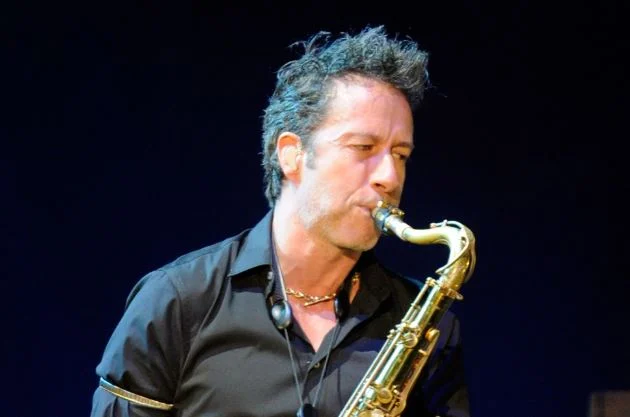
English musician, songwriter, producer, and composer Stuart Matthewman has an estimated net worth of $10 million.
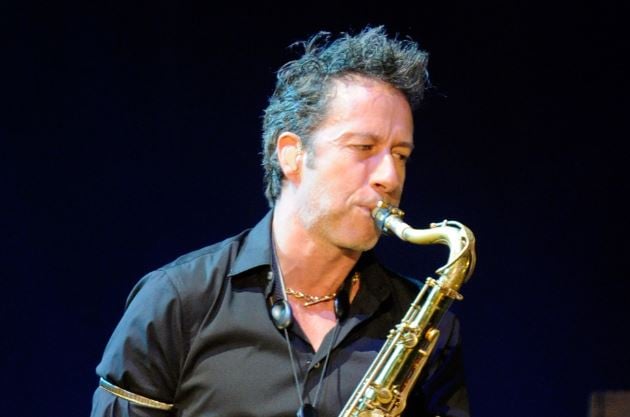
Matthewman is widely recognized as the guitarist and saxophonist behind Sade, the enduring British group led by Sade Adu. His role, however, extends far beyond that of a supporting player. Since the band’s beginnings in the early 1980s, he has served as one of its central creative forces. His atmospheric guitar work and unmistakable saxophone lines helped shape Sade’s elegant blend of soul, jazz, pop, and R&B. His songwriting credits include such lasting tracks as “Your Love Is King,” “No Ordinary Love,” “Paradise,” “Nothing Can Come Between Us,” “Cherish the Day,” “By Your Side,” “King of Sorrow,” and “Soldier of Love.” Sade’s six studio albums have sold more than 50 million copies globally, with “Diamond Life” accounting for about 10 million of those sales. Matthewman has also built an extensive career away from the group, working as a producer and songwriter with neo-soul artist Maxwell, forming the side project Sweetback with his Sade bandmates, releasing electronic recordings as Cottonbelly, writing film scores, and co-founding the jazz-pop band Twin Danger. In 2026, Sade entered the Rock & Roll Hall of Fame’s Performer class, honoring Matthewman alongside Adu, Andrew Hale, and Paul Spencer Denman.
Early Life
Stuart Colin Matthewman was born in Hull, England, on August 18, 1960. He developed an interest in music early in life, first studying the clarinet before taking up saxophone and guitar as a teenager.
His musical influences covered a wide range of styles. Matthewman absorbed the work of soul and R&B figures such as Junior Walker, King Curtis, Ernie Isley, and Johnny “Guitar” Watson, while also exploring jazz, dub, reggae, classical music, and cinematic scoring.
Matthewman relocated from Hull to London in 1982. Soon afterward, he joined Pride, a sizable band with funk and Latin influences. Among its backup singers was a young performer named Sade Adu.
The creative bond formed between Matthewman and Adu would ultimately define the musician’s career.
Meeting Sade Adu
As members of Pride, Matthewman and Sade began meeting outside rehearsals and quickly realized that they approached music in much the same way.
Together, they started writing songs and assembled a more subdued, jazz-oriented repertoire that stood apart from Pride’s expansive funk style. At some shows, a smaller combination of Pride members would open with a brief set centered on Sade’s voice and Matthewman’s guitar and saxophone.
The intimate performances drew an unexpectedly enthusiastic response from audiences and soon captured the interest of record-label executives.
Although record companies approached Sade about a solo career, she declined opportunities that would have separated her from the musicians who had helped shape her sound. Matthewman, keyboard player Andrew Hale, and bassist Paul Spencer Denman eventually formed the permanent band around her.
The newly established group took the name Sade and signed a recording deal with Epic Records.
Diamond Life
Sade issued its first album, “Diamond Life,” in 1984.
At a time when mainstream pop often favored a much bigger sound, the album offered something markedly different. Matthewman’s crisp guitar, restrained saxophone, and open, spacious arrangements combined with Hale’s keyboards, Denman’s bass, and Adu’s controlled vocals, producing a polished fusion of jazz, soul, R&B, and pop.
Matthewman co-wrote “Your Love Is King” with Adu, giving Sade its first major hit and a Top 10 single in the United Kingdom. He was also a prominent instrumental presence across the album, playing guitar and saxophone on “Smooth Operator.”
“Diamond Life” became an international blockbuster, moving approximately 10 million copies worldwide. Sade won the Grammy for Best New Artist, and the album quickly established the band as a global force.
Through his songwriting royalties from “Your Love Is King,” Matthewman also secured a financial interest in one of Sade’s earliest and most enduring catalog songs.
Promise
Sade returned the following year with its second album, “Promise,” released in 1985.
The record topped both the Billboard 200 and the UK Albums Chart. Its track list included “The Sweetest Taboo,” “Never as Good as the First Time,” and “Is It a Crime.”
Matthewman co-wrote “Is It a Crime” and again contributed guitar and saxophone throughout the album. His saxophone work became a signature part of Sade’s identity, typically serving the melody and mood instead of stretching into extended jazz solos.
The consecutive triumphs of “Diamond Life” and “Promise” propelled Sade into the ranks of the decade’s biggest international music acts.
Songwriting and Sade’s Sound
Matthewman’s importance to Sade extends well beyond instrumental performance.
Although the public frequently thinks of Sade as a solo singer, the recordings have historically been created by a stable band. Matthewman, Hale, Denman, and Adu have shared writing, arranging, production, and performance responsibilities across the group’s catalog.
Matthewman accumulated songwriting credits on many of Sade’s most durable recordings. He co-wrote “Paradise,” “Nothing Can Come Between Us,” “Turn My Back on You,” “No Ordinary Love,” “Feel No Pain,” “Cherish the Day,” “By Your Side,” “King of Sorrow,” “The Moon and the Sky,” and “Soldier of Love,” among others.
Some of those songs have remained radio and streaming staples decades after their initial release. “No Ordinary Love,” in particular, was written by Adu and Matthewman and became one of Sade’s signature recordings following its release on “Love Deluxe.”
Those composition credits have given Matthewman a long-running source of publishing royalties separate from his earnings as a performer and touring musician.
Stronger Than Pride and Love Deluxe
Sade released “Stronger Than Pride” in 1988. The album included “Paradise,” “Nothing Can Come Between Us,” “Love Is Stronger Than Pride,” and “Turn My Back on You.”
Matthewman’s guitar became increasingly important to the group’s sound as the records grew more atmospheric and rhythmically understated.
After another lengthy recording break, Sade returned with “Love Deluxe” in 1992. The album produced “No Ordinary Love,” “Kiss of Life,” “Feel No Pain,” and “Cherish the Day.”
“No Ordinary Love,” co-written by Matthewman and Adu, developed into one of the band’s most celebrated songs. Matthewman’s heavily processed guitar and saxophone helped create the recording’s dark, slow-moving atmosphere.
“Love Deluxe” reached #3 on the Billboard 200 and continued the group’s pattern of achieving major commercial success despite releasing albums far less frequently than most mainstream acts.
Sweetback
Following the tour supporting “Love Deluxe,” Sade entered another extended hiatus.
Rather than stop working, Matthewman joined Andrew Hale and Paul Spencer Denman in a new studio project called Sweetback. The trio used the band to explore dub, trip-hop, soul, electronic music, and acid jazz without needing to fit those ideas into a Sade record.
Sweetback released its self-titled debut album in 1996. Rather than employ a permanent lead singer, the group brought in guest vocalists including Maxwell, Amel Larrieux, and Bahamadia.
The single “You Will Rise,” featuring Larrieux, became one of the album’s best-known tracks.
Sweetback released a second album, “Stage [2],” in 2004. The project reinforced the creative independence of the musicians who were frequently perceived by casual listeners primarily as Sade’s backing band.
Getty
Working With Maxwell
One of Matthewman’s most important careers outside Sade developed through his collaboration with Maxwell.
Matthewman met the then-little-known singer in the mid-1990s through percussionist Karl Vanden Bossche. He became deeply involved with Maxwell’s debut album, “Maxwell’s Urban Hang Suite,” serving as a producer, songwriter, multi-instrumentalist, and arranger.
Matthewman co-wrote and produced songs including “Welcome,” “Lonely’s the Only Company,” and “Whenever Wherever Whatever” while playing guitar, saxophone, keyboards, percussion, and other instruments across the record.
Released in 1996, “Maxwell’s Urban Hang Suite” became a multi-platinum success and one of the foundational albums of the neo-soul movement. Matthewman’s work helped give the album the lush, understated instrumental sound that distinguished it from much of contemporary R&B.
He continued collaborating with Maxwell on later albums, including “Embrya,” “Now,” and “blackSUMMERS’night.”
The relationship became one of the most significant production partnerships of Matthewman’s career outside Sade.
Film Scores
Matthewman also developed a substantial career composing music for film.
He wrote the score for the 1999 independent drama “Twin Falls Idaho,” directed by Michael and Mark Polish. The soundtrack incorporated members of the New York Philharmonic alongside musicians from Matthewman’s more experimental musical circle.
He subsequently scored the Polish brothers’ films “Northfork” and “The Astronaut Farmer.” His other screen work included music connected to “Sea of Love,” “Indecent Proposal,” and Nelson George’s HBO film “Life Support.”
Film composition gave Matthewman an opportunity to explore orchestral and cinematic ideas that would have been difficult to accommodate within Sade’s catalog.
Cottonbelly
Matthewman has also recorded electronic and dub-oriented music under the name Cottonbelly.
The pseudonym allowed him to work extensively with electronic production, programming, remixes, and dub techniques. His Cottonbelly work included remixes for artists including Janet Jackson, Gregory Isaacs, and The Isley Brothers.
In 2010, he released the album “X Amounts of Niceness” under the Cottonbelly name.
The project demonstrated another side of the musician responsible for many of Sade’s elegant guitar and saxophone parts, drawing heavily from dub, chill-out, electronic music, and studio experimentation.
Lovers Rock
Sade returned in 2000 with “Lovers Rock,” its first studio album in eight years.
Matthewman’s acoustic guitar played an especially important role in the album’s stripped-down sound. The record incorporated influences from reggae and lovers rock while generally using fewer of the saxophone-centered arrangements associated with some earlier Sade records.
Matthewman shared writing credit on songs including “By Your Side,” “King of Sorrow,” “Flow,” and “Lovers Rock.”
“By Your Side” became another of the band’s most enduring songs and has been widely used at weddings and romantic occasions. Because Matthewman is one of its credited composers, the song added another major title to his publishing catalog.
“Lovers Rock” reached #3 on the Billboard 200 and won the Grammy Award for Best Pop Vocal Album.
Soldier of Love
Sade once again disappeared from recording for nearly a decade before returning with “Soldier of Love” in 2010.
The four core members reconvened at Peter Gabriel’s Real World Studios in England. Matthewman contributed guitar, saxophone, programming, songwriting, and production work.
He shared composition credit on the title track as well as “The Moon and the Sky” and other material.
“Soldier of Love” debuted at #1 on the Billboard 200 and remained there for three consecutive weeks. The title track won the Grammy Award for Best R&B Performance by a Duo or Group with Vocals.
The band subsequently embarked on its enormous 2011 world tour. The production traveled across Europe, North America, Australia, and other markets and reinforced Sade’s ability to fill arenas despite the long gaps between albums.
Twin Danger
Matthewman formed another side project in New York during the 2010s with singer and multi-instrumentalist Vanessa Bley.
The duo became Twin Danger, mixing jazz, blues, pop, and cinematic music into a noir-inspired sound. Matthewman played saxophone and guitar and shared songwriting, arranging, production, and engineering duties.
Twin Danger signed with Decca/Universal and released its self-titled album in 2015. The record included originals such as “Sailor,” “Coldest Kind of Heart,” and “Pointless Satisfaction,” along with a reinterpretation of Queens of the Stone Age’s “No One Knows.”
Bley died in a car accident in 2019, ending the project.
Later Sade Years and Rock & Roll Hall of Fame
Sade has maintained an unusually slow and deliberate recording schedule throughout its career. Rather than releasing music to satisfy commercial deadlines, the band has repeatedly taken years between projects.
In 2020, Matthewman joined Adu, Hale, and Denman in remastering all six Sade studio albums for the vinyl box set “This Far.”
The band remained culturally influential despite its limited output. In 2024, Sade released “Young Lion” on the Red Hot Organization compilation “Transa.” The track was primarily an Adu project rather than a full-band composition, but its release brought renewed attention to the Sade name.
In April 2026, the Rock & Roll Hall of Fame announced Sade as a member of its 2026 Performer class. Matthewman was specifically named as one of the four band members being honored, alongside Sade Adu, Andrew Hale, and Paul Spencer Denman.
The recognition formally acknowledged what had long been evident from the group’s recording credits: Sade is a band, and Matthewman’s songwriting, musicianship, and production have been fundamental to its sound since the beginning.
Personal Life
Matthewman has maintained a considerably lower public profile than many musicians associated with similarly successful bands.
After Sade’s early success, he moved to New York City and became deeply involved in the city’s studio and music scene. His work with Sweetback, Maxwell, film composers, electronic artists, and Twin Danger grew largely out of that New York base.
Matthewman is the father of a son named Clay. Away from music, he has also been an enthusiastic competitive cyclist and trained and raced with a New York cycling team.
Despite Sade’s enormous international success, Matthewman has generally avoided celebrity culture and has devoted much of the time between Sade projects to studio work, songwriting, film composition, and smaller musical collaborations.
All net worths are calculated using data drawn from public sources. When provided, we also incorporate private tips and feedback received from the celebrities or their representatives. While we work diligently to ensure that our numbers are as accurate as possible, unless otherwise indicated they are only estimates. We welcome all corrections and feedback using the button below.
(function() {
var _fbq = window._fbq || (window._fbq = []);
if (!_fbq.loaded) {
var fbds = document.createElement(‘script’);
fbds.async = true;
fbds.src = ”
var s = document.getElementsByTagName(‘script’)[0];
s.parentNode.insertBefore(fbds, s);
_fbq.loaded = true;
}
_fbq.push([‘addPixelId’, ‘1471602713096627’]);
})();
window._fbq = window._fbq || [];
window._fbq.push([‘track’, ‘PixelInitialized’, {}]);