
What Is Tego Calderón’s Net Worth?
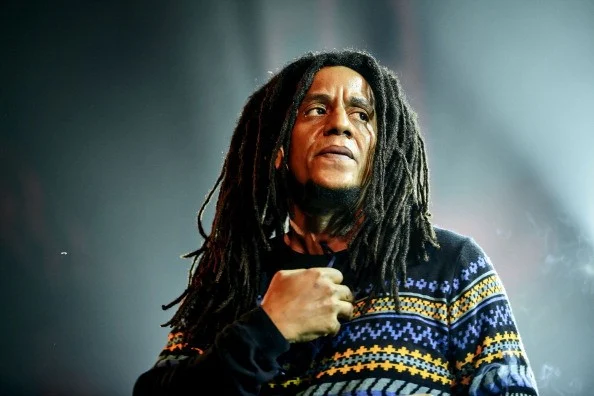
Tego Calderón is a Puerto Rican rapper, singer, songwriter, actor, and record executive with an estimated net worth of $8 million.
Known as “El Abayarde,” Tego Calderón is widely regarded as one of reggaeton and Latin hip-hop’s most influential artists. He made his international breakthrough with the 2002 album “El Abayarde,” blending reggaeton and hip-hop with salsa, bomba, plena, dancehall, and other Afro-Caribbean styles. As the genre moved toward commercial success, Calderón stood out for addressing racism, poverty, Black identity, Puerto Rican culture, and social inequality in his music. His early achievements helped carry reggaeton from Puerto Rico’s underground scene into the Latin mainstream. In 2005, he signed a long-term worldwide agreement involving Atlantic Records and his own Jiggiri Records. Calderón later said he had rejected multimillion-dollar offers when accepting them would have compromised his creative control.
His discography includes “The Underdog/El Subestimado,” “El Abayarde Contraataca,” and “El Que Sabe, Sabe,” which won the 2015 Latin Grammy for Best Urban Music Album. Eight years later, he earned another Latin Grammy, this time for Best Reggaeton Performance for “La Receta.” Calderón has also acted in multiple films from the “Fast & Furious” franchise alongside Vin Diesel, Paul Walker, and Ludacris. Unlike many commercial reggaeton stars, he has never followed a nonstop release schedule. He has said that touring and live performances, rather than record royalties, have traditionally provided most of his income.
Early Life
Tegui Calderón Rosario was born on February 1, 1972, in Santurce, Puerto Rico. He spent much of his childhood in places such as Río Grande and Carolina, communities shaped by the Afro-Caribbean culture and music that would later influence his artistic identity.
His parents introduced him to traditional Puerto Rican music and salsa, especially the work of Ismael Rivera. Calderón also explored jazz, African music, American hip-hop, and heavy metal. He studied percussion at Puerto Rico’s Escuela Libre de Música and spent part of his youth in Miami, where he attended Miami Beach Senior High School.
Before turning to rap, Calderón played drums in rock and heavy metal groups. That percussion background became central to his musical style. His reggaeton often draws on live instrumentation and rhythms from bomba, plena, rumba, salsa, and other traditions instead of depending solely on the genre’s familiar electronic production.
Breaking Into Reggaeton
Calderón spent years building a reputation in Puerto Rico’s underground rap and reggaeton communities. He entered hip-hop competitions, performed wherever he could find an opportunity, and formed important connections with artists and producers such as Eddie Dee.
Guest appearances on compilations and recordings by other artists gradually expanded his audience. Calderón differentiated himself through both his image and his writing. He openly celebrated his Afro-Puerto Rican heritage, addressed racism and class inequality, and largely rejected the luxury cars, jewelry, and other status symbols commonly associated with rap success.
Although that perspective initially made him an unconventional presence in the growing commercial reggaeton market, it eventually became a defining part of his influence.
“El Abayarde”
Calderón reached a career-defining turning point with the 2002 release of “El Abayarde.”
The album featured tracks including “Pa’ Que Retozen,” “Guasa Guasa,” and “Al Natural.” It became a major independent success at a time when reggaeton had limited access to mainstream distribution in the United States. “Pa’ Que Retozen” emerged as one of Calderón’s signature songs and remains a landmark recording from reggaeton’s early-2000s expansion.
The album’s significance extended beyond its sales and popularity. Calderón brought traditional Puerto Rican and Afro-Caribbean sounds into a genre increasingly shaped by electronic production. His lyrics explored racial identity, poverty, politics, and social inequality while still including more conventional party songs.
His audience grew rapidly in Puerto Rico, the Dominican Republic, New York, Miami, and other major Latin markets. Calderón performed at Madison Square Garden in 2003, and by the middle of the decade he was recognized as one of the artists who helped move reggaeton into the American mainstream.
Jiggiri Records and Atlantic Deal
Alongside his music career, Calderón developed a strong business presence.
He founded Jiggiri Records to maintain greater ownership and creative authority—an unusual position for an artist emerging from reggaeton’s underground. The label became associated with music by acts including Zion & Lennox and Julio Voltio, while also serving as Calderón’s own recording platform.
In 2005, Atlantic Records announced a long-term worldwide agreement with Calderón through Jiggiri Records. Atlantic called him the first artist from the rapidly growing reggaeton movement to secure a global deal with a major non-Latin record label.
The arrangement appealed to Calderón because he kept his own imprint instead of signing away his identity as a direct major-label artist. He said the agreement enabled him to feel like the “captain,” rather than a passenger, in his career.
The Atlantic agreement followed earlier decisions to prioritize independence over a larger payday. According to a 2005 report by the Los Angeles Times, Calderón had turned down multimillion-dollar offers from major labels because they did not provide the level of control he wanted over his music.
Turning Down Endorsement Money
His willingness to put principle ahead of money was not limited to recording contracts.
At the height of his early fame, Calderón declined an advertising opportunity with Sean “Diddy” Combs’ Sean John clothing company. He referenced reports about labor conditions tied to clothing production and said the campaign did not align with his personal values.
He also gradually stopped embracing the expensive jewelry commonly associated with hip-hop and reggaeton. Calderón later explained that learning about working conditions surrounding the diamond trade made him uncomfortable promoting what he called “bling bling.”
Those decisions became part of a broader pattern throughout his career. Although Calderón clearly benefited financially from reggaeton’s explosive growth, he frequently prioritized independence and personal beliefs over maximizing endorsements or fitting the image expected of a commercial rap star.
AFP / Getty Images
“Bandoleros”
One of Calderón’s most enduring collaborations arrived in 2005 when he appeared with Don Omar on “Bandoleros.”
The song became an international reggaeton classic and received additional exposure after being included in “The Fast and the Furious: Tokyo Drift.” Calderón and Don Omar subsequently developed an onscreen partnership within the movie franchise itself.
Calderón also collaborated with numerous prominent artists during the period, including Fat Joe, Wyclef Jean, 50 Cent, Cypress Hill, and other American and Latin performers. His verses appeared on remixes and compilation records that helped connect the Spanish-language urban movement to mainstream American hip-hop.
“The Underdog/El Subestimado”
Calderón released “The Underdog/El Subestimado” through Jiggiri and Atlantic in 2006.
Rather than simply repeating the sound of “El Abayarde,” he broadened the musical palette considerably. The album incorporated hip-hop, reggae, salsa, Cuban rumba, Puerto Rican bomba, and other Afro-Caribbean sounds and included collaborations with artists such as Don Omar, Zion, Yandel, Julio Voltio, Buju Banton, and salsa legend Oscar D’León.
The album reached #2 on Billboard’s Top Latin Albums chart and earned Calderón a Grammy nomination for Best Latin Rock, Alternative or Urban Album. Its success demonstrated that he could experiment beyond conventional reggaeton without abandoning the audience that had made him famous.
Calderón followed it in 2007 with “El Abayarde Contraataca.” That album earned another Grammy nomination, this time for Best Latin Urban Album.
How Tego Calderón Made His Money
Although record sales, publishing, acting, and his record label have all contributed to Calderón’s wealth, he has said that touring historically generated the bulk of his income.
In a 2015 interview, Calderón was unusually direct about his finances, explaining that he did not live from record royalties. Instead, he said he made his living primarily through personal appearances and concerts, adding that he was fortunate to have a large volume of live work.
That business model was especially valuable during the 2000s, when Calderón became a major touring attraction throughout the United States, Puerto Rico, Latin America, and Europe. His peak coincided with reggaeton’s first international explosion, giving pioneering artists significant demand for concerts even before streaming transformed the economics of Latin music.
His ownership of Jiggiri Records also gave Calderón more control over his recorded work than an artist functioning entirely under a conventional major-label contract. At the same time, his insistence on artistic independence and his relatively selective release schedule likely limited the maximum commercial earnings he could have generated during reggaeton’s boom years.
Acting Career
Calderón expanded into acting during the 2000s.
He played Choco in the 2007 crime drama “Illegal Tender,” which was produced by John Singleton. Two years later, he entered the “Fast & Furious” universe alongside Don Omar.
Calderón first appeared as Leo Tego in the 2009 short film “Los Bandoleros,” directed by Vin Diesel, before appearing in “Fast & Furious” later that year. Leo and Don Omar’s Rico Santos became members of Dominic Toretto’s extended crew.
The pair returned for 2011’s “Fast Five,” one of the franchise’s most successful and important installments. Leo and Santos participate in the elaborate Rio de Janeiro vault heist alongside Dom, Brian, Roman, Tej, Han, and Gisele.
Calderón subsequently reprised Leo in 2017’s “The Fate of the Furious.” His work in the movies gave him a recognizable acting résumé without ever becoming his primary profession.
“El Que Sabe, Sabe”
Calderón became increasingly selective about releasing full-length albums during the 2010s.
In 2015, eight years after his previous studio album, he released “El Que Sabe, Sabe.” The title honored his late father, Esteban Calderón, who frequently used the expression.
The album continued Calderón’s mixture of reggaeton, Latin hip-hop, and Afro-Caribbean music while addressing subjects including social injustice and abuse. It was nominated for multiple Latin Grammy Awards and won Best Urban Music Album at the 2015 ceremony.
The victory was an important validation for an artist who had helped shape Latin urban music more than a decade earlier but had never depended on the volume of releases or pop collaborations pursued by many younger artists.
“La Receta” and Second Latin Grammy
Calderón largely disappeared from the conventional album cycle after “El Que Sabe, Sabe,” surfacing periodically for collaborations and individual singles.
He appeared on Cosculluela’s “Chambean” in 2022 and returned more prominently in 2023 with “La Receta.” The song immediately reminded listeners of the conversational flow, percussion-heavy production, and lyrical personality that had made him distinctive two decades earlier.
“La Receta” won the 2023 Latin Grammy for Best Reggaeton Performance, beating a field that included Karol G, Feid, Ozuna, María Becerra, and Maldy. The victory gave Calderón his second Latin Grammy nearly eight years after “El Que Sabe, Sabe.”
His continuing relevance was reinforced in 2025 when “Reggaeton Malandro” earned another Latin Grammy nomination for Best Reggaeton Performance.
Influence on Reggaeton
Calderón occupies an unusual position in reggaeton history.
Artists such as Daddy Yankee and Don Omar ultimately became larger commercial stars, but Calderón became one of the genre’s most influential artistic figures. His music demonstrated that reggaeton could incorporate traditional Black Caribbean music, politically conscious lyrics, and serious discussions of race and poverty without losing its connection to clubs and the street.
His pride in his Afro-Puerto Rican identity was particularly important. Calderón openly described himself as a Black artist at a time when colorism and anti-Black prejudice were often minimized within Latin entertainment. His music and visual presentation deliberately foregrounded that identity.
As reggaeton later became one of the dominant forms of global pop music, younger stars repeatedly cited the generation represented by Calderón as foundational. His influence became particularly apparent as artists such as Bad Bunny embraced Puerto Rican musical history, social commentary, and Afro-Caribbean sounds alongside mainstream reggaeton.
Personal Life
Calderón married Michelle Peterbauer in January 2006 after the two had already been together for several years. Peterbauer had previously worked as his assistant. Calderón has children from his relationships and has repeatedly described fatherhood as more important to him than his entertainment career.
The marriage later deteriorated. By 2015, Calderón publicly acknowledged that he and Peterbauer were living separately, and subsequent Puerto Rican media reports described domestic disputes between them.
In June 2019, Calderón was taken into custody in Puerto Rico after an ex-partner alleged that he had violated a protective order by contacting her through telephone calls and text messages. The arrest concerned the alleged violation of the order rather than a finding that the underlying accusations were true.
Despite periods of personal turmoil and lengthy stretches away from recording, Calderón has retained an unusually respected position within Latin music. More than two decades after “El Abayarde” helped introduce a wider audience to reggaeton, his occasional releases continue to compete for the genre’s most prestigious awards.
All net worths are calculated using data drawn from public sources. When provided, we also incorporate private tips and feedback received from the celebrities or their representatives. While we work diligently to ensure that our numbers are as accurate as possible, unless otherwise indicated they are only estimates. We welcome all corrections and feedback using the button below.


