
Every wedding comes with a budget, though some are far more extravagant than others. In the most lavish celebrations, the costs can quickly balloon, with flowers, cakes, photographers, venues, live music, lighting, party favors, and even custom napkins adding up to a staggering total.
Yet regardless of how elaborate the event becomes, one element captures attention like no other: the wedding dress.
The gown is often the visual focal point of the entire day. It is the first detail guests wait to see when the bride arrives, the item people ask about long after the ceremony, and the piece most likely to be photographed, preserved, admired, critiqued, imitated, or even regretted. For many brides, choosing the right dress is far more than a routine purchase. It is a deeply personal search.
Few people understood that better than Vera Wang.
What makes Wang’s rise especially striking is that bridal fashion was not where she began. She was not a lifelong seamstress who built her career from a small boutique upward. Before becoming one of the most recognizable names in wedding wear, she had been an Olympic figure-skating hopeful, a fashion editor, and an executive at Ralph Lauren.
Then, at 40, while preparing for her own wedding, Wang found herself unable to find a gown that matched her vision.
That single decision became the foundation for one of the most powerful bridal and lifestyle brands in the world. More than three decades after opening her first salon, Vera Wang has a net worth of $650 million. Her company has dressed celebrities, heiresses, first daughters, actresses, singers, and thousands of regular brides who simply wanted to feel like they were entering their own red carpet moment.
In the process, Wang did something very few designers have ever done: she turned bridal fashion into a global luxury empire.
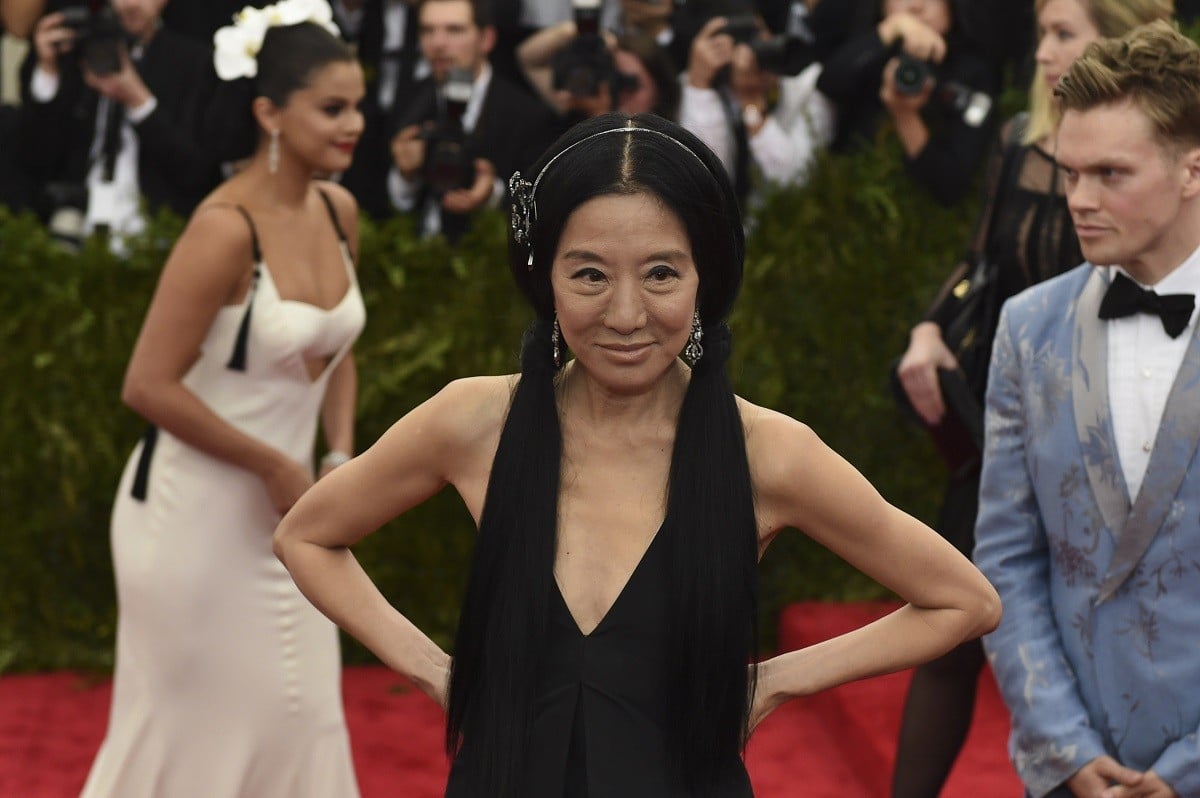
TIMOTHY A. CLARY/AFP/Getty Images
From Figure Skating Dreams To Fashion
Vera Wang was born on June 27, 1949, in New York City. Her parents had moved to the United States from Shanghai, China, before her birth. Her father built a successful career in business, and her mother worked as a translator for the United Nations. Wang grew up in a sophisticated, well-off Manhattan household where art, fashion, culture, and discipline were all part of the atmosphere.
Her first great ambition, however, was not fashion. It was figure skating.
Wang began skating as a child and trained seriously for years. She competed at the 1968 U.S. Figure Skating Championships in pairs with James Stuart and was good enough to be featured in “Sports Illustrated.” Her dream was to make the U.S. Olympic team, but when that did not happen, she was forced to shift her attention elsewhere.
That disappointment turned out to be one of the most important pivots of her life. Figure skating taught Wang about line, movement, discipline, costume, and performance. Decades later, those lessons would show up not only in her bridal gowns but also in the skating costumes she designed for elite athletes including Nancy Kerrigan, Michelle Kwan, Evan Lysacek, and Nathan Chen.
After skating, Wang attended Sarah Lawrence College and also studied at the University of Paris. She graduated with a degree in art history, a background that gave her a strong visual foundation before she entered the fashion world professionally.
The Vogue Years
In 1970, Wang landed a job at “Vogue.” She was only in her early 20s, but she rose quickly and became one of the magazine’s youngest editors. Working at “Vogue” gave her a front-row education in luxury, taste, photography, styling, couture, celebrity, and the business of aspiration.
For nearly two decades, Wang lived inside the fashion establishment. She saw how designers built identities, how clothes became images, how images became desire, and how desire became commerce. She learned that fashion was not simply about fabric. It was about fantasy.
After around 17 years at “Vogue,” Wang left the magazine and joined Ralph Lauren as a design director for accessories. The move gave her experience on the brand side of the business, where she could see how a fashion label operated beyond editorial pages.
Still, Wang’s career-defining opportunity did not arrive in a boardroom. It arrived when she got engaged.
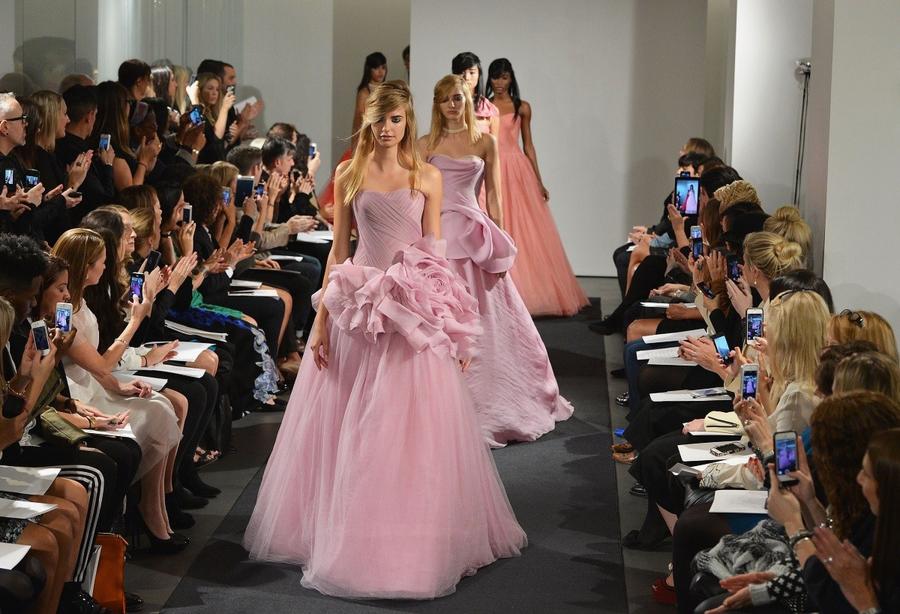
Slaven Vlasic/Getty Images
The $10,000 Dress That Started It All
When Vera Wang became engaged to investor Arthur Becker, she went searching for her own wedding gown. For someone with her fashion background, the experience was shockingly disappointing. The bridal market in the late 1980s was profitable, but much of it was traditional, sentimental, and disconnected from high fashion.
Wang wanted something modern. She wanted something sophisticated. She wanted a gown that felt like fashion, not costume.
So she sketched her own design and paid a dressmaker roughly $10,000 to make it.
That custom gown did more than solve her personal wedding problem. It revealed a huge gap in the market. Wang realized that there were plenty of women who cared deeply about fashion but had very few truly fashionable bridal options. A bride might spend more on her wedding dress than any other garment she would ever own, yet the category was often treated as separate from the rest of luxury fashion.
Wang saw the opening.
With financial backing from her father, she opened her first bridal salon in 1990 at the Carlyle Hotel on Madison Avenue in New York City. At first, the shop carried gowns from established designers, including Carolina Herrera and Christian Dior. But Wang soon began offering her own designs, and those were the dresses that changed everything.
Turning Bridal Into High Fashion
Vera Wang did not invent the wedding dress. She reinvented what a wedding dress could be.
Her gowns were romantic without feeling dusty. Dramatic without feeling ridiculous. Feminine without being predictable. They had the emotion brides wanted, but they also had the polish of high fashion. She used luxurious fabrics, clean lines, unexpected proportions, intricate draping, and a modern sense of silhouette.
In other words, she treated bridalwear with the seriousness and ambition of couture.
That was the key. Wang understood that a wedding dress was not merely a garment. It was a symbol. It had to photograph beautifully, flatter the bride, satisfy family expectations, and still express the bride’s own identity. It had to feel timeless in the moment and iconic in the pictures.
Celebrity culture helped fuel the rise. As weddings became more photographed, more public, and more analyzed, the dress became even more important. Wang was perfectly positioned for that world. She had the editor’s eye, the designer’s taste, and the business instinct to understand that bridal fashion was about both intimacy and spectacle.
The Celebrity Wedding Dress Machine
Once Vera Wang became the go-to name for celebrity brides, the brand’s power multiplied.
Her gowns have been worn by Victoria Beckham, Chelsea Clinton, Kim Kardashian, Ariana Grande, Mariah Carey, Jennifer Lopez, Alicia Keys, Vanessa Hudgens, Uma Thurman, and many others. Her eveningwear has also appeared on major red carpets, worn by actresses, singers, and public figures including Charlize Theron, Reese Witherspoon, Sandra Bullock, Viola Davis, Kerry Washington, Michelle Obama, and Sofia Vergara.
Every celebrity wedding became a kind of advertisement. Every magazine spread reinforced the idea that Vera Wang was the top of the bridal pyramid. For a certain kind of bride, wearing Vera Wang became shorthand for taste, status, glamour, and arrival.
In 2001, Wang released “Vera Wang on Weddings,” further cementing her authority over the category. By then, she was no longer just a designer who made wedding dresses. She was a wedding oracle.
Beyond Bridal: Building A Lifestyle Empire
The real fortune came from understanding that the Vera Wang name could travel far beyond couture gowns.
In 2000, Wang launched a ready-to-wear collection. That move helped expand the brand from bridal into broader luxury fashion. She also pushed into fragrance, jewelry, eyewear, shoes, home goods, china, crystal, mattresses, accessories, and men’s formalwear.
The business model became a mix of high-end fashion, celebrity dressing, licensing, and mass-market accessibility. That last piece was especially important. Not every bride could afford a custom Vera Wang gown, but many consumers could buy a fragrance, a home item, a piece of jewelry, or a lower-priced bridal dress carrying her name.
In 2011, Wang partnered with David’s Bridal to launch “White by Vera Wang,” a more affordable bridal line that brought her aesthetic to a much larger audience. She also built “Simply Vera” at Kohl’s, giving the brand a major foothold in accessible fashion and home categories. Men’s Wearhouse later carried Vera Wang tuxedos, extending the wedding ecosystem to grooms.
This is how a bridal salon became a lifestyle brand. Wang did not just sell dresses. She sold the entire emotional architecture around modern romance: the gown, the tuxedo, the perfume, the china, the crystal, the home, and the fantasy.
The $700 Million-A-Year Brand Sale
The biggest update to Vera Wang’s business story came after nearly 35 years of independent ownership.
In December 2024, WHP Global announced a deal to acquire the intellectual property of the Vera Wang fashion brand. The acquisition was completed in January 2025. Financial terms were not publicly disclosed, but the deal marked a major turning point in Wang’s career and in the future of the brand.
The key detail: Wang did not simply walk away. Under the deal, she remained founder and chief creative officer and became a shareholder in WHP Global. That means she cashed in on the brand she built while retaining a role in its future expansion.
At the time of the transaction, the Vera Wang brand was generating more than $700 million in annual retail sales across categories including bridal, women’s apparel, men’s tuxedos and suiting, fine jewelry, fragrance, and home. WHP Global, whose portfolio includes a large stable of consumer brands, positioned the acquisition as a way to expand Vera Wang into new markets and categories around the world.
For Wang, it was the kind of exit very few fashion founders ever achieve. She started with one bridal salon at the Carlyle Hotel. She ended up with a global brand valuable enough to be acquired by a major brand-management firm while still keeping her in the creative driver’s seat.
Awards, Honors, And Figure Skating Full Circle
Wang’s industry recognition has matched her commercial success.
In 2005, the Council of Fashion Designers of America named her Womenswear Designer of the Year. In 2013, the CFDA honored her with the Geoffrey Beene Lifetime Achievement Award, one of the organization’s most prestigious honors. She has also been recognized by the figure skating world for her contributions to costume design.
That connection to figure skating is one of the more satisfying full-circle elements of her story. The sport that once broke her heart became part of her fashion legacy. Wang did not make the Olympic team, but she eventually dressed Olympic athletes. She did not become famous on the ice, but her understanding of performance helped make her famous in fashion.
How One Dress Became $650 Million
The phrase “rags to riches” is not literally accurate in Vera Wang’s case. She did not grow up poor. She had advantages, education, connections, and financial support. But her business story still contains a classic entrepreneurial lesson: the opportunity was hiding inside a personal frustration.
She could not find the wedding dress she wanted.
So she made it.
Then she realized millions of other women had some version of the same problem. They wanted tradition, but not boredom. Romance, but not cliché. Luxury, but not stiffness. They wanted a wedding dress that felt like fashion.
Wang turned that insight into a salon, the salon into a brand, the brand into a licensing empire, and the empire into a fortune.
A decade ago, Vera Wang was already worth hundreds of millions of dollars. Today, with the WHP Global deal completed and her brand generating hundreds of millions in annual retail sales, her net worth stands at $650 million.
Not bad for a woman whose fashion empire began because she could not find anything good enough to wear to her own wedding.
(function() {
var _fbq = window._fbq || (window._fbq = []);
if (!_fbq.loaded) {
var fbds = document.createElement(‘script’);
fbds.async = true;
fbds.src=”
var s = document.getElementsByTagName(‘script’)[0];
s.parentNode.insertBefore(fbds, s);
_fbq.loaded = true;
}
_fbq.push([‘addPixelId’, ‘1471602713096627’]);
})();
window._fbq = window._fbq || [];
window._fbq.push([‘track’, ‘PixelInitialized’, {}]);


