
Share this @internewscast.com
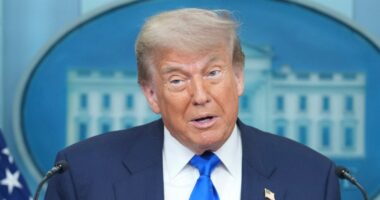
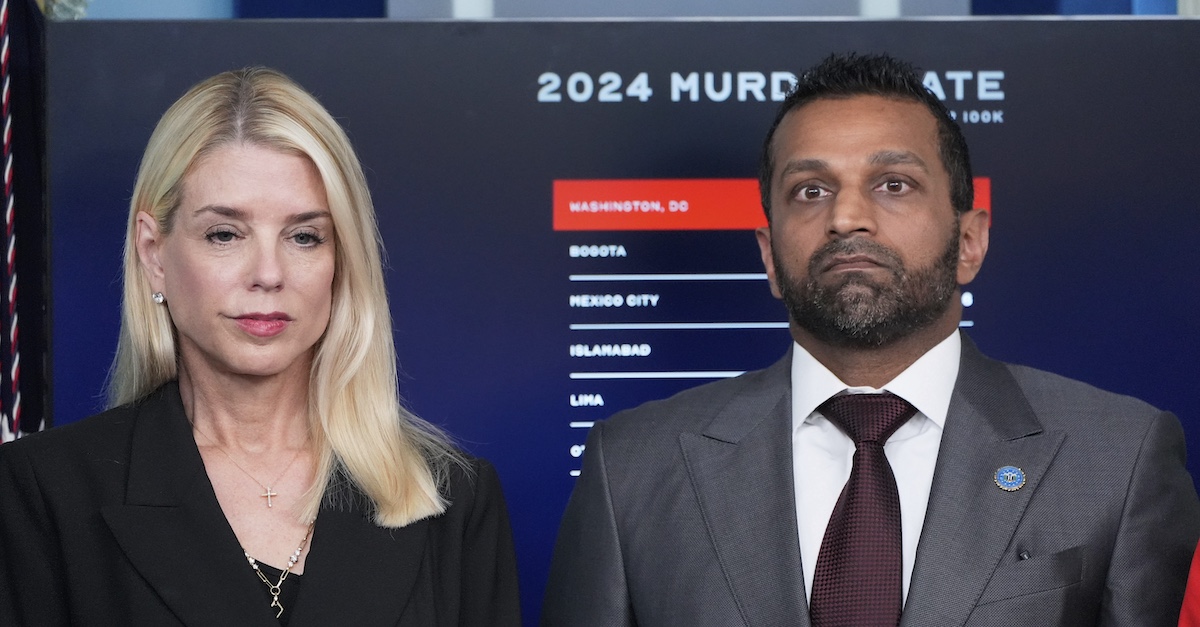
Attorney General Pam Bondi and FBI Director Kash Patel look on as President Donald Trump speaks with reporters in the James Brady Press Briefing Room at the White House, Monday, Aug. 11, 2025, in Washington. (AP Photo/Alex Brandon).
Special agents formerly involved in the “Arctic Frost” investigation, which ultimately led to the indictment of former President Donald Trump on January 6, have filed a lawsuit against Director Kash Patel and U.S. Attorney General Pam Bondi. They argue that their dismissals were unconstitutional and amounted to politically motivated retaliation.
Since Trump’s inauguration, both the Department of Justice and the FBI have been the targets of multiple lawsuits. These claims range from alleged wrongful termination due to investigating Trump, to repercussions faced by agents for actions like kneeling during a protest for George Floyd. In this instance, the two special agents, anonymized as John Doe 1 and 2, had accrued nearly three decades of combined experience working on significant cases. The lawsuit claims their termination was “solely” due to their involvement in Arctic Frost, running from November 2022 to June 2023, during which they contributed to the investigation that led to Trump’s indictment under special counsel Jack Smith.
The plaintiffs contend that Patel, Bondi, Trump, and others who advocated for their dismissal believed the agents were politically opposed to Trump because of their roles in Arctic Frost. The investigation’s outcomes allegedly implicated Trump in criminal activities, resulting in a federal grand jury indictment.
The circumstances surrounding these “pretextual” dismissals reveal that both agents were accused of “poor judgment and a lack of impartiality,” supposedly leading to the misuse of government power for political ends. Their terminations followed shortly after Republican lawmakers publicly questioned Smith about the Arctic Frost investigation.
According to court documents, neither internal investigations nor formal notifications or hearings preceded the agents’ firings. The plaintiffs claim they were not shown any evidence justifying their dismissals nor given a chance to appeal the decision.
In an illustrative anecdote, Doe 1 described being summoned to an unavoidable meeting just as he was about to take his costumed children out for Halloween, highlighting the abruptness of the situation.
“This is it? Nothing can be done?” the plaintiff asked.
“It is what it is,” Washington Field Office Special Agent in Charge Paul Reid Davis answered, according the suit.
Three days later, John Doe 2, aware of Doe 1’s fate, said he received a call that he understood would be to initiate his firing — which U.S. Attorney Jeanine Pirro was allegedly “sorry” about and tried to prevent.
The agent had been working a “highly sensitive public corruption case” when he was told on Nov. 3 that “you are going to be terminated,” but the firing didn’t happen until the next day, the lawsuit said. That was because someone “had called on [his] behalf,” and that intercessor was Pirro, the filing claimed. The reprieve did not last and the agent was likewise “summarily dismissed.”
“[Assistant Director in Charge Darren] Cox confirmed to John Doe 2 that, the prior day, there had been an intercession on his behalf by U.S. Attorney Jeanine Pirro, which was why John Doe 2 was initially spared. Cox said Pirro had called him a second time, that day, and had asked him to relay the message that she was sorry for this process and appreciated all the work John Doe 2 had done,” the complaint went on.
Both plaintiffs recounted difficulties finding new employment, with one unidentified regulatory organization CEO declining to extend an offer to John Doe 1, described as the “sole breadwinner for his household” and two “young children,” based on the “optics” of his ouster. In addition, they understand the firings to be a “bar” on employment in any executive branch job.
In addition to Fifth Amendment due process claims, the plaintiffs alleged the firings violated the First Amendment as “improper acts of political retribution,” as evidenced by Patel’s own “defamatory speech” online.
“In the course of unlawfully terminating Plaintiffs’ respective employment without due process of law, Defendants—primarily through Patel—publicly connected the termination actions to allegations that the terminated Arctic Frost agents had been ‘weaponizing’ the FBI. This false and defamatory public smear impugned the professional reputation of all publicly identified fired Arctic Frost agents, including John Doe 1, suggesting they were something other than faithful and apolitical law enforcement personnel,” the suit concluded. “This public reputational smear has caused not only the loss of John Doe 1’s government employment but further harmed his present and future employment prospects. In the months following Plaintiffs’ unlawful terminations, Patel has continued to engage in such defamatory speech, publicly describing the fired Arctic Frost agents as ‘corrupt’ and compounding the reputational harm suffered by John Doe 1.”
Read the full filing here.