
Share this @internewscast.com
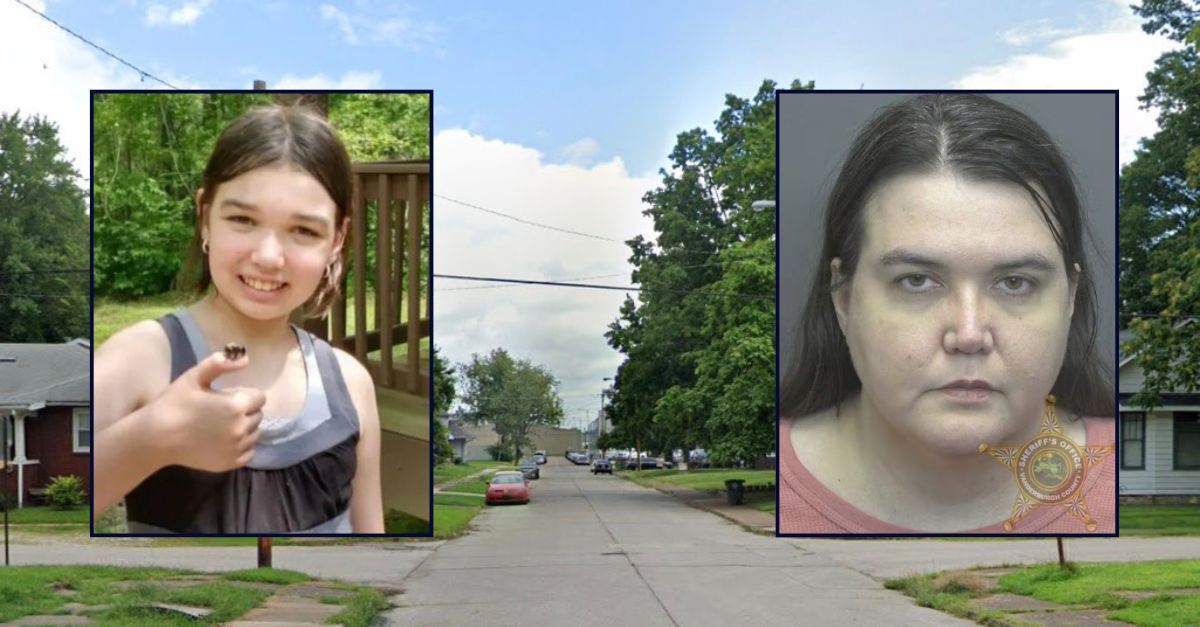
Inset, left to right: Alice Bredhold (Browning Funeral Home) and Ashley Marie Bredhold (Vanderburgh County Sheriff’s Office). Background: The Indiana street where the family lived when Alice died (Google Maps).
An Indiana mother, aged 40, has been sentenced to spend several decades behind bars after being found guilty of causing her 12-year-old daughter’s death by neglecting her diabetes care.
On Thursday, Vanderburgh Circuit Judge Ryan D. Hatfield sentenced Ashley Marie Bredhold to a 30-year term in state prison for her involvement in the tragic demise of young Alice Bredhold, court documents reveal.
The sentencing followed a February jury verdict that found Bredhold guilty of neglecting a dependent, leading to death.
The previous year, Alice’s father, Brent Bredhold, received a conviction for neglect of a dependent resulting in serious bodily harm. Judge Hatfield sentenced him to nine years in prison.
“This deeply saddening case involves a 12-year-old girl with Type 1 diabetes who was tragically left to manage her condition alone until her premature death,” remarked Vanderburgh County Chief Deputy Prosecutor Winston Lin. “Instead of being her greatest supporters in maintaining her health and life, her parents offered nothing but neglect and apathy.”
On July 4, 2024, police and emergency responders were called to the Bredhold residence on South New York Avenue in Evansville, Indiana, following reports of a 12-year-old girl unresponsive. According to a previous news release from the Vanderburgh County Prosecutor’s Office, Alice was found lying on her bedroom floor and was declared dead at the scene.
According to the Vanderburgh County Coroner, Alice died from diabetic ketosis — a serious condition which, according to the Mayo Clinic, manifests numerous telltale symptoms.
Alice was diagnosed with Type 1 diabetes in March 2020. Typically, children with the disease live “long, mostly normal lives,” prosecutors said, but Alice was dead within four years of her diagnosis.
Evidence revealed during the parents’ trials showed that Alice’s diabetes was poorly handled — and sometimes outright ignored — from the start.
For example, prior to her death, the Indiana Department of Child Services contacted Alice’s parents because her blood sugar levels frequently tested in an exceedingly high range while she was at school. In the state’s opening statement against Brent Bredhold, prosecutors cited a school nurse who reported 44 readings in excess of 300 and 14 readings above 600 in the weeks leading up to her death.
Blood sugar levels less than 180 two hours after starting a meal are considered typical targets for people living with diabetes, according to the Centers for Disease Control.
Witness testimony and cellphone data from Ashley Bredhold’s trial showed that in the days before Alice died, her parents knew her medication delivery system was not working but failed to get replacements, local ABC affiliate WEHT reported.
When the child complained that drinking water “felt like drinking acid,” Ashley Bredhold reportedly responded by telling Alice to “drink more water.”
“Parental responsibility is not a 9-to-5 job, to clock in or clock out when convenient,” Lin said. “That said, this was an extreme case where Alice was not properly supervised for years, and the long-term neglect placed her in a precarious situation that cut her life short. Of the hundreds of Type 1 diabetic kids under the age of 18 seen by her pediatric endocrinologist, she was the only one to have died directly due to her diabetes.”