
Share this @internewscast.com
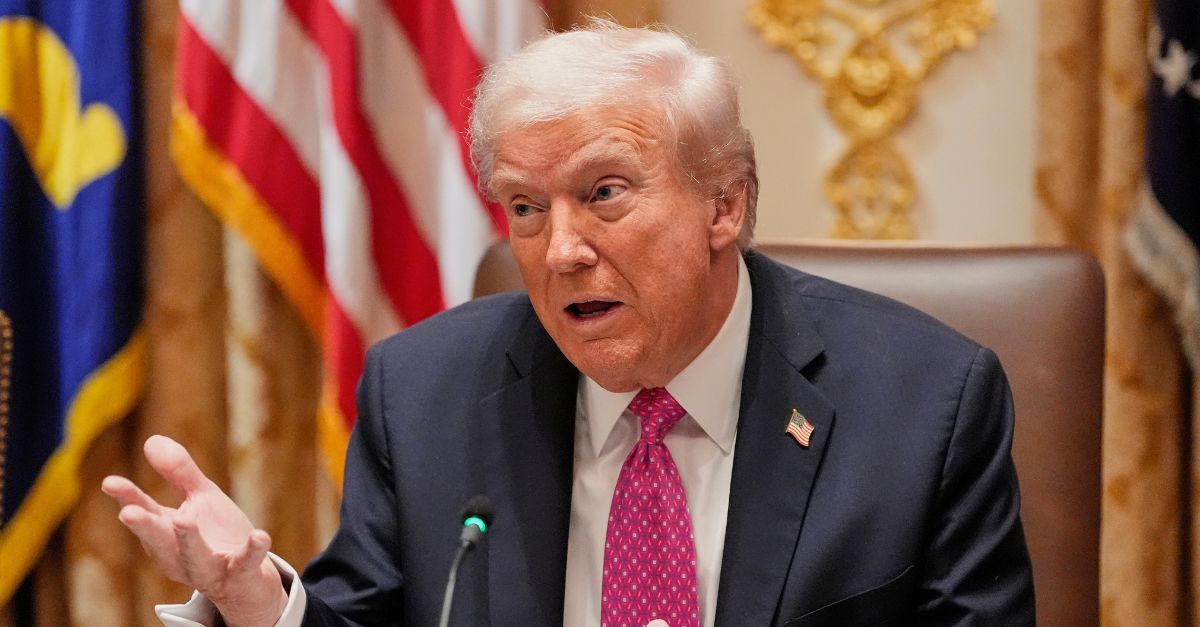
President Donald Trump speaks before a lunch with Ukraine”s President Volodymyr Zelenskyy in the Cabinet Room of the White House, Friday, Oct. 17, 2025, in Washington (AP Photo/Alex Brandon).
The Trump administration’s initiative to deploy National Guard troops for policing Portland faced opposition from West Coast states, culminating in a swift halt by a federal judge late Tuesday.
Earlier that day, the attorneys general from both Oregon and California approached U.S. District Judge Karin Immergut, seeking a delay on a prior restraining order she had issued. Notably, Judge Immergut was appointed by President Trump during his first term.
One such order might soon be rescinded following a decision by a three-judge panel from the U.S. Court of Appeals for the 9th Circuit to stay a similar order on Monday.
The complexities of this legal battle are far from straightforward.
The lawsuit, initiated on September 28, accuses the federal government of violating statutes concerning troop deployment, the Administrative Procedure Act (APA), and constitutional provisions. Initially, Oregon stood alone in its legal challenge against the troop deployment in Portland.
On October 4, Judge Immergut implemented a temporary restraining order, which remained effective until October 18, prohibiting the “federalization and deployment of Oregon National Guard service members.”
The Trump administration immediately appealed to the U.S. Court of Appeals for the 9th Circuit, seeking a stay and, later that same night, apparently tried an end-run around Immergut’s restraining order by communicating its intent to use 200 members of the California National Guard in Portland in lieu of the Beaver State’s own troops.
On Oct. 5, in response to the threat of Golden State troops being activated, California joined the litigation and filed an amended complaint as well as a second motion for a temporary restraining order — which Immergut granted that very same day.
The second restraining order, more broadly, enjoined the government “from deploying federalized members of the National Guard in Oregon.” And, similarly, expired on its own terms on Oct. 19.
On Oct. 15, after a hearing, the district court found “good cause to extend” both of its own temporary restraining orders — pending the results of the then-ongoing appeal with the 9th Circuit.
On Oct. 20, a three-judge panel on the 9th Circuit voted to stay the first restraining order in a relatively clear victory for the Trump administration. The 2-1 majority decision was penned by Trump-appointed U.S. Circuit Judge Bridget S. Bade, with a concurrence by Trump-appointed U.S. Circuit Judge Ryan D. Nelson. In dissent was Bill Clinton-appointed U.S. Circuit Judge Susan P. Graber.
Notably, while the second restraining order was not appealed by the federal government or formally considered by the trio of judges, the 9th Circuit strongly suggested that order should be paused as well.
“The district court stated that it granted the second TRO based on the same legal reasoning it provided in its order issuing the first TRO,” the panel’s opinion reads. “Defendants are thus correct that the first TRO and the second TRO rise or fall together on the merits of the issues raised in this motion for a stay pending appeal.”
So, despite the lack of formal consideration, the U.S. Department of Justice, in turn, asked Immergut to formally stay her second restraining order in a motion to dissolve filed on Tuesday.
“Given the Ninth Circuit’s clear statements on the second TRO’s validity, the Court should address this motion in part today and without awaiting plaintiffs’ response,” the DOJ argued. “The Court should immediately dissolve or stay the second TRO to the extent it overlaps with the now-stayed first TRO (i.e., to the extent it applies to the Oregon National Guard). The Court should dissolve or stay the second TRO in full after plaintiffs file their response.”
Meanwhile, however, the 9th Circuit had other things in mind.
In a sua sponte — or “of one’s own accord”— order filed late Monday, a judge on the bench moved to have the full court reconsider the Immergut restraining order en banc. This is an uncommon, but not rare, break from typical reconsideration requests – which are more often than not filed by one of the parties to the litigation.
Oregon and California moved to seize the fast-shifting legal terrain.
In their response motion to the motion to dissolve, the states asked Immergut to deny the motion to stay her second order — citing the sua sponte motion filed by U.S. Circuit Judge S. R. Thomas, a Clinton appointee.
“Until there is an en banc vote, it would be legal error for this Court to construe the panel’s non-final decision as a ‘significant change in the law’ warranting dissolution of the Second TRO,” the states’ motion reads.
The plaintiffs went on to blame the DOJ for errors of its own making.
“Had Defendants appealed the Second TRO, the relief they now seek from this Court would already be before the Ninth Circuit,” the states’ motion goes on. “But they chose not to appeal the Second TRO, which raises factual and legal issues that extend far beyond the Stay Order. Now, in their rush to file their Motion to Dissolve, Defendants have misconstrued the finality of the Ninth Circuit proceedings, failing to carry their burden for dissolution of the Second TRO.”
Immergut, for her part, agreed with the plaintiffs — at least for now. The court did not rule in the defendants’ favor without waiting to hear from the states — which was what the DOJ had requested.
Instead, the judge ordered the Trump administration to reply to the states’ arguments in another court filing due Thursday afternoon.