Share this @internewscast.com
Protesters in Portland, Oregon, confronted law enforcement on Thursday night near an Immigration and Customs Enforcement (ICE) facility, following an earlier incident where a U.S. Border Patrol agent shot two individuals.
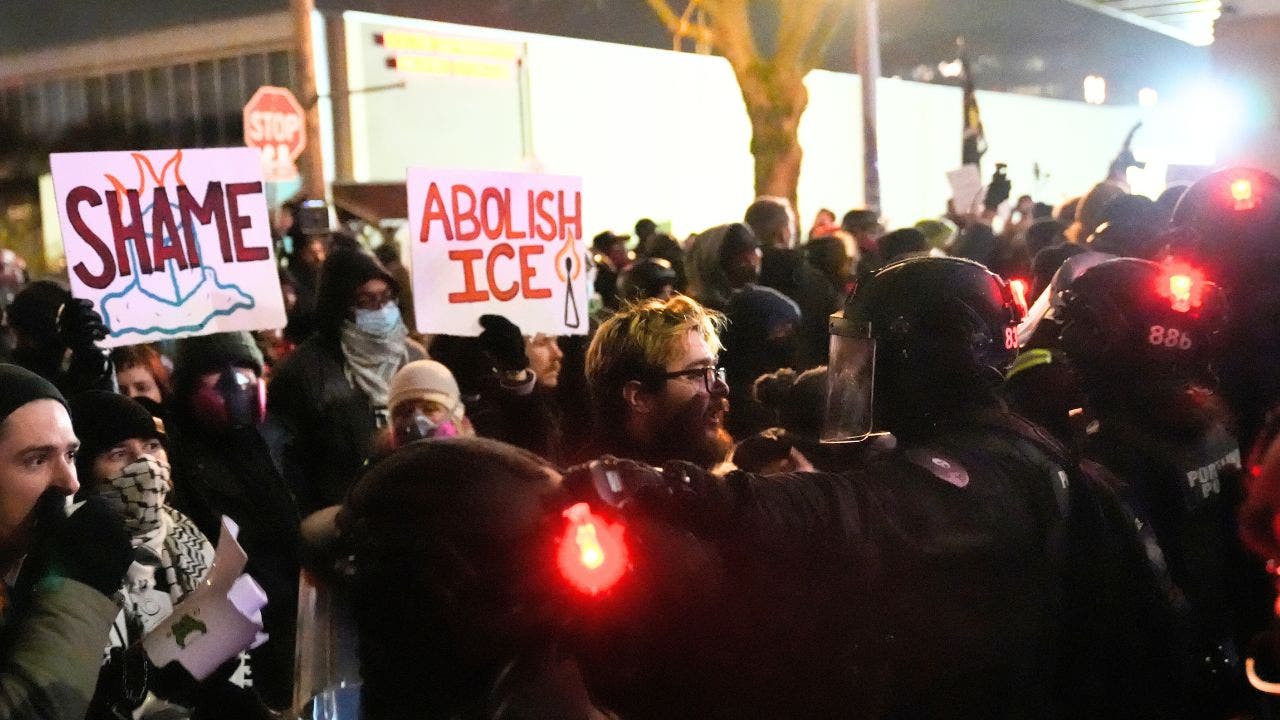
Footage from the scene depicted officers clad in riot gear advancing on a street filled with demonstrators, resulting in pushing and scuffling during the nighttime standoff.
The Portland Police Bureau reported that six individuals were taken into custody. Those arrested are facing charges that include rioting, second-degree disorderly conduct, and interfering with a peace officer. They were all transported to the Multnomah County Detention Center.
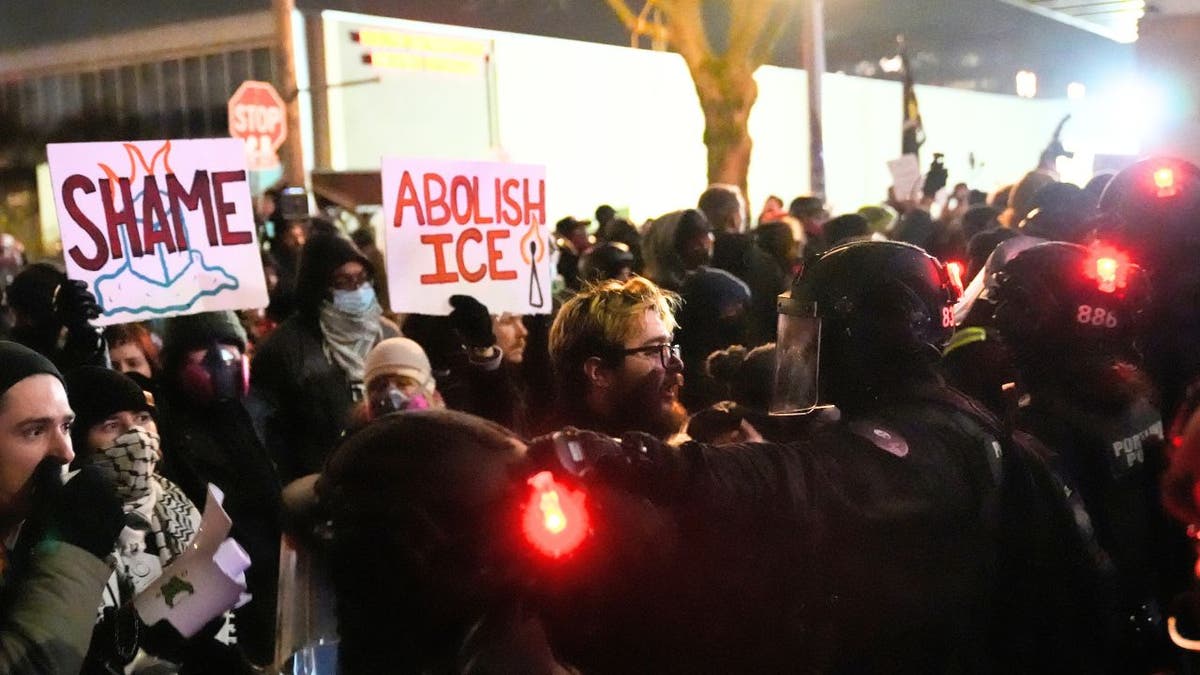
On Thursday night, January 8, 2026, law enforcement in riot gear confronted crowds outside an Immigration and Customs Enforcement building in Portland, Oregon, as protests erupted in response to a federal immigration agent’s involvement in a shooting.
Amid the protests, some participants could be heard chanting, “Shame on you, shame on you,” while police officers escorted detainees away. Law enforcement officials stated that they employed crowd-management tactics, including the use of dialogue officers and a sound truck, to handle the situation.
Authorities explained that officers repeatedly instructed demonstrators to move to the sidewalk to allow traffic to flow. When these instructions were disregarded, targeted arrests were made by the officers.
Police said the total number of arrests tied to anti-ICE and immigration enforcement demonstration activity has reached 79.
The incident erupted after the Department of Homeland Security (DHS) said that a U.S. Border Patrol agent shot two people during a traffic stop earlier in the day.
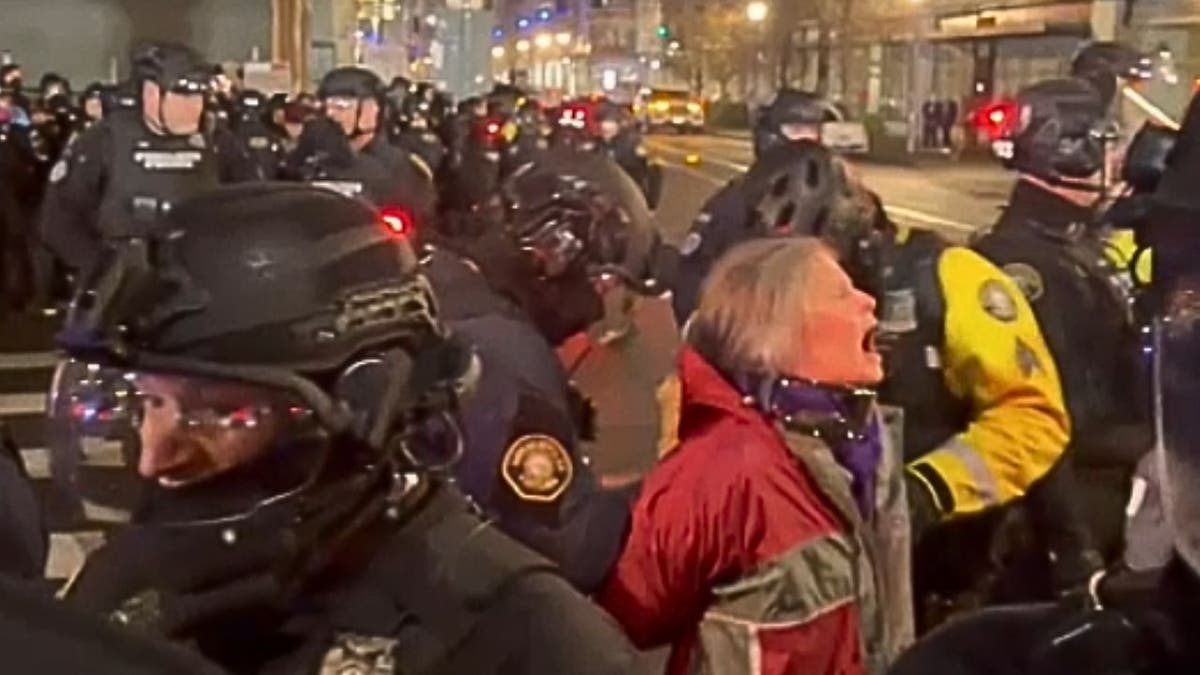
A woman was arrested near an Immigration and Customs Enforcement facility Thursday night, Jan. 8, 2026, in Portland, Ore. (X/@haileywest)
According to DHS, the driver — who is believed to be a member of the Venezuelan gang Tren de Aragua (TdA) — allegedly, “weaponized the vehicle and attempted to run over the law enforcement agents” after agents identified themselves as law enforcement, prompting an agent to fire a defensive shot. The driver fled the scene with a passenger, officials said.
Following the incident, Portland Mayor Keith Wilson called on ICE to “halt all operations” in the city until a full and independent investigation can take place.
“We know what the federal government says happened here,” Wilson said during a news conference Thursday. “There was a time when we could take them at their word. That time has long passed.”
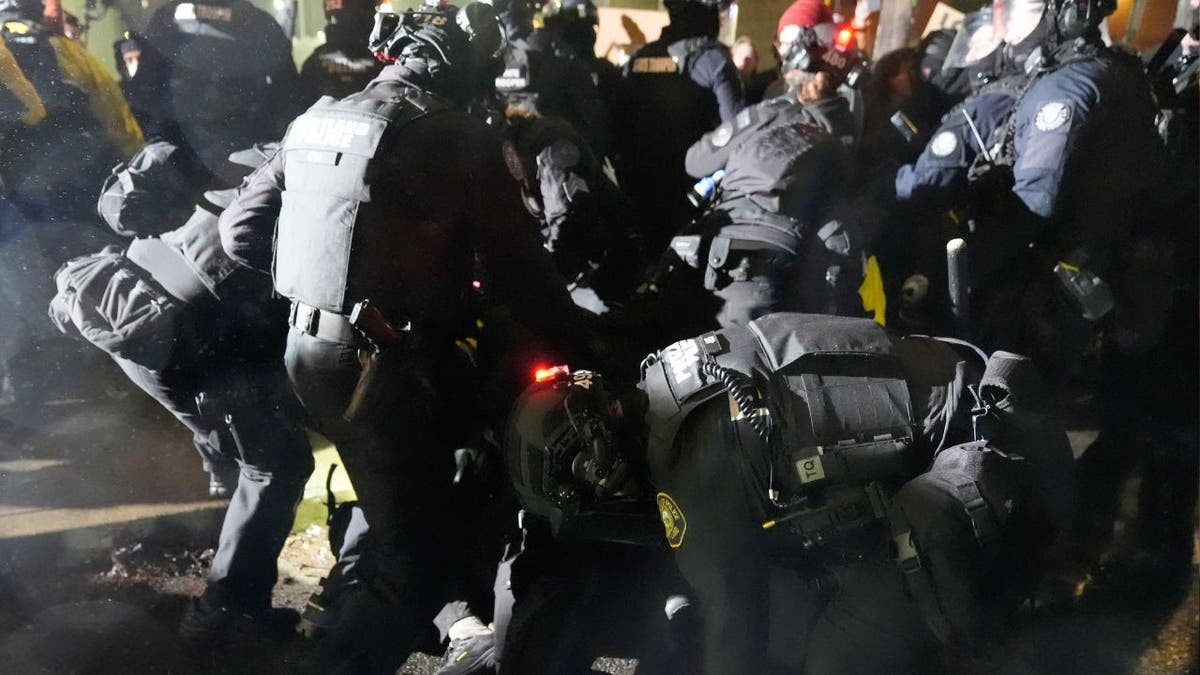
Portland police officers in riot gear detain agitators during a demonstration near an Immigration and Customs Enforcement facility Thursday night, Jan. 8, 2026, in Portland, Ore. Police said six people were arrested during the protest. (AP Photo/Jenny Kane)
Wilson added that ICE agents and DHS leadership “must fully be investigated and held responsible for the violence inflicted on the American people in Minnesota, in Portland, and in all the communities across America.”
Thursday’s shooting in Portland followed the fatal shooting of Renee Good during an ICE enforcement operation in South Minneapolis Wednesday.