
Former president Joe Biden underwent a common surgery to remove skin cancer from his forehead, officials have revealed.
A representative from the White House informed the Daily Mail that President Biden, 82, recently underwent Mohs surgery. This procedure is utilized for excising certain skin cancers, including some melanomas, basal cell carcinoma, squamous cell carcinoma, and other rarer types.
It’s the same procedure his wife and former First Lady Jill Biden underwent in 2023.
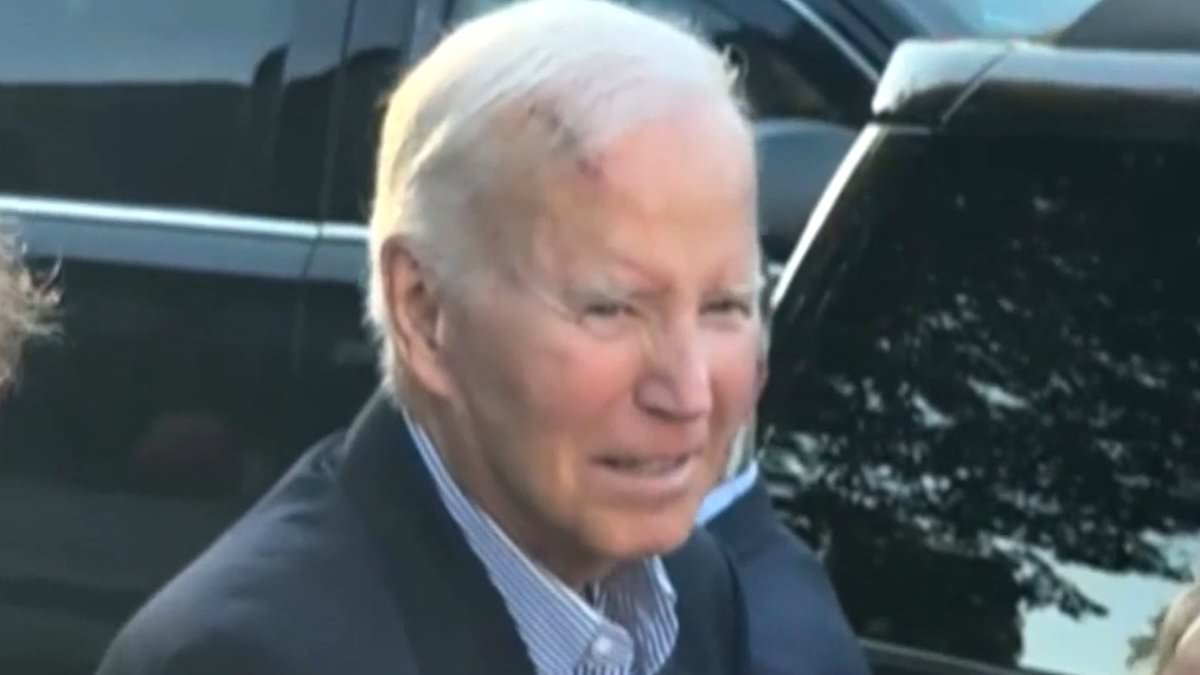
The confirmation of the surgery came after Biden stirred health speculations when he was seen leaving a church in Delaware with what seemed to be a prominent wound on his head earlier this month.
Back in August, Biden was observed with a bandage on his forehead at the funeral of former governor and US Representative Mike Castle, covering the same spot.
Biden had a basal cell carcinoma excised from his chest in 2023, a condition his wife, Dr. Biden, also dealt with on her eye in the same year. It’s not specified which type of skin cancer was most recently removed.
Additionally, the former president is currently receiving care for stage four prostate cancer, which has metastasized to his bones. It remains uncertain if the skin cancer has spread to other areas.
Mohs surgery is typically carried out in an outpatient setting, usually lasting a few hours. It is done under local anesthesia to numb the area while patients remain awake.

Former President Joe Biden stunned locals in Delaware as he stepped out with a large scar across his forehead
It’s unclear if Biden was awake for the procedure and when exactly it took place.
The objective of a Mohs procedure is to excise as much cancerous skin tissue as possible while also doing as little damage to the surrounding healthy tissue as possible. It’s a gradual process and layers of skin are removed in steps.
First, the surgeon uses a scalpel to remove the surface level cancerous skin tissue with the understanding that there might be more cancerous tissue beneath the surface, as the bulk of skin cancer is usually hidden under the surface.
The surgeon maps out where on the body the cancerous tissue was extracted, takes that tissue sample to the lab, dyes it, and cuts it into sections. Specialized technicians place those tissue samples on slides to be investigated under the microscope.
The doctor then examines the edges of each section of tissue for evidence of remaining cancer. If the surgeon finds cancer cells under the microscope, their location is marked on the map.
The process is repeated until the doctor can find no evidence of cancer in the sampled tissue.

In August, Biden was also seen with a bandage covering the same spot on his forehead at the funeral for former governor and US Representative Mike Castle
Some wounds will be big enough to require sutures to close. They typically heal within a couple of weeks. Smaller wounds can heal by themselves in about a month.
Typically people are able to leave between two and six hours after the outpatient surgery, though the timing depends on the size of the area effected.
The procedure is extremely common. Mohs surgery is performed on over 876,000 tumors per year in the United States.
Certain types of skin cancers treated by this procedure – basal cell and squamous cell carcinomas – are on the rise. Roughly 1.8million cases of squamous cell carcinomas are reported annually.
Over the past 30 years, incidences of squamous cell carcinomas have spiked 200 percent, according to the Skin Cancer Foundation.
Basal cell carcinoma, meanwhile, is the most common form of skin cancer and the most frequently occurring form of all cancers. An estimated 3.6million cases are diagnosed each year in the US alone.
The rising rates of skin cancer are likely due to better detection and diagnosis capabilities as well as increased exposure to ultraviolet light, more time spent on outdoor activities, changes in clothing style, increased longevity, ozone depletion, genetics and in some cases, immune suppression.