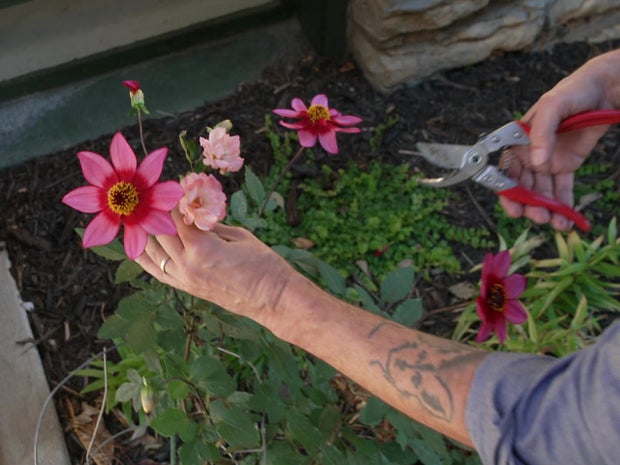
Gardening at home in Kansas City, Missouri, Clancy Martin hardly looks like someone who has struggled for years with grim thoughts of suicide. “It was just all day, every day, wanting to die, wanting to take my own life,” he said.
It started young, very young. At six he ran in front of a bus – the first of ten suicide attempts over the years. “One time I pushed myself off a building,” he recalled, “and a friend, who almost went over with me, grabbed me from behind, who I didn’t even know was there. It’s a miracle that I’m alive. And I’m so grateful for that miracle!”
CBS News
Suicidal thoughts at six may be rare, but now 56, Martin fits one of the demographics most likely to die by suicide: White males, middle-aged and older. But in America today, every demographic is at risk, said psychiatrist Christine Yu Moutier, who heads up the American Foundation for Suicide Prevention. “Suicidal ideation is actually so common in the general population,” she said.
For example, a recent report from the Centers for Disease Control and Prevention notes that about one in five high school students has contemplated attempting suicide.
Moutier says this is a public health crisis, pure and simple. “In the United States in the last year something like 13 million Americans (and those are just the adults) have been having serious thoughts of suicide at some point,” Moutier said.
In 2021, nearly 50,000 people in the U.S. died by suicide, according to Tia Dole, a psychologist at Vibrant Emotional Health in New York City. She puts part of the blame on an epidemic of loneliness. “People in this country are really struggling with isolation, with sadness, with anxiety, and suicide is an option for them,” she said.
According to the American Foundation for Suicide Prevention, on average a staggering 132 Americans kill themselves every single day. “One suicide death is too many,” said Moutier. “So, 130-something a day is actually an enormous and tragic loss of life, many times prematurely, many times preventable.”
And prevention, she said, must start by getting rid of the stigma around the subject: “We know from research that young people and adults – some percentage of them, like half – do not tell anyone about their experience until they have a suicide attempt. That is because stigma is clouding the picture to say that I should feel ashamed. I can’t out myself as having these very human experiences of mental health suffering and suicidal thought.”
That stigma with talking about suicidal ideation compounds the likelihood that they’ll go through with it. “It keeps them from being able to take the step to open up, to talk about what they’re experiencing, and then to get the help that they need,” Moutier said.
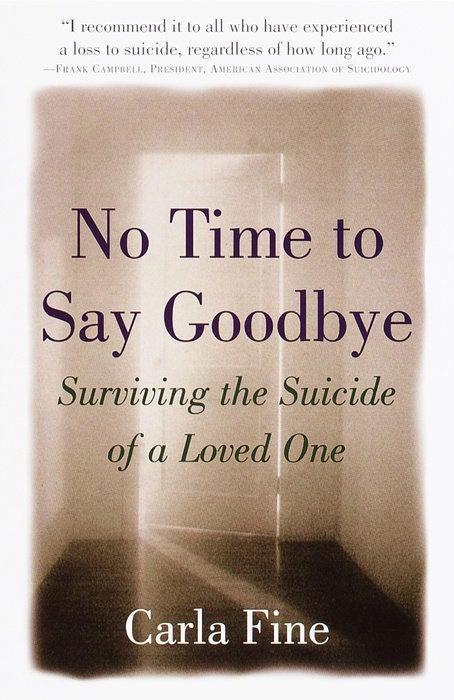
Author Carla Fine has been writing and speaking about suicide for more than two decades. “Even now, even when we talk about every single subject, and there’s nothing off-limits, suicide is off-limits,” she said.
Harmony
Her journey began with her own devastating experience: Her husband killed himself at 43. “I was angry, and I was confused, and I was horrified, and I was in disbelief, and I was numb. I was every single thing looking at this,” said Fine.
Dr. Harry Reiss, Carla’s husband, a board-certified urologist and an assistant professor at NYU Medical School, was at the peak of his career when he died.
Fine said the stigma surrounding his death led her to lie: “My first reaction was not to tell the truth. I told people that Harry died of a heart attack.”
Why? “I thought at that point that I was protecting him. I didn’t want people to think he was crazy. He was such a great doctor. I didn’t want people to think, ‘What’s wrong with Harry?’ And then I thought, ‘Wait a minute. I think I’m protecting myself.'”
Dole said, “When people die by suicide, I do think that folks make a character judgment about the person who died, that means there’s something wrong with them, they failed, or they’re a bad person.”
Dole heads the newly revamped 988 Suicide & Crisis Lifeline, a $232 million federally-funded project. Last year, its trained counselors answered five million calls. Dole said, “You have a suicidal young person, they talk to one accepting adult, and it reduces their risk of suicide by 40%.”
“You’re telling me that 15 to 20 minutes on the phone can literally save someone’s life?” asked Spencer.
“Yes! We talk people, figuratively and literally, off of bridges. Some people will call us when they’re standing on a bridge and we’ll talk them down. Sometimes we send emergency services to their location.”
“What could be more gratifying than feeling like you’d saved someone’s life?”
“Oh, no, people save their own lives,” Dole replied. “They are given tools by the counselors, and they make the decision to save themselves.”
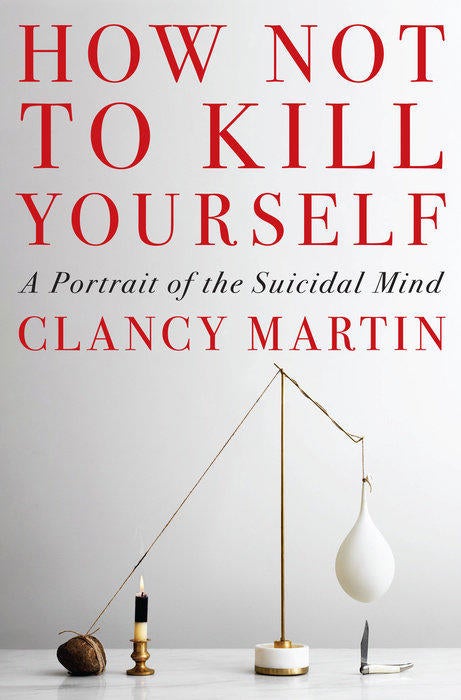
It’s been more than five years since Clancy Martin’s last suicide attempt. A professor at the University of Missouri-Kansas City, he credits the act of writing a book about his experiences (“How Not to Kill Yourself: A Portrait of the Suicidal Mind”) with saving his life.
Pantheon
Not only did he defy the stigma, Martin connected with others struggling just as he was. “My thinking about it miraculously – I’m so grateful! – has changed,” he said. “It’s no longer part of my deep belief structure in the way that it was.”
Moutier said, “When you live with something that you thought was your own maybe unique and private despair, and you finally are brave enough to come out with it, only to find that, guess what, a large percentage of the people around you relate to it – that’s a powerful experience.”
Spencer asked Martin, “Do you allow yourself to believe that you’ll never try again?”
“You know, I want to knock on wood as I say this,” he replied, “but I don’t think I am ever going to make – I don’t wanna say it out loud! – but yes, I allow myself to believe that I am never going to try again.”
If you or someone you know is in emotional distress or a suicidal crisis, you can reach the 988 Suicide & Crisis Lifeline by calling or texting 988. You can also chat with the 988 Suicide & Crisis Lifeline here.
For more information about mental health care resources and support, The National Alliance on Mental Illness (NAMI) HelpLine can be reached Monday through Friday, 10 a.m.–10 p.m. ET, at 1-800-950-NAMI (6264) or email info@nami.org.
For more info:
- “How Not to Kill Yourself: A Portrait of the Suicidal Mind” by Clancy Martin (Pantheon), in Hardcover, eBook and Audio formats, available via Amazon, Barnes & Noble and Bookshop.org
- Clancy Martin, professor, University of Missouri-Kansas City
- American Foundation for Suicide Prevention
- Vibrant Emotional Health, New York City
- “No Time to Say Goodbye: Surviving the Suicide of a Loved One” by Carla Fine (Harmony), in Trade Paperback, eBook and Audio formats, available via Amazon, Barnes & Noble and Bookshop.org
- carlafine.com
Story produced by Amiel Weisfogel. Editor: Carol Ross.
See also:


